

Fan Convectors vs Unit Heaters for Warehouse Heating: Which Is Right for Your Project?
When specifying heating for a warehouse, factory, or large industrial space, two technologies come up most often: fan convectors and unit heaters. Both use forced-air convection to distribute warmth, both are widely available, and both can be connected to low-temperature hot water (LTHW) systems, but they are designed for fundamentally different environments and applications.
This guide compares the two technologies across the factors that matter most for industrial and large commercial projects: heat output and throw, ceiling height suitability, energy efficiency, installation requirements, and overall running costs.
What Is a Unit Heater?
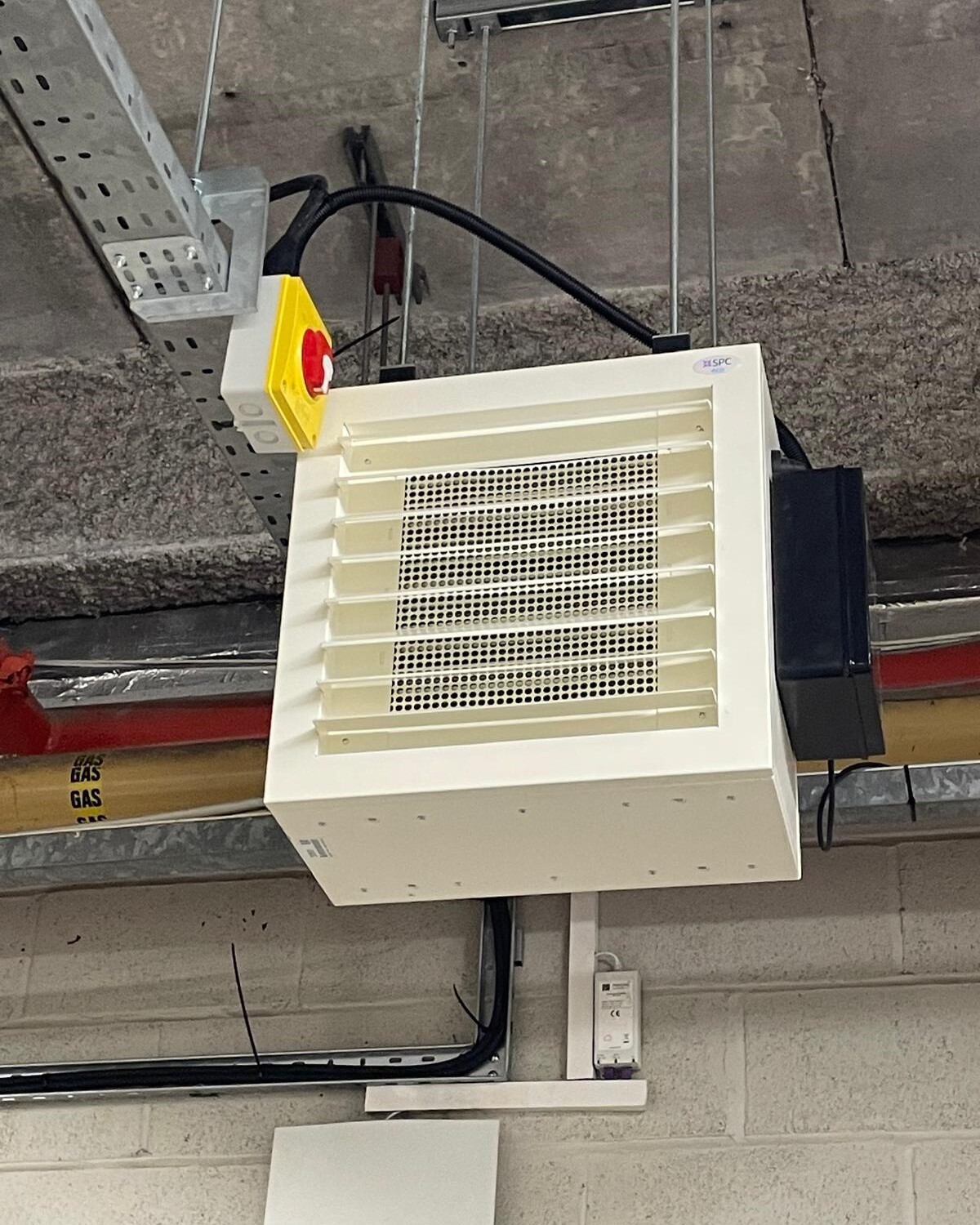
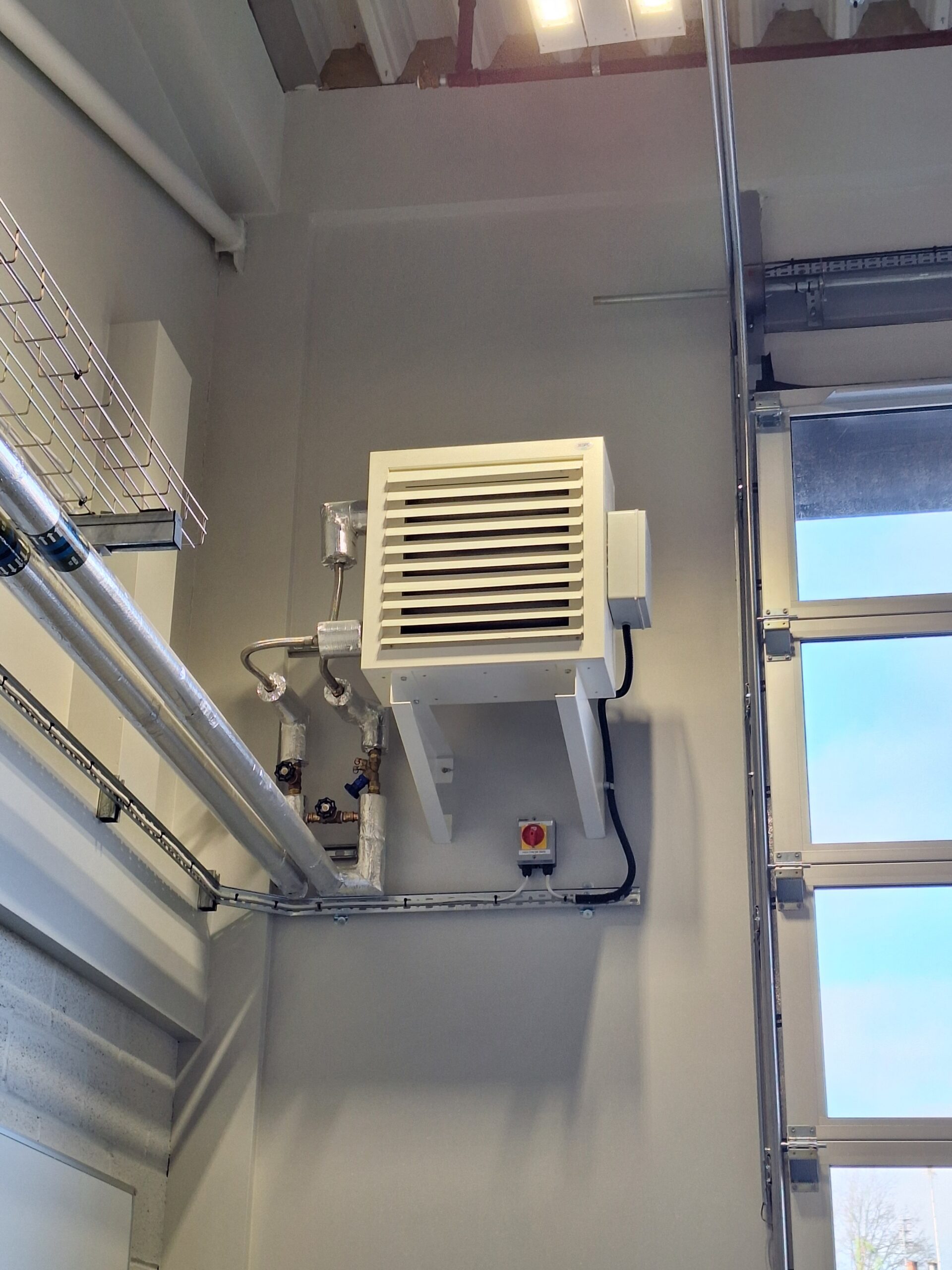
A unit heater is a self-contained air heating device designed for large commercial or industrial environments. It combines a heat exchanger coil with a powerful axial or centrifugal fan to project warm air across large distances and volumes. Unit heaters are typically ceiling or wall-mounted and are built to operate effectively in high-bay spaces where heat stratification is a significant challenge.
SPC’s CiRRUS Unit Heater is a purpose-built low temperature hot water (LTHW) unit heater available in two configurations:
- Water – powered by a low temperature hot water circuit, with a throw of up to 27 metres at high speed. Suitable for mounting heights of 2.5 to 6 metres
- Electric – an electric version for spaces without an existing hot water circuit
Both versions support BMS integration via 0-10V or BACnet, making them straightforward to incorporate into building management systems.
What Is a Fan Convector?
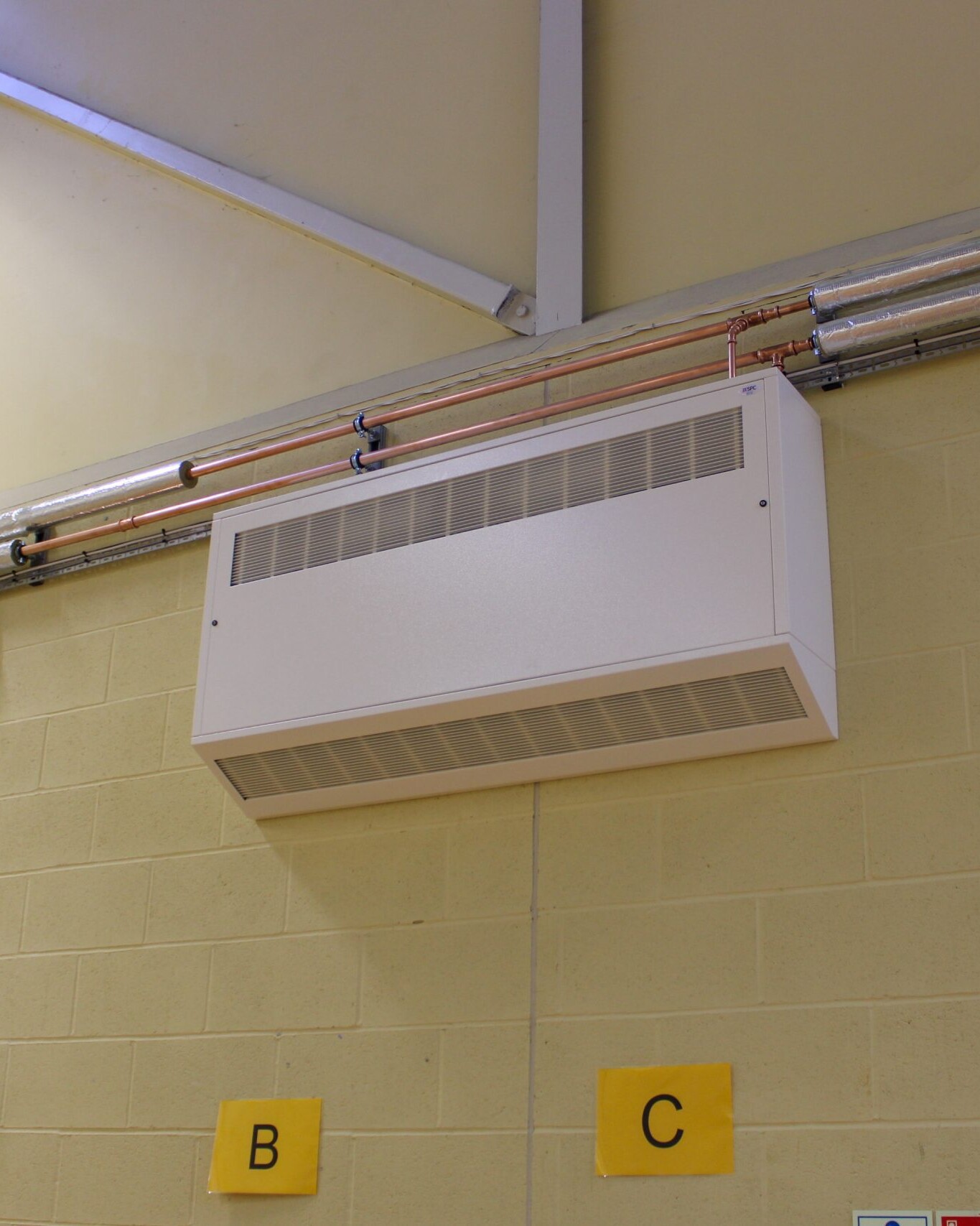
A fan convector is a forced-air heating unit that draws room air over a heat exchanger and recirculates it into the space. Fan convectors are most commonly found in commercial and light commercial environments such as schools, offices, retail spaces, healthcare buildings, where comfort heating across a moderate floor area is the primary requirement.
SPC’s Belgravia Fan Convector range is designed for exactly these environments. Available in wall-mounted, floor-standing, and ceiling tile formats (including the Tilevector Plus range for suspended ceiling grids), Belgravia units offer heating and cooling in a compact, aesthetically considered package well suited to occupied commercial spaces.
Which Is Better for Warehouse Heating?
For the majority of warehouse, factory, and workshop applications, a unit heater is the correct choice.
Here is why:
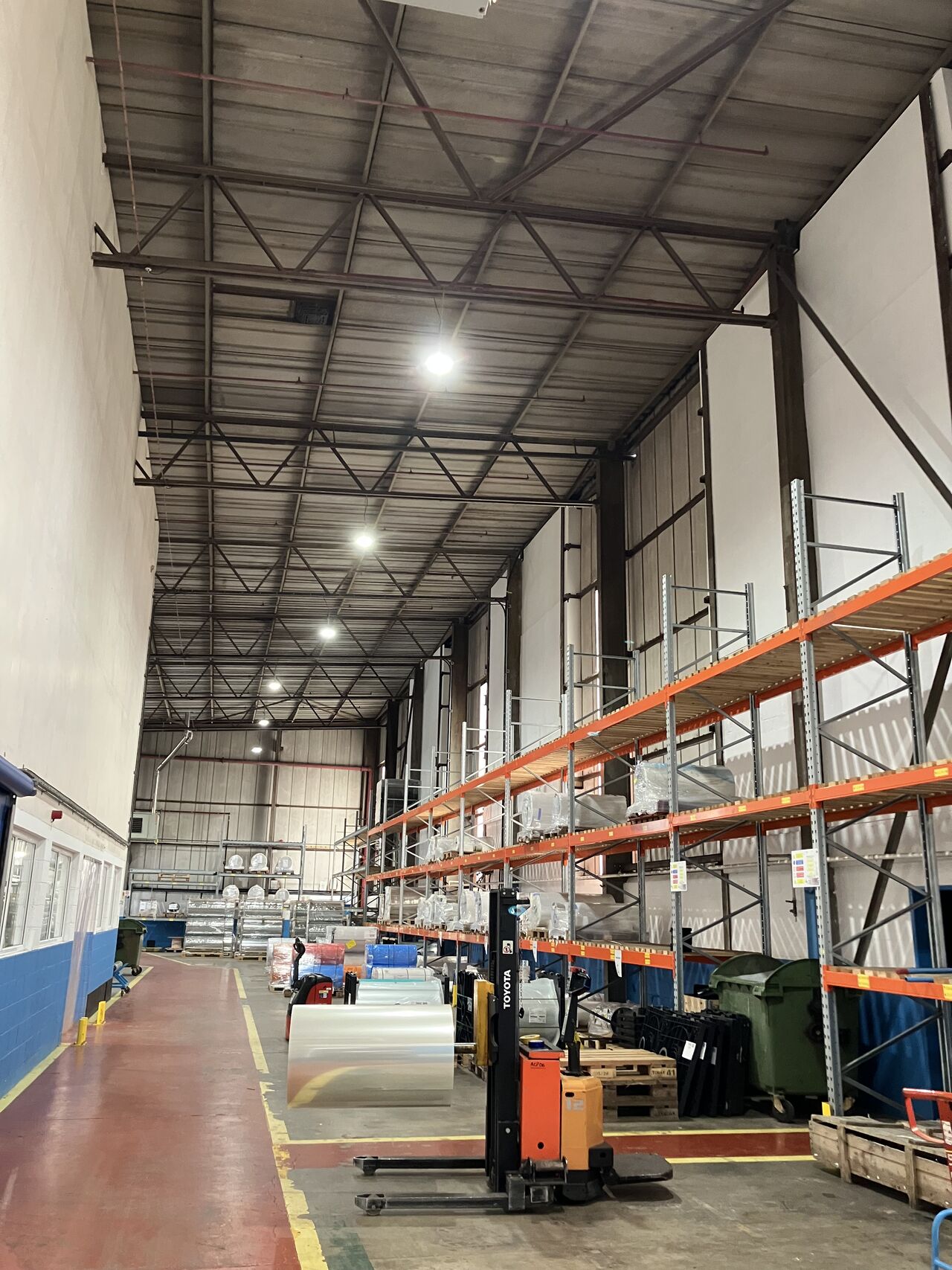
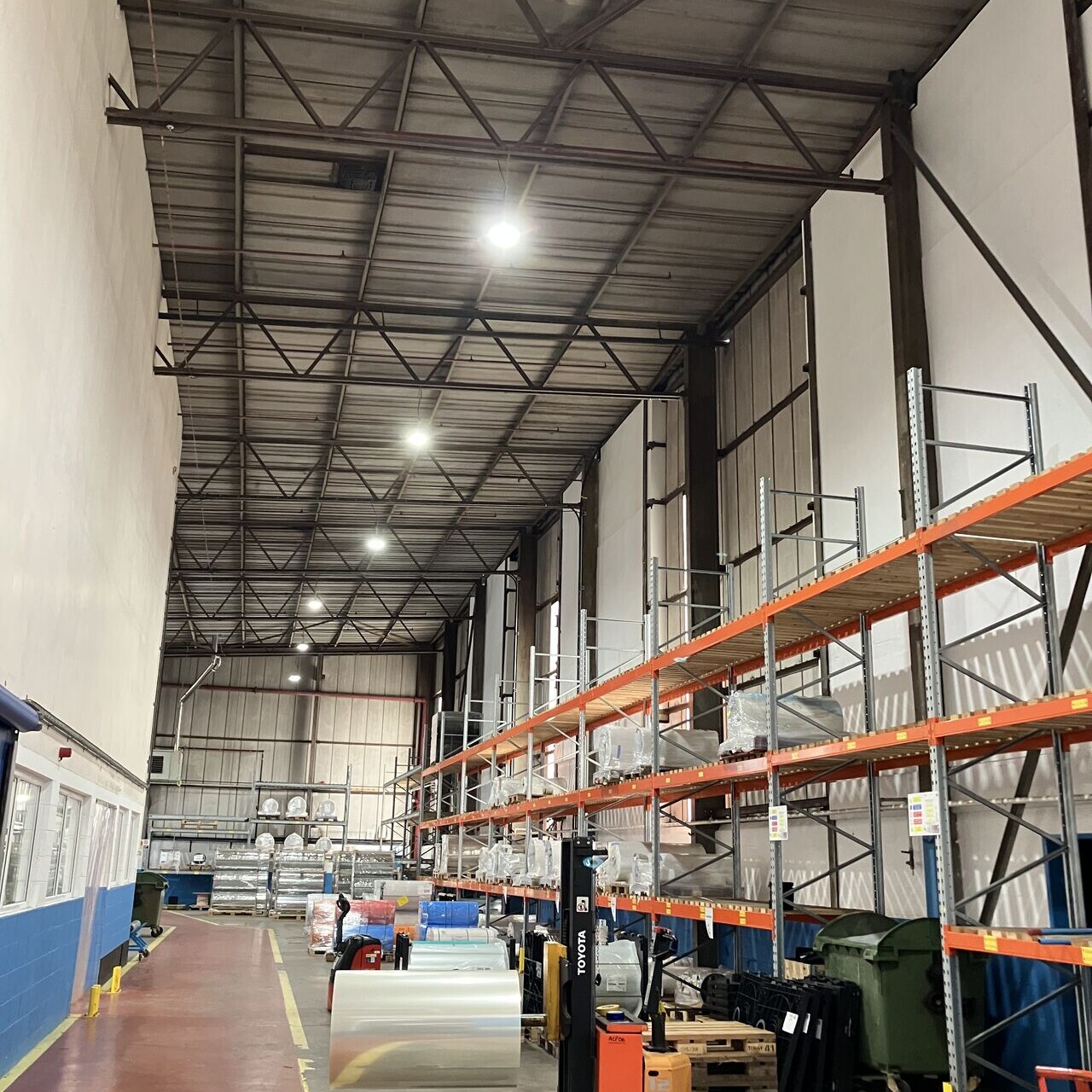
Heat stratification is the primary challenge in any high-bay space. Warm air rises naturally and accumulates near the roof, well away from the people and processes that need it. Unit heaters are specifically engineered to overcome this; the powerful axial fan on a CiRRUS unit heater projects warm air at high velocity across up to 27 metres, breaking up stratification layers and driving warmth down to floor level.
Fan convectors recirculate air within a defined zone. In a standard commercial room with a ceiling height of 2.5 to 3 metres, this works well. In a warehouse with a ceiling height of 6, 8, or 10 metres, the short throw and lower air momentum of a fan convector means it will struggle to overcome stratification, and a significant proportion of heat output will be lost to the roof void.
The exception: Fan convectors are a strong choice for welfare areas, offices, reception spaces, or mezzanine levels within a warehouse building, anywhere with a lower ceiling height and a requirement for comfort heating in an occupied zone. In these cases, a Belgravia fan convector will outperform a unit heater on both comfort and aesthetics.
What About Heat Loss at Loading Bays?
Both unit heaters and fan convectors address the temperature of the air within the building. Neither addresses the root cause of heat loss in warehouses with active loading bays: the exchange of internal and external air every time a roller shutter door opens.
In buildings with regular vehicle or forklift traffic, this can happen dozens of times a day. The most effective way to reduce this heat loss is an industrial air curtain installed across the doorway opening. SPC’s iForce Industrial Air Curtain protects openings up to six metres in height and is available in ambient, LTHW, and electric versions.
Pairing a CiRRUS Unit Heater with an iForce Air Curtain at each loading bay door is the most energy-efficient approach for most warehouse heating projects.

Can These Systems Work with Heat Pumps?
Yes, both can with the right coil specification.
The CiRRUS unit heater can be specified with coil configurations suited to LTHW systems operating at the lower flow temperatures typical of air source and ground source heat pumps. Output will vary depending on coil row count and airflow, so it is important to confirm the specification with SPC’s technical team for heat pump-connected installations.
The Belgravia Fan Convector range includes enhanced coil options specifically designed for low temperature heating systems, making them well suited to heat pump applications in commercial environments.
Frequently Asked Questions
Fan convectors are designed for commercial environments with ceiling heights up to approximately 3.5 metres. In high-bay warehouses, the short air throw and lower fan momentum mean they are unlikely to overcome heat stratification effectively. Unit heaters are the more appropriate choice for the main warehouse space. Fan convectors remain a good option for offices, welfare areas, or mezzanine spaces within the same building.
Both use a fan to circulate air over a heat exchanger, but unit heaters are built for industrial environments – they have more powerful fans, longer air throw, and are designed for mounting at height in large spaces. Fan convectors are designed for comfort heating in commercial rooms, with a focus on quiet operation, aesthetics, and the option to provide cooling as well as heating.
SPC’s CiRRUS unit heater have a throw of up to 27 metres at high speed, making it suitable for large warehouse bays and open industrial spaces. Fan convectors are designed for room recirculation rather than long-distance throw.
Yes, CiRRUS unit heaters can be specified with LTHW coil configurations suited to heat pump systems. SPC’s technical team can advise on coil row count and flow temperature requirements for your specific installation.
A combination of unit heaters for the main space and industrial air curtains at loading bay doors is the most energy-efficient approach. The unit heaters maintain temperature across the floor area; the air curtains reduce heat loss every time a door opens.
Talk to SPC About Your Warehouse Heating Project
SPC has been manufacturing heating and cooling products for industrial and commercial environments for over 50 years. Whether you are specifying a new warehouse heating system, replacing ageing equipment, or looking to improve efficiency on an existing installation, our technical team can advise on product selection, sizing, and system configuration.

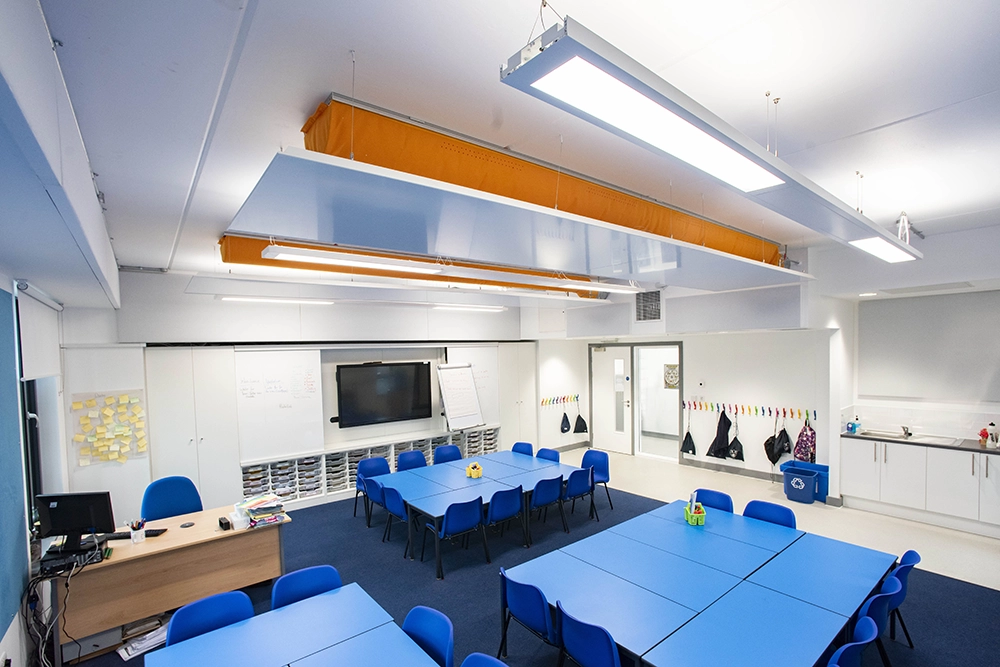
Why Radiant Panels Are Specified for Schools and Commercial Buildings
In buildings where every square metre of usable space matters, classrooms, open-plan offices, heritage spaces, radiant heating panels offer something conventional heating systems cannot: warmth delivered directly from the ceiling, with no intrusion on floor space, wall surfaces, or room layout. SPC’s Thermatile radiant panel range integrates directly into standard suspended ceiling grids, making it a practical and increasingly popular choice for specifiers working on school refurbishments, commercial fit-outs, and sensitive heritage buildings.
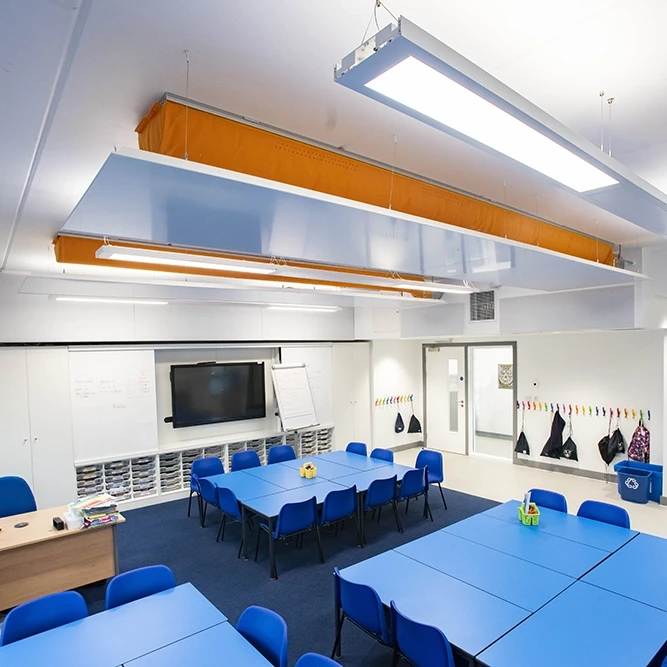
Why Do Specifiers Choose Ceiling-Mounted Radiant Panels?
When specifying heating for occupied buildings, floor and wall space is rarely a neutral variable. In a classroom, wall-mounted heating systems compete with display boards, whiteboards, and furniture arrangements. In open-plan offices, floor-level or perimeter systems can disrupt desk layouts and cable management. In heritage buildings, any visible pipework or casings must be carefully managed.
Traditional radiators consume the very wall space that architects, interior designers, and building users need for other purposes. Ceiling-mounted radiant panels sidestep this problem entirely. Installed flush with (or integrated directly into) a suspended ceiling grid, the Thermatile range occupies zero usable floor or wall space while delivering comfortable, silent warmth to the occupants and surfaces below.
This is not simply a spatial benefit. It also simplifies room design, reduces the risk of accidental contact with heating surfaces, and eliminates the air circulation that conventional convective systems create.
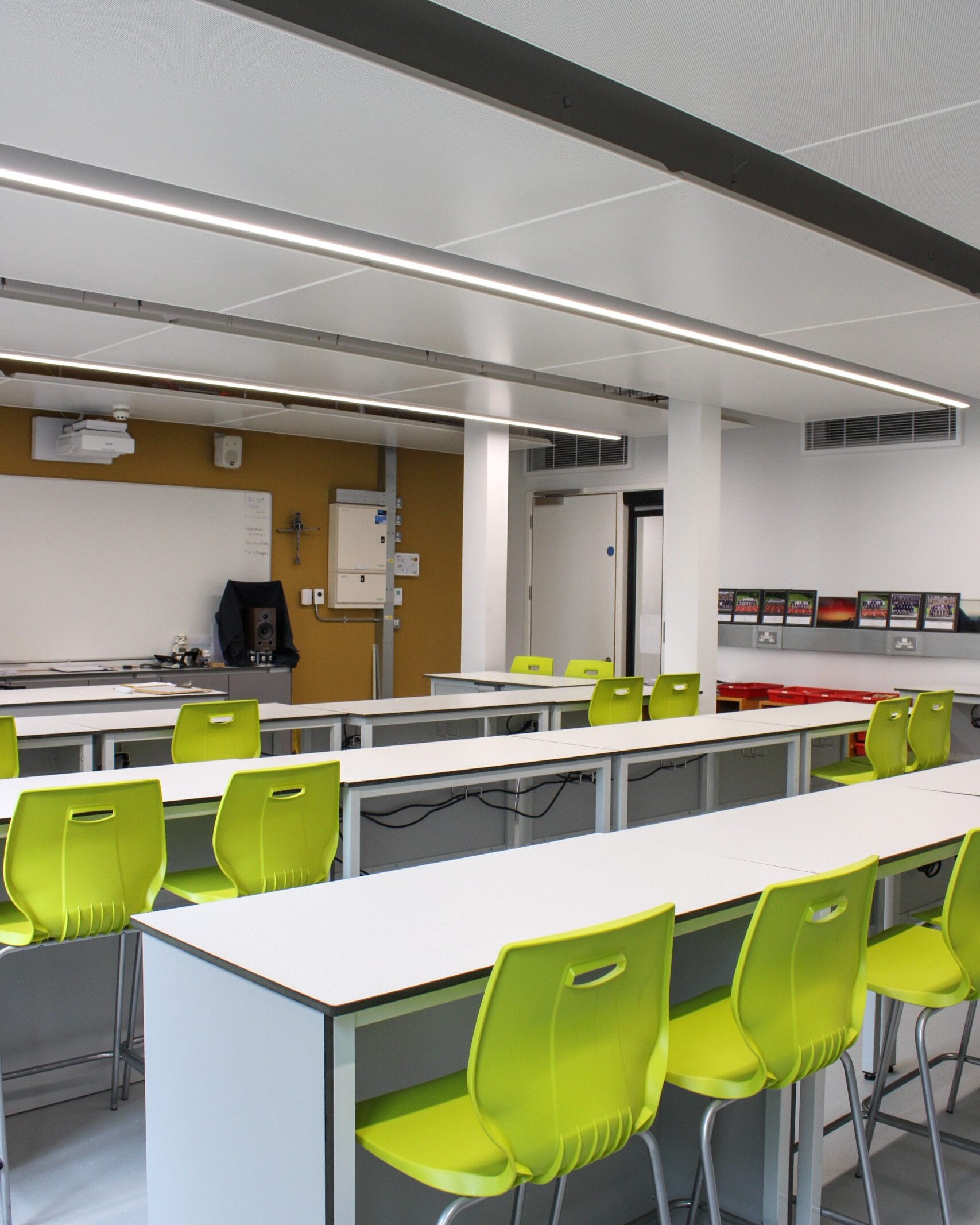
Radiant Panels in Education Environments
Schools are one of the most demanding environments for heating specification. Systems must meet low surface temperature (LST) requirements to protect pupils, operate quietly to avoid disruption, and be practical to maintain during short holiday windows.
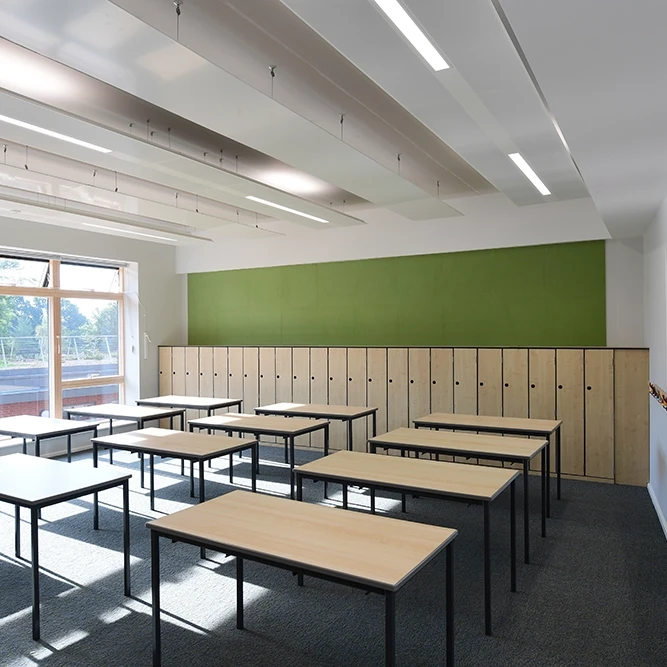
Classrooms and teaching spaces benefit from ceiling tile integration in two ways. The Thermatile panels drop directly into standard 600 x 600mm or 1200 x 600mm suspended ceiling grids, requiring no additional structural work and leaving classroom walls entirely free. Because radiant panels transfer heat directly to occupants and surfaces without forcing air movement, they do not circulate dust or airborne particles, a meaningful consideration in spaces shared by large numbers of children.
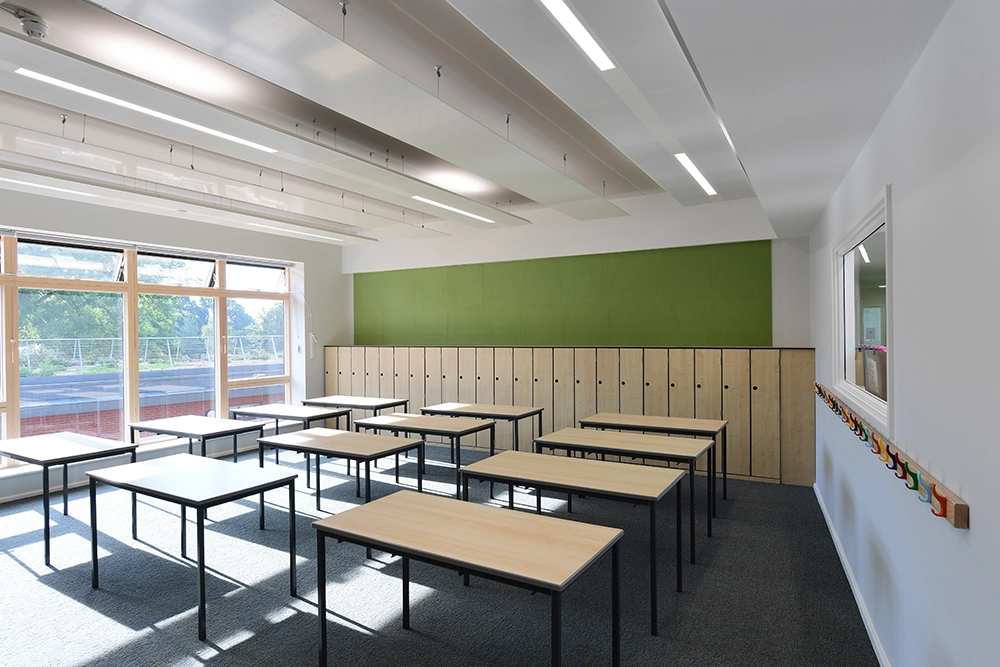
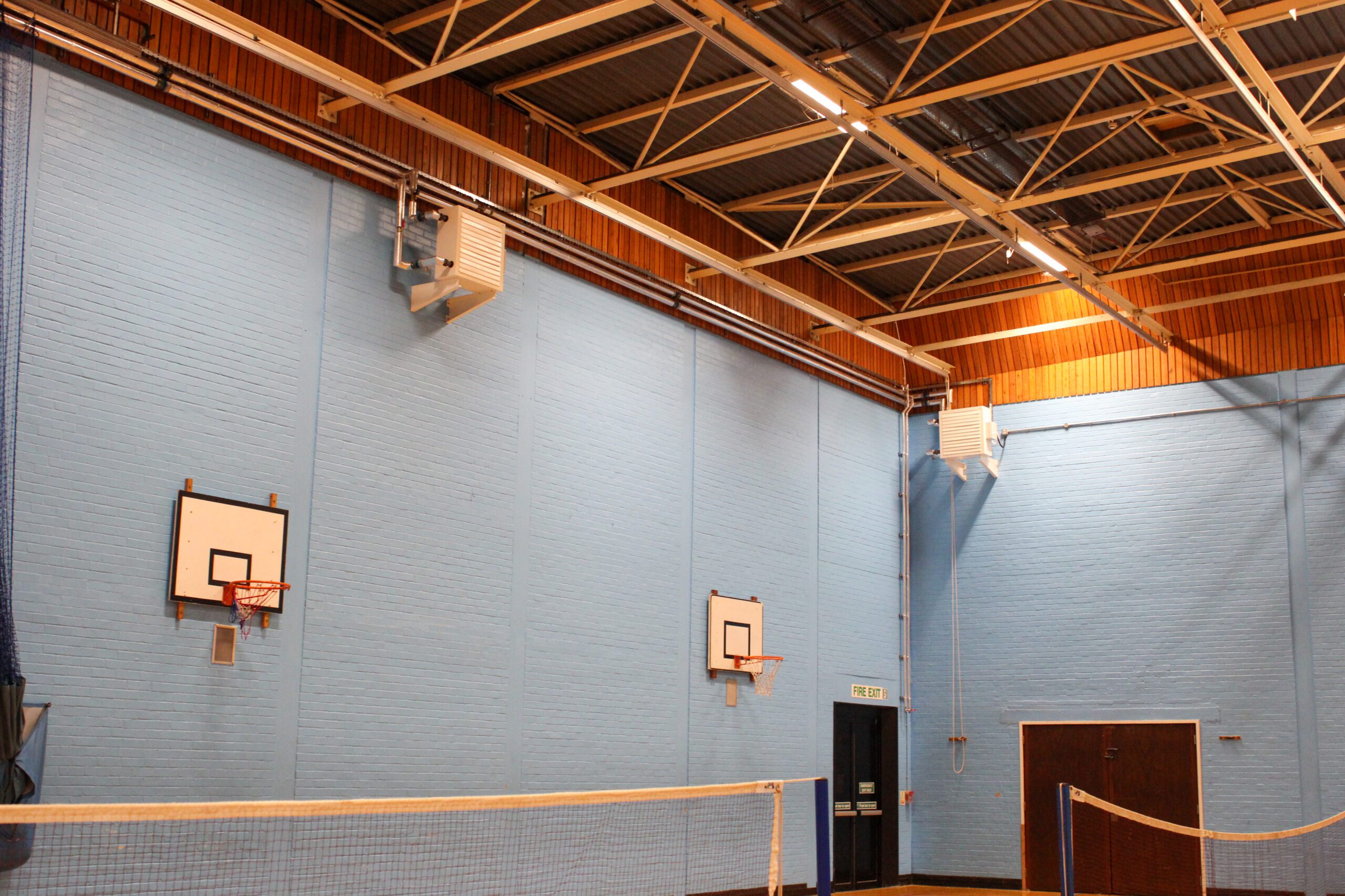
Sports halls present a different challenge: high ceilings, large open volumes, and the constant risk of ball impact. Our radiant panels can be fitted with a ball guard protection, ensuring the panels are protected from impact while preventing sports equipment, such as balls or shuttlecocks, from becoming trapped above the units. Our industrial radiant panel is also compatible with low-temperature heating systems, making it suitable for sports halls where heat pump integration is part of a broader decarbonisation strategy.
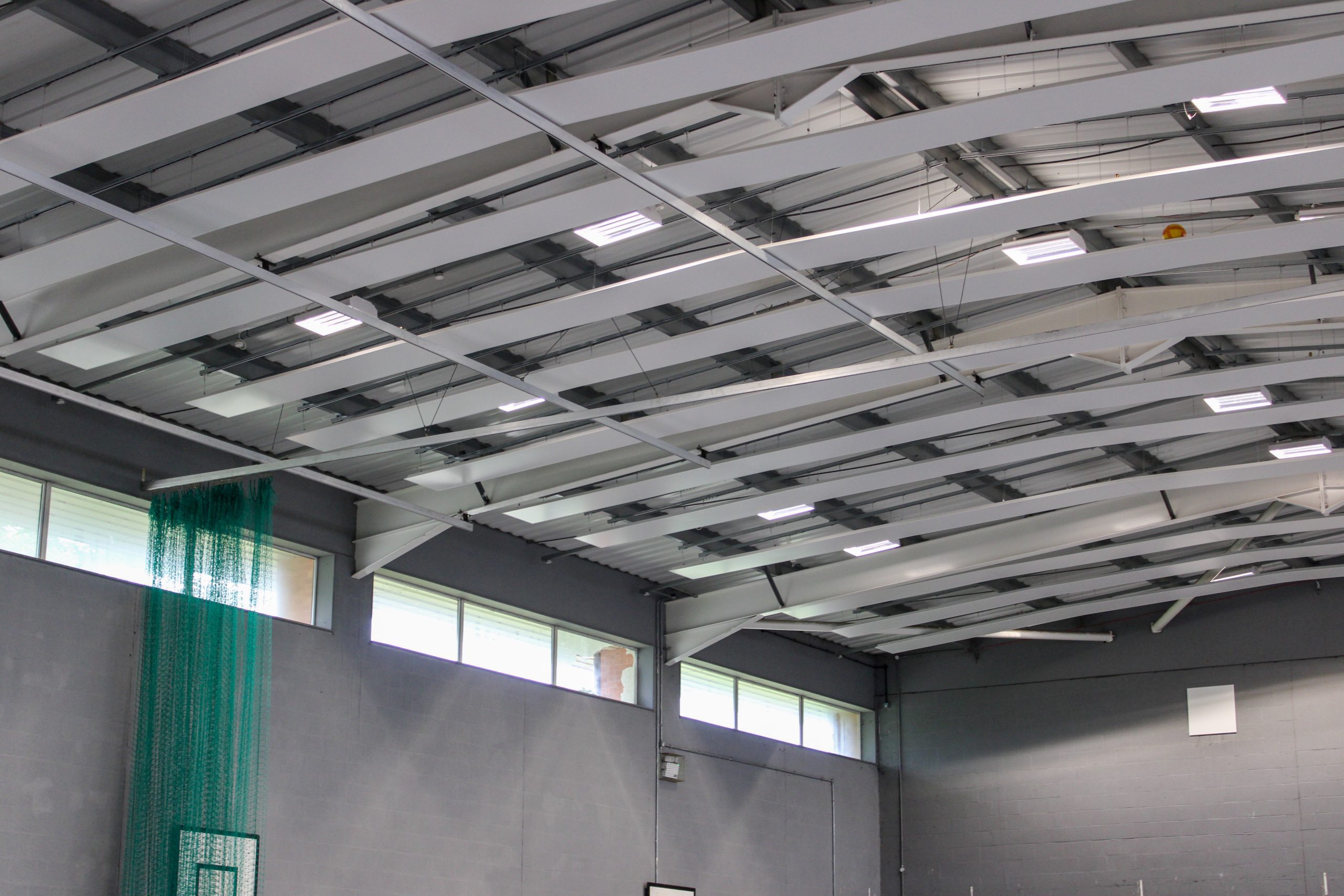
Corridors and assembly halls are well suited to free-hanging or plasterboard-mounted radiant panels where no suspended ceiling grid is present. The result is a clean, low-profile installation that maintains the aesthetic of a shared school space.
For school projects funded through the Salix Finance scheme or the Condition Improvement Fund (CIF), radiant panels have an additional advantage: heat pump compatibility.
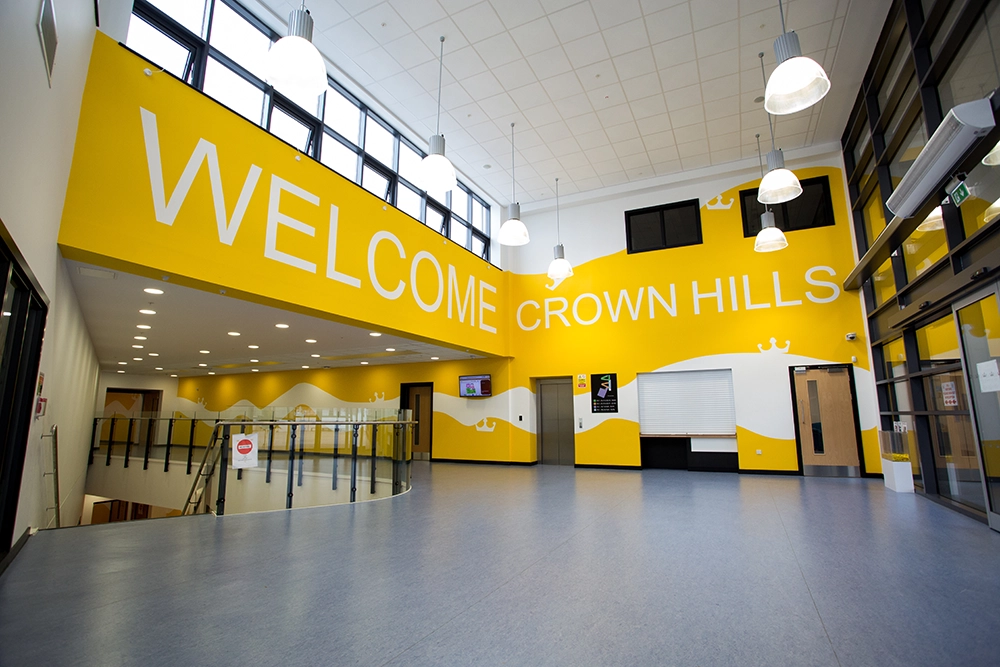
Radiant Panels in Commercial Environments
The same space-efficiency benefits that make radiant panels attractive in schools translate directly into commercial applications, often with an even stronger business case.
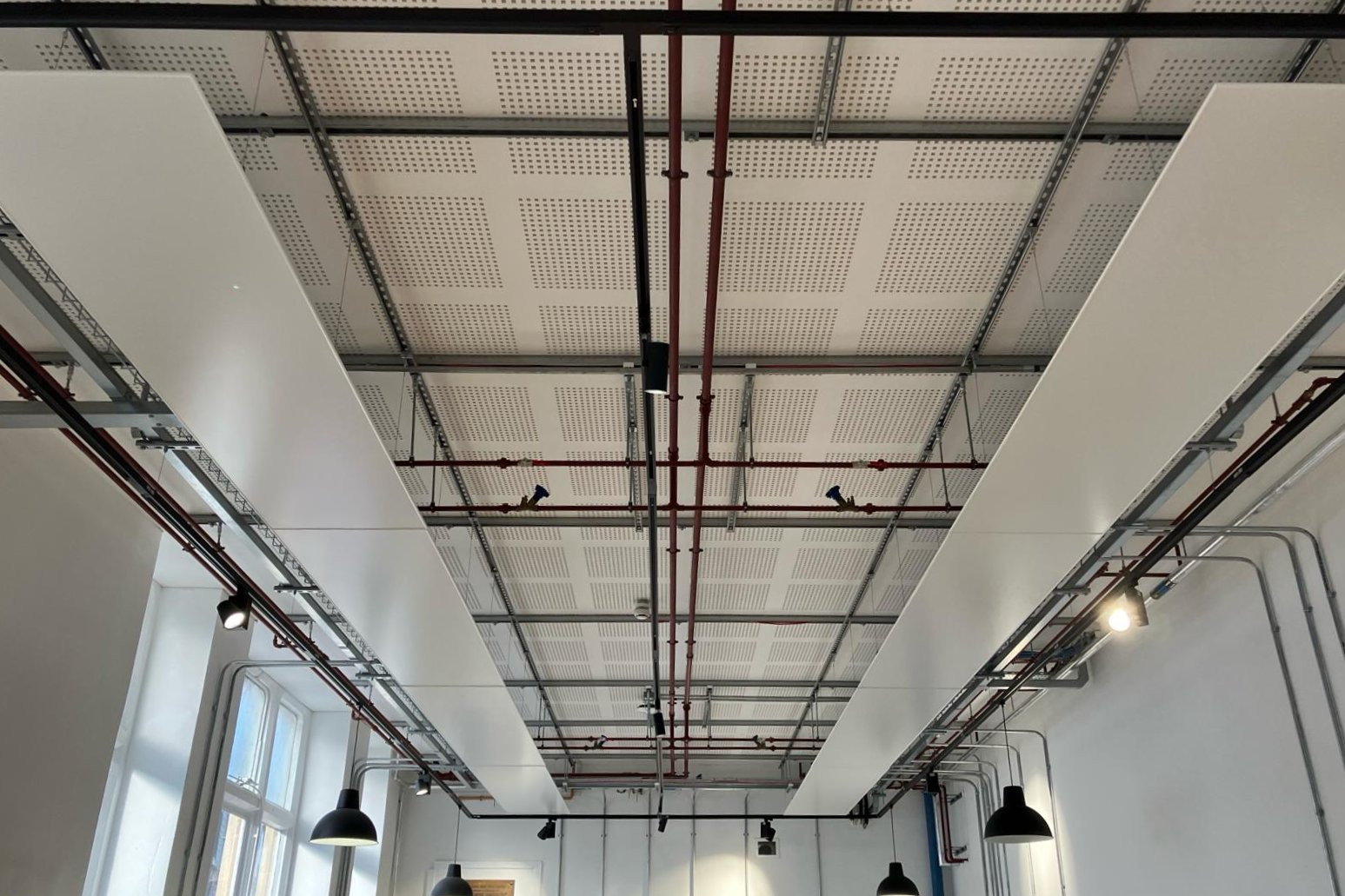
Open-plan offices increasingly use suspended ceiling systems as standard, which makes Thermatile integration straightforward. Panels can be specified in the same grid as lighting and ventilation components, creating a clean and coordinated ceiling plane. At 45–50°C flow temperatures, the Thermatile range operates efficiently with modern heat pump systems, supporting net zero commitments without requiring a complete building services overhaul.
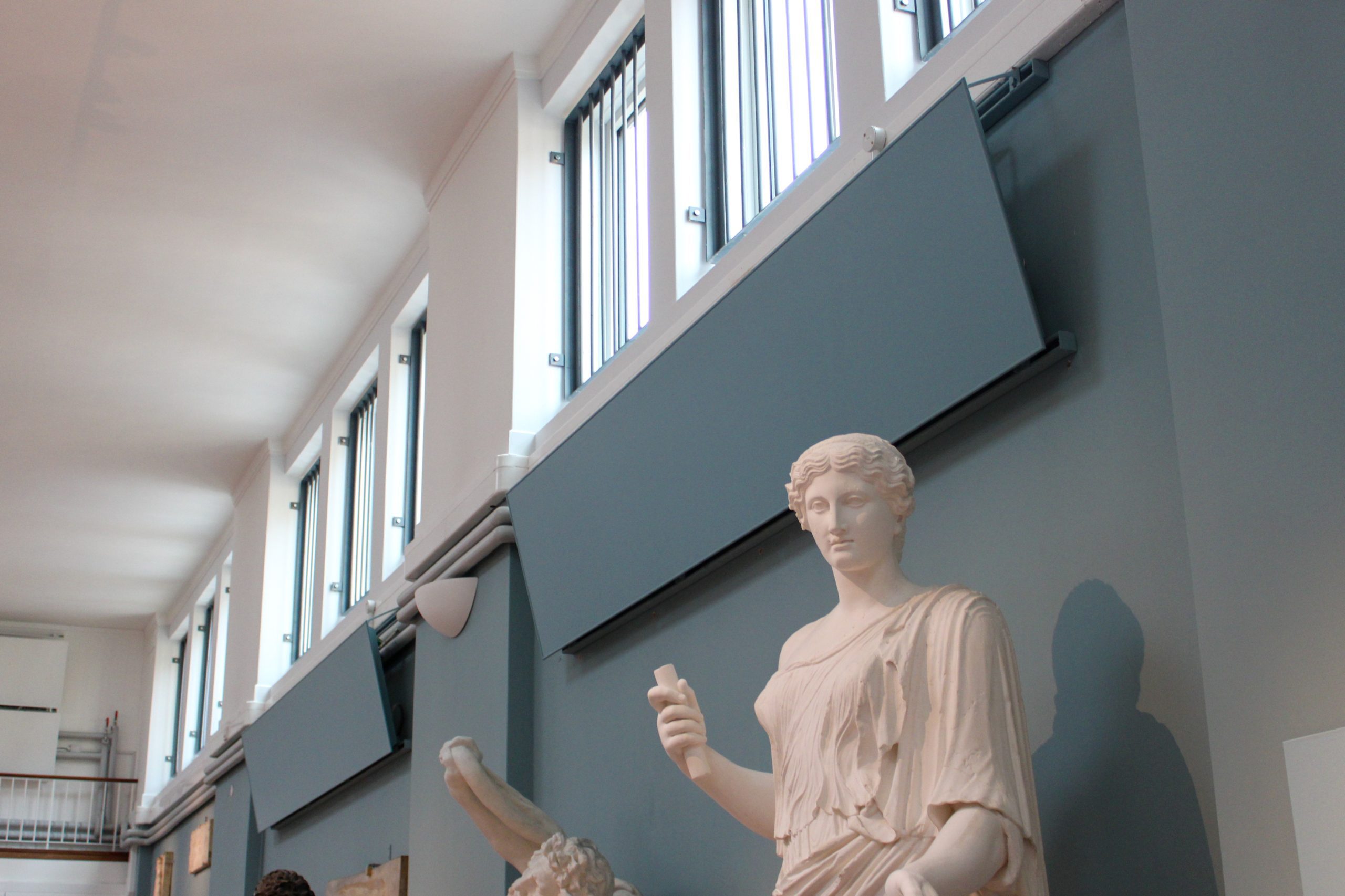
Museums and heritage buildings place particularly stringent demands on heating systems. Visible pipework, wall-mounted casings, or floor penetrations are rarely acceptable in listed or historically sensitive spaces. Radiant panels, whether integrated into an existing ceiling grid or concealed within plasterboard, offer a discreet solution that delivers consistent background warmth without affecting exhibits or original fabric. SPC has supplied Thermatile panels for heritage projects, including the Ashmolean Museum in Oxford.
Libraries and reading rooms benefit from the silent operation of radiant heating. With no fans and no air movement, Thermatile panels create no background noise, an important consideration in spaces where acoustic comfort is a stated design requirement.
What Are the Differences Between the Thermatile TEN, TWELVE, and Electric Panels?
SPC manufactures the Thermatile range at its facility in Leicester. The range covers three main configurations:
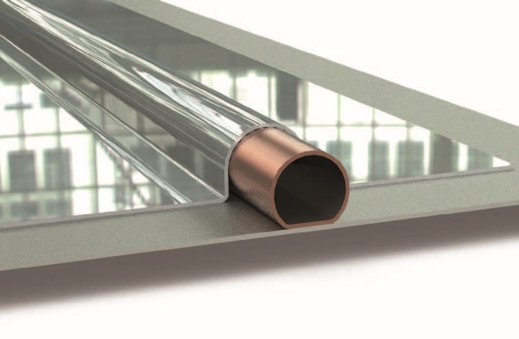
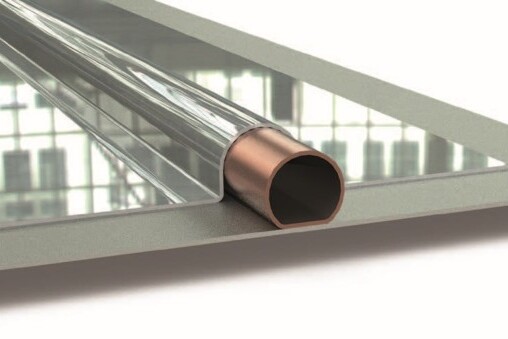
Thermatile TEN panels are designed for suspended ceiling tile applications. Each panel is 600mm wide and available in lengths up to 3,600mm for a single unit. The D-Tube technology, a flattened copper tube profile that maintains 360° contact with the aluminium panel, maximises heat transfer and ensures even surface temperatures across the panel face.
Thermatile TWELVE panels use modular connections to form continuous runs of up to 70 metres. This makes them particularly suitable for large-area applications such as open-plan offices or school halls, where a single continuous system is more practical than multiple individual units.
Thermatile Electric panels are available for buildings without an LPHW system. At 250W per 600 x 600mm panel and 500W per 1200 x 600mm panel, they are well suited to retrofit projects, listed buildings where pipework installation would be disruptive, or individual rooms that require supplementary heat.
All water-based Thermatile panels are compatible with chilled water systems as well as LPHW, making them a viable solution for year-round comfort in office environments where summer cooling is also a requirement.
Heat Pump Compatibility and Low-Temperature Performance
One of the strongest arguments for specifying radiant panels in refurbishment projects is their compatibility with heat pump systems.
Heat pumps deliver maximum efficiency at low flow temperatures, typically in the range of 45–55°C. Conventional radiators specified for higher-temperature systems often underperform when connected to a heat pump operating at these temperatures, requiring either panel upgrades or system compromises.
Radiant panels are inherently well-matched to low-temperature operation. Because radiant panels transfer heat directly through radiation rather than convection, they achieve comfortable room temperatures at flow temperatures that heat pumps deliver efficiently. The Thermatile range is designed to operate effectively at 45–50°C flow temperature, which aligns with the output range of air source and ground source heat pumps commonly specified for commercial and educational buildings in the UK.
For school projects applying for Salix Finance funding or CIF grants, both of which can include heat pump installation, specifying a radiant panel system removes a potential barrier to whole-building decarbonisation. The heating emitter and the heat source are engineered to work together from the outset.
CIBSE Guide B provides additional guidance on low-temperature heating system design for specifiers working on heat pump-integrated projects: Guide B1 Heating (2016)
Which Radiant Panel Mounting Option Is Right for My Building?
SPC offers five main installation configurations for Thermatile panels, each suited to different building types and refurbishment constraints:
- Ceiling tile (drop-in T-bar) — the standard option for buildings with a suspended ceiling grid. Panels replace existing ceiling tiles with no structural modification. Suited to offices, schools with modern classroom ceilings, and retail or commercial spaces.
- Plasterboard frame (concealed installation) — panels are set into a plasterboard ceiling, with no visible grid. Suited to heritage buildings, high-specification commercial interiors, and spaces where a flush finish is architecturally required.
- Tile replacement (concealed grid) — similar to drop-in, but uses a concealed grid system for a cleaner visual result. Suited to premium commercial environments.
- Free-hanging — panels are suspended from the structural soffit without a ceiling grid. Suited to sports halls, industrial spaces with high ceilings, or buildings without a suspended ceiling infrastructure.
- Wall-mounted (angled) — panels are fixed to walls and can be angled to direct radiant warmth into the occupied zone. Suited to museums and heritage sites (such as the Ashmolean Museum) where ceiling installation is restricted or architectural features need to be preserved.
Frequently Asked Questions
Yes. Radiant panels are well suited to educational environments for several reasons: they install into standard suspended ceiling grids without occupying wall space, they operate silently with no air movement, and they do not circulate airborne particles. SPC’s Thermatile range is compatible with low-temperature hot water systems, including heat pumps, which aligns with many schools’ decarbonisation requirements under Salix Finance or CIF-funded refurbishment programmes.
Radiant panels are one of the most compatible heating emitter types for heat pump systems. They operate efficiently at flow temperatures of 45–50°C, which is within the normal operating range of air source and ground source heat pumps. Unlike oversized radiators specified for higher-temperature boiler systems, radiant panels do not require derating or oversizing when connected to a heat pump, they are designed for low-temperature operation.
Traditional radiators are wall-mounted and occupy surface area that would otherwise be available for furniture, displays, or fixtures. In a classroom, this means competing with display boards and whiteboards. In an office, it means managing perimeter constraints. Ceiling-mounted radiant panels eliminate this entirely; they are installed above the occupied space and occupy no usable floor or wall area. For buildings where space efficiency is a design priority, this is a meaningful specification advantage.
The Thermatile TEN is designed for individual ceiling tile applications, available in panel lengths up to 3,600mm. The Thermatile TWELVE uses a modular connection system that allows continuous runs of up to 70 metres, making it better suited to large open areas such as office floors, sports halls, or assembly spaces where a single connected system is more practical and easier to balance hydraulically.
Specify Radiant Panels with SPC
SPC has manufactured heating and cooling products in Leicester for over 50 years. The Thermatile range is produced to ISO 9001:2015 quality standards, with outputs independently tested to EN 14037.
For specification support, product selection assistance, or to request a sample or datasheet, contact the SPC team:
Are CiRRUS Unit Heaters the Right Choice for Your Industrial Building?
Industrial unit heaters are one of the most practical and cost-effective heating solutions available for warehouses, factories, workshops, and distribution centres. SPC’s CiRRUS range covers outputs up to 50.9kW from a wall or ceiling-mounted position, with no floor space lost and full BMS integration capability, making them a strong specification choice for both new-build industrial projects and retrofit upgrades.
But not every industrial building has the same heating challenge. A high-bay distribution centre, a busy vehicle workshop, and a factory with a mezzanine floor all have different ceiling heights, airflow patterns, occupancy types, and control requirements. Specifying the wrong unit heater (or the wrong type of heating altogether) means wasted energy, uncomfortable working conditions, and a system that never quite performs as expected.
This guide is designed to help specifiers, contractors, and building owners work through the key questions before choosing CiRRUS Unit Heaters, including the scenarios where a different product may actually be the better fit.
What Is an Industrial Unit Heater and How Does It Work?
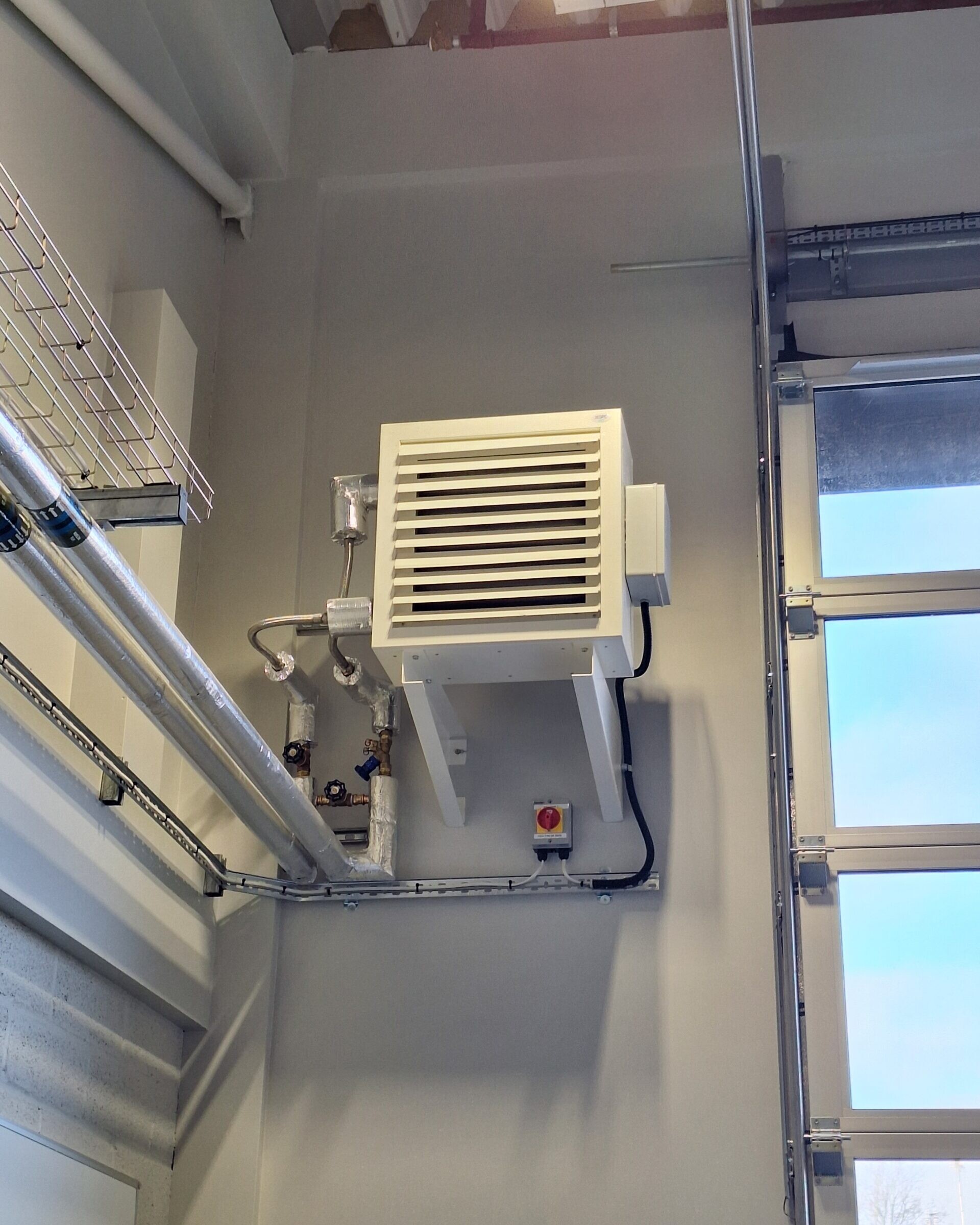
An industrial unit heater combines a heat exchanger, fed by a hot water circuit or electric elements, with a powerful axial fan that distributes warm air across a large area. Unlike a boiler or radiant system, the heat is delivered convectively: the fan draws in cool room air, passes it over the heated exchanger, and throws warm air out into the space.
This makes unit heaters particularly effective where:
- Fast heat-up times are required at the start of a shift
- Heating is intermittent rather than continuous
- Large floor areas need to be covered from a small number of mounting points
- Installation simplicity and low maintenance are priorities
What Makes CiRRUS Different from a Standard Unit Heater
Unit heaters as a product category are well established in industrial heating. What separates the CiRRUS range from a generic warm air unit is the level of control and flexibility built into the specification.
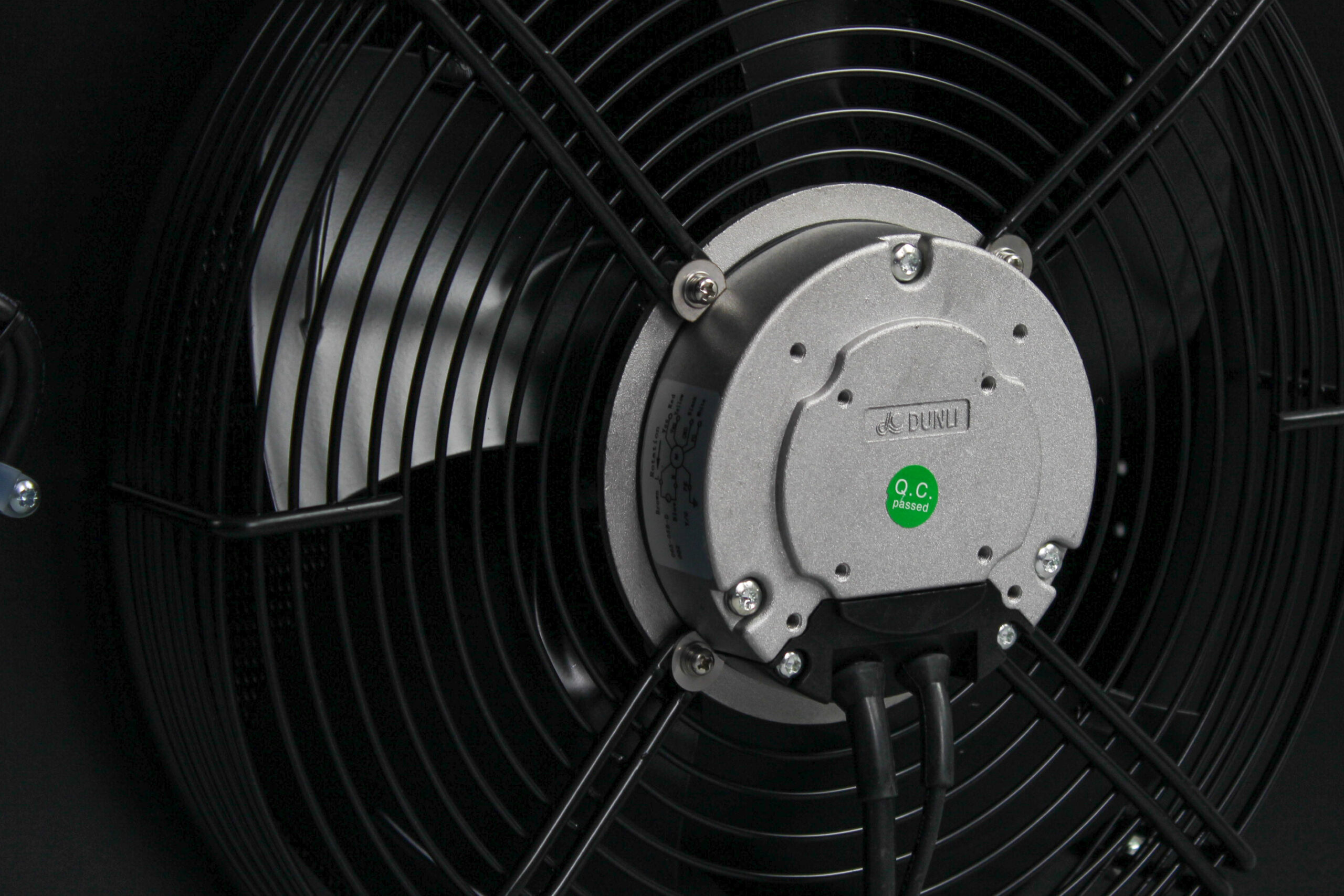
EC motor with 0-10V control
The CiRRUS uses an electronically commutated (EC) axial fan that is continuously variable via a 0-10V signal. This means fan speed, and therefore air throw, can be precisely matched to the mounting height, rather than being locked to fixed speed settings. This matters in practice: mounting a unit too high on a fixed-speed motor means the heated air loses momentum before it reaches the occupied zone. The EC motor removes that constraint.
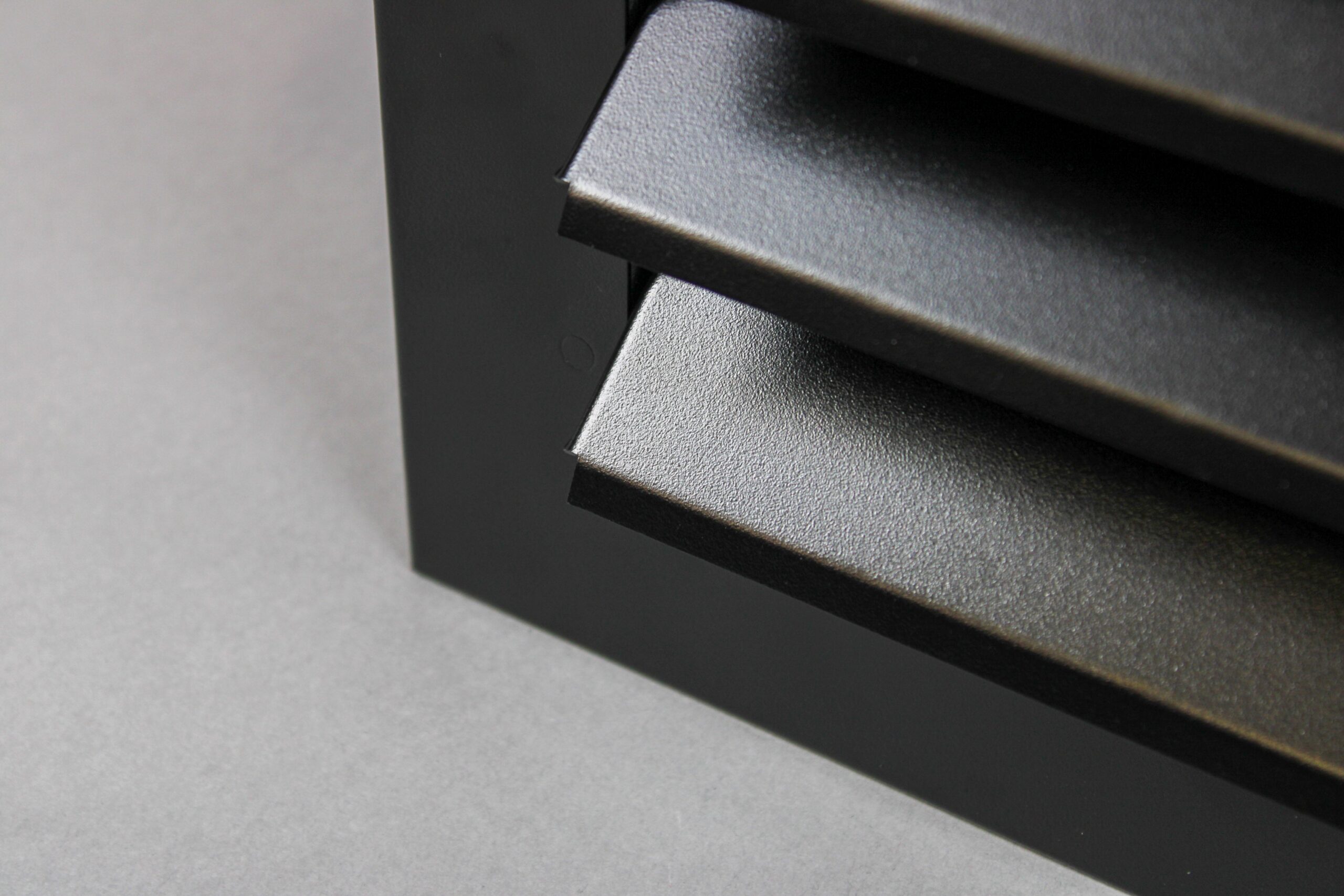
Adjustable louvre blades
The discharge louvres on horizontal units are manually adjustable, allowing the installer to direct airflow at the correct angle for the space. In a deep-plan warehouse this can make the difference between even coverage and cold spots.
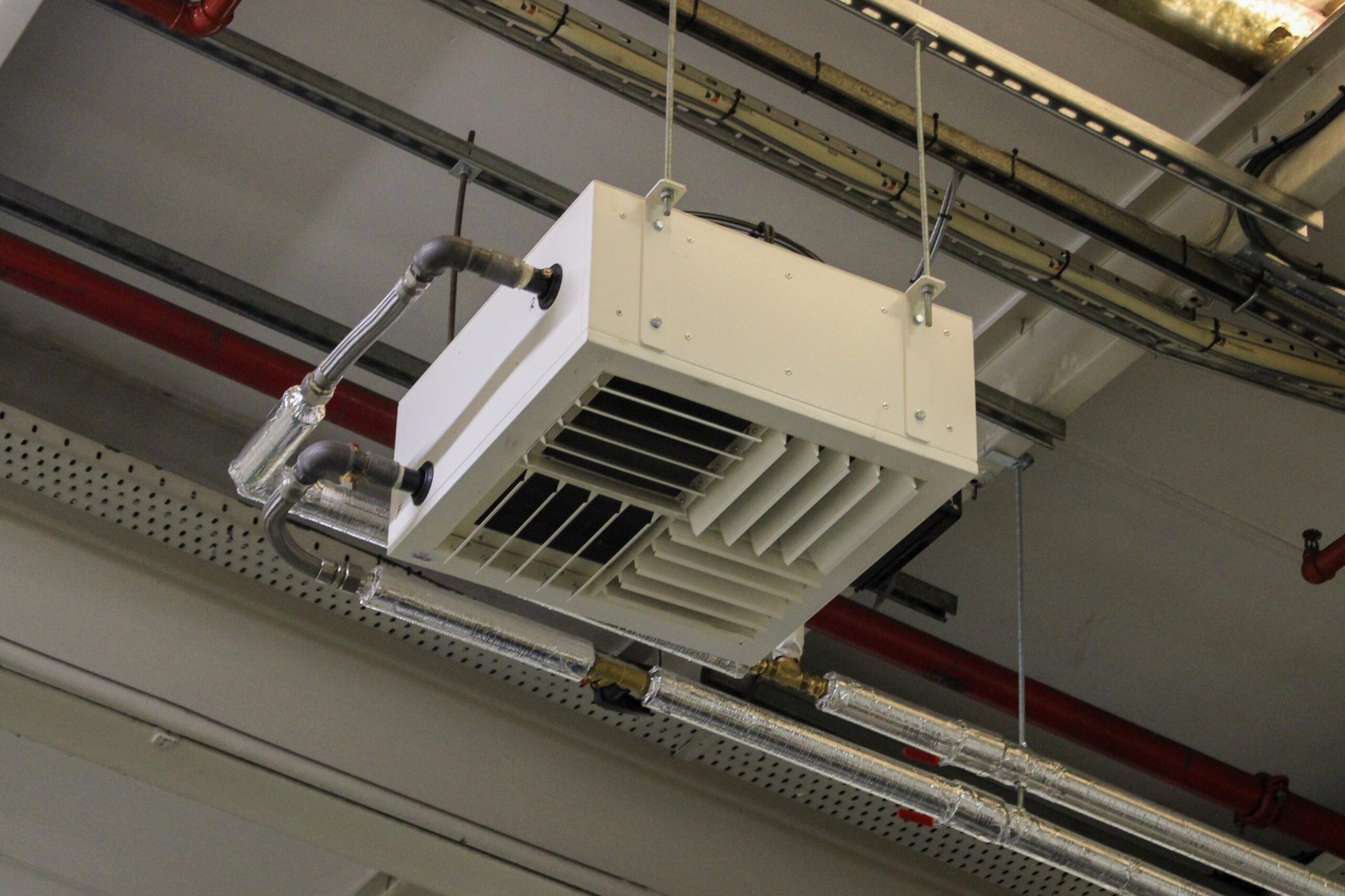
Horizontal and vertical configurations
Horizontal units are wall-mounted and direct heated air across the space via angled louvres. Vertical units are ceiling-suspended and discharge directly downward, with a 4-way diffuser option available for wider coverage. The choice depends on ceiling structure, available wall space, and the airflow pattern the space requires.
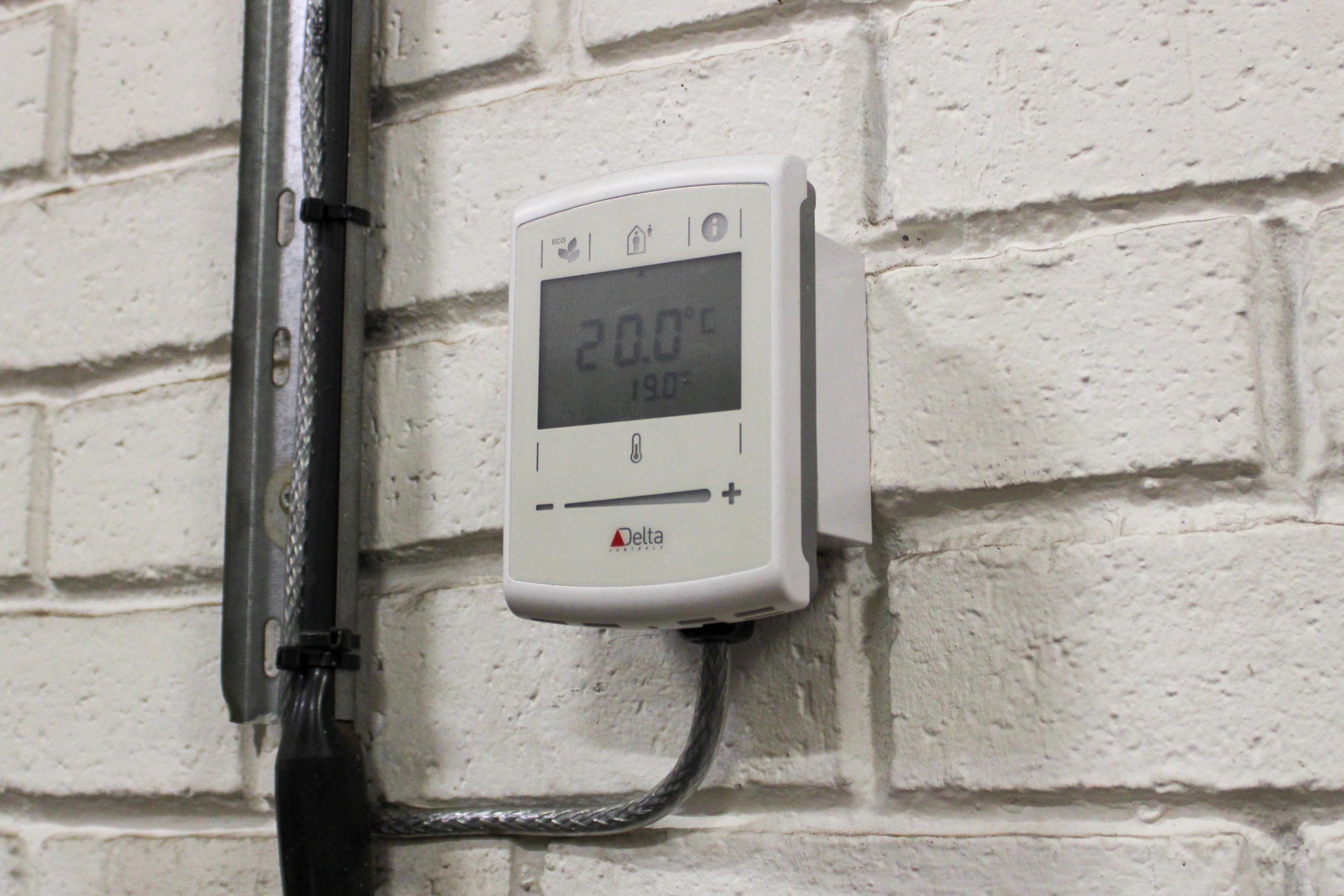
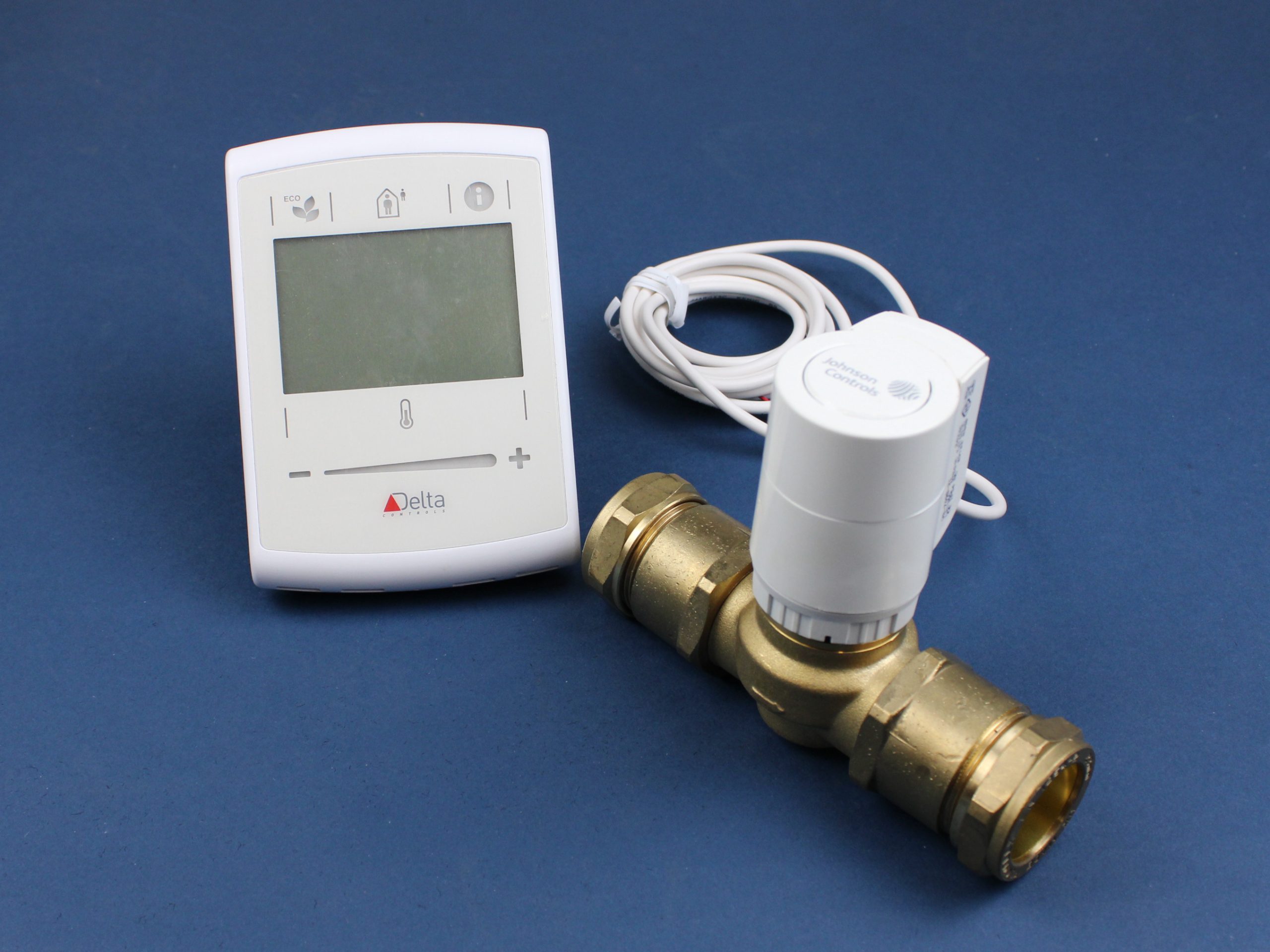
Delta Waterside Controller compatibility
The CiRRUS is designed to work with SPC’s Delta Waterside Controller, which modulates the hot water flow to the coil rather than cycling fan speed to control output. More on this in the control section below.
BMS and BACnet integration
The unit can be supplied for manual, automatic, or full BMS control with BACnet compatibility. For larger facilities or multi-zone installations, this allows CiRRUS units to be integrated into a building-wide energy management strategy.

What Output Do CiRRUS Unit Heaters Deliver?
The CiRRUS range spans four sizes, Ci5 to Ci8, with water-heated models available in multiple coil configurations.
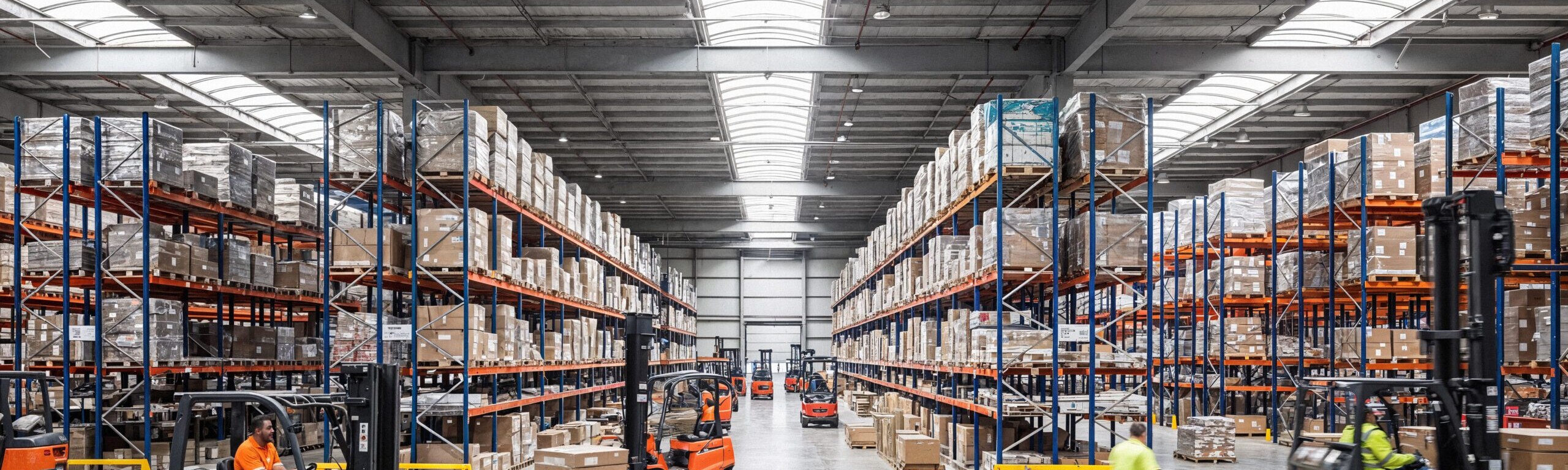
The largest water-heated model, the Ci8 with a 3-row coil at 82/71°C, delivers up to 50.9kW of thermal output with a throw distance of 27 metres and coverage of up to 25 x 25 metres per unit. A single Ci8 is capable of heating a significant floor area, reducing the number of units, pipework runs, and commissioning points required.
EC axial fans with sealed-for-life bearings keep running costs and maintenance requirements low across the range.
Where Does CiRRUS Excel?
The CiRRUS range has been engineered for industrial and heavy commercial environments. These are the applications where it performs best:
High-bay warehouses (6m+ ceiling height)
The EC motor’s variable speed control is particularly valuable at height. Units can be set to deliver the airflow momentum needed to push warm air down to floor level without creating excessive draught at the occupied zone. The Ci8’s 27m throw makes it suitable for very high-bay facilities.
Factories with open floor plans
Large, unobstructed floor areas allow the horizontal throw from wall-mounted units to cover significant distances. The adjustable louvres help direct heat toward workstations or high-activity zones.
Sports halls
High ceilings, large volumes, and intermittent occupancy make unit heaters a practical choice. The ability to zone heating and control fan speed means the space can be brought up to temperature quickly before use.
Loading bay areas and back-of-house retail spaces
Applications where robust, low-maintenance heating is required and noise is not a primary concern.
Distribution centres with frequent door openings
Loading bay doors create significant infiltration. Unit heaters respond quickly to temperature drops and can be zoned to concentrate heating near doorways, compensating for heat loss without heating the entire building.
Garages and vehicle workshops
Robust steel casing and industrial-grade components handle the environment well. Vertical ceiling-suspended units work particularly effectively in workshop bays, delivering downward airflow directly over working areas.
Where CiRRUS May Not Be the Best Fit
This is the question most product guides avoid answering. The honest answer is that CiRRUS is not the right specification for every building, and understanding the limitations saves costly mistakes.
Low-ceiling spaces (below 2.0m)
The CiRRUS range has defined minimum mounting heights. The absolute minimum across the range is 2.0m, applicable only to the Ci5 model at low fan speed. Below this height, the airflow momentum creates unacceptable draught levels. If your ceiling height is below 2.0m, the CiRRUS range is unsuitable regardless of model selection.
For spaces between 2.0m and 3.0m, the Ci5 at low speed is the only viable option – and only in non-noise-sensitive applications. The larger models require progressively greater minimum heights:
| Model | Low Speed | Medium Speed | High Speed |
| Ci5 | 2.0m | 2.5m | 2.5m |
| Ci6 | 2.5m | 2.5m | 3.0m |
| Ci7 | 2.5m | 3.0m | 3.0m |
| Ci8 | 2.5m | 3.0m | 3.5m |
Note also that wall-mounted horizontal units require a minimum clearance of 250mm from the wall at the air intake side to ensure sufficient airflow.
Noise-sensitive environments
The CiRRUS handles high airflow volumes and generates noise levels as a result. It is not suitable for offices, libraries, classrooms, or any space where occupant noise sensitivity is a primary concern. In these applications, a Belgravia Fan Convector or a radiant panel solution will be more appropriate.
Spaces requiring both heating and cooling
Unit heaters are heating-only products. If your building requires year-round temperature control, a radiant panel system such as SPC’s iTwenty Eight Industrial Radiant Panels is worth considering, as these can operate in both heating and cooling modes from a single installed product.
Spaces with very low air change requirements
In environments where air quality or contamination control is critical, the high airflow volumes from unit heaters can be counterproductive. Radiant heating, which warms surfaces and occupants directly without moving large volumes of air, may be the more appropriate specification.
Can CiRRUS Unit Heaters Work with a Heat Pump?
CiRRUS Unit Heaters are compatible with heat pump systems and low-temperature hot water (LTHW) circuits, making them a practical choice for decarbonisation projects and net zero specifications. The key is designing the system correctly from the outset.
At heat pump flow temperatures (typically 45/35°C), thermal output is lower than at conventional boiler temperatures, but SPC offers enhanced 3 or 4-row coil options specifically to address this. These maintain a sufficient leaving air temperature (ideally 30°C to 45°C) to ensure the air jet retains the momentum needed to reach the occupied zone.
In practice, a heat pump specification will require either a larger model or additional units compared with a conventional high-temperature system. A load that a Ci6 with a standard 2-row coil handles at 80/70°C may require a Ci8 with a 4-row coil at 45/35°C to meet the same demand. This is a sizing consideration, not a product limitation, and it applies equally to any convective emitter on a low-temperature circuit.
SPC can provide output selection data for specific flow temperatures and coil configurations. If you are designing for a heat pump primary plant, confirm the coil specification at project stage.
What Control Options Are Available?
CiRRUS Unit Heaters support a range of control configurations to suit different project requirements:
- Manual on/off and speed rocker switches for straightforward local control
- Automatic local thermostatic control with waterside modulating valves
- BMS integration via 0-10V signal or BACnet for full remote management and monitoring
This flexibility makes them suitable for standalone installations and for larger projects where centralised building management is required.
Why Waterside Control Outperforms Airside for Unit Heaters
Most unit heaters are controlled airside, meaning output is regulated by adjusting fan speed. When the thermostat calls for less heat, the fan slows down. This sounds logical, but it creates a practical problem: reducing fan speed reduces the throw of the unit. A unit mounted at 6m running at 30% fan speed may no longer be delivering heated air to the occupied zone at all. The heat is being generated, but it is not reaching the people who need it.
The SPC Delta Waterside Controller takes a different approach. Rather than modulating the fan, it modulates the flow of hot water through the coil using a proportional valve. The fan continues to run at the speed appropriate for the mounting height, maintaining throw and coverage. The heat output is controlled by varying the water flow rate, not the airflow.
The practical result is more consistent comfort, particularly in buildings with high ceilings where throw distance is critical. Additional benefits include:
- Proportional valve control for energy saving
- Precise thermostatic control for consistent comfort
- Master/slave configuration for multiple units
- Volt-free terminals for integration flexibility
- BACnet compatibility for BMS integration
Is There an Electric Version of the CiRRUS?
Yes. The Ci5 is the electric variant in the range, featuring self-regulating ceramic PTC heating elements and multiple overheat protection switches. It runs on 400V 3-phase power and delivers a fixed 9kW output, making it suitable for locations where a hot water circuit is not available or practical.
Key Specification Questions
Before selecting CiRRUS, work through these questions:
What is your ceiling height?
This determines which model is viable and at what fan speed. Use the minimum mounting height table above as your starting point. The recommended installation height range is 2.0 to 6.0m.
What is the nature of the space?
Industrial and heavy commercial applications are well suited to CiRRUS. Offices, classrooms, and noise-sensitive spaces are not.
Do you need heating only, or heating and cooling?
If cooling is required, consider radiant panels rather than unit heaters.
Do you need BMS integration?
CiRRUS supports BACnet and can be supplied for full BMS control. Confirm this at specification stage.
How frequently are large doors opened?
High infiltration benefits from the fast response and zonal flexibility of unit heaters. Consider whether SPC iForce Industrial Air Curtains should also be specified to reduce heat loss at doorways.
How many units are required?
For multi-unit installations, the Delta Waterside Controller’s master/slave capability allows multiple units to be controlled from a single point.
Frequently Asked Questions
The water-heated Ci8 delivers up to 50.9kW at 82/71°C with a 3-row coil configuration. Output varies by model size, coil specification, and water temperature – SPC can provide selection data for specific project conditions.
The recommended installation height range is 2.0 to 6.0 metres. Minimum heights vary by model and fan speed, the Ci8 requires a minimum of 3.5 metres at high speed, while the Ci5 can be installed as low as 2.0 metres at low speed. A minimum wall clearance of 250mm is required at the air intake side for horizontal wall-mounted units.
Horizontal units are wall-mounted and use adjustable louvre blades to direct heated air across the space at a downward angle. Vertical units are ceiling-suspended and discharge directly downward, with a 4-way diffuser available for wider coverage. Vertical units are better suited to spaces where wall mounting is not practical or where a downward airflow pattern is preferred, such as over individual workstations or vehicle bays.
EC axial fans use sealed-for-life bearings, reducing routine maintenance requirements. The main service tasks are periodic coil cleaning and checking that air intake and discharge paths remain clear. Louvres are fully adjustable and can be repositioned without specialist tools.
As a UK-manufactured product, CiRRUS unit heaters benefit from shorter lead times than imported alternatives. Contact the SPC team directly for current availability on specific models and configurations.
Ready to Specify CiRRUS for Your Project?
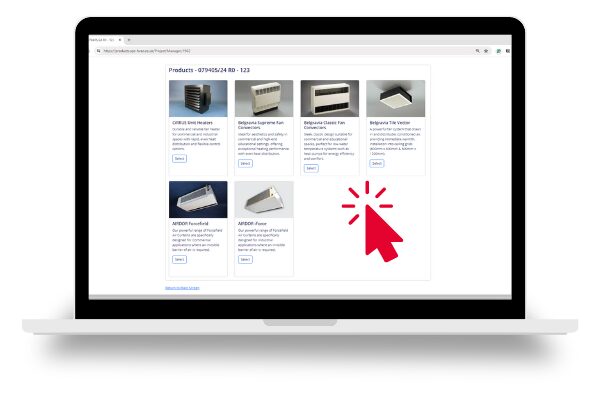
If CiRRUS is the right fit for your building, the next step is selecting the right model and configuration. SPC’s online product configurator includes the full CiRRUS range and allows you to specify units, configure outputs, and generate a project quote.
If you would prefer to speak with a member of the team directly, our Area Sales Managers cover the whole of the UK and can carry out a site survey to confirm the right specification for your project. Please fill in the form below.
If you would prefer to speak with a member of the team directly, our Area Sales Managers cover the whole of the UK and can carry out a site survey to confirm the right specification for your project. Please fill in the form below.
Do Industrial Air Curtains Work in Summer? Yes - Here's Why They're a Year-Round Specification
Yes, industrial air curtains work in summer! For temperature-controlled warehouses, food production facilities, and high-throughput logistics operations, summer is often when they earn their keep most.
Industrial air curtains are not just a cold-weather product. In warehouses, factories, food production facilities, and logistics centres, they solve a different but equally costly set of problems during summer, and specifying the right variant year-round is a decision that pays back quickly.
Why Do Warehouses and Factories Need Air Curtains in Summer?
When external temperatures rise, large industrial doorways stop being a cold draught problem and start being a heat gain, pest, and contamination problem.
High-traffic loading bays and factory entrances remain open for extended periods. Without an air barrier in place:
- Flying insects enter food production and processing environments, creating hygiene and compliance risks
- Cool, conditioned or ventilated air escapes freely, increasing energy costs
- Dust, airborne debris, and exhaust fumes infiltrate working areas
- Warm, humid external air enters temperature-controlled spaces, increasing the load on the refrigeration and cooling plant
- Internal temperature control becomes difficult in spaces that rely on mechanical ventilation
An industrial air curtain addresses all of these by maintaining a continuous high-velocity air seal across the opening, without restricting vehicle or pedestrian movement.
Summer-Specific Use Cases
Cold Stores and Temperature-Controlled Warehouses
This is arguably the most critical summer application. When dock doors are open during loading and unloading, warm, humid external air floods in. That humidity doesn’t just raise the temperature; it creates condensation on racks, floors, and product packaging. In a cold store operating at 2-4°C, a single open door on a warm day can introduce enough moisture to trigger icing on evaporator coils and disrupt the entire refrigeration circuit.
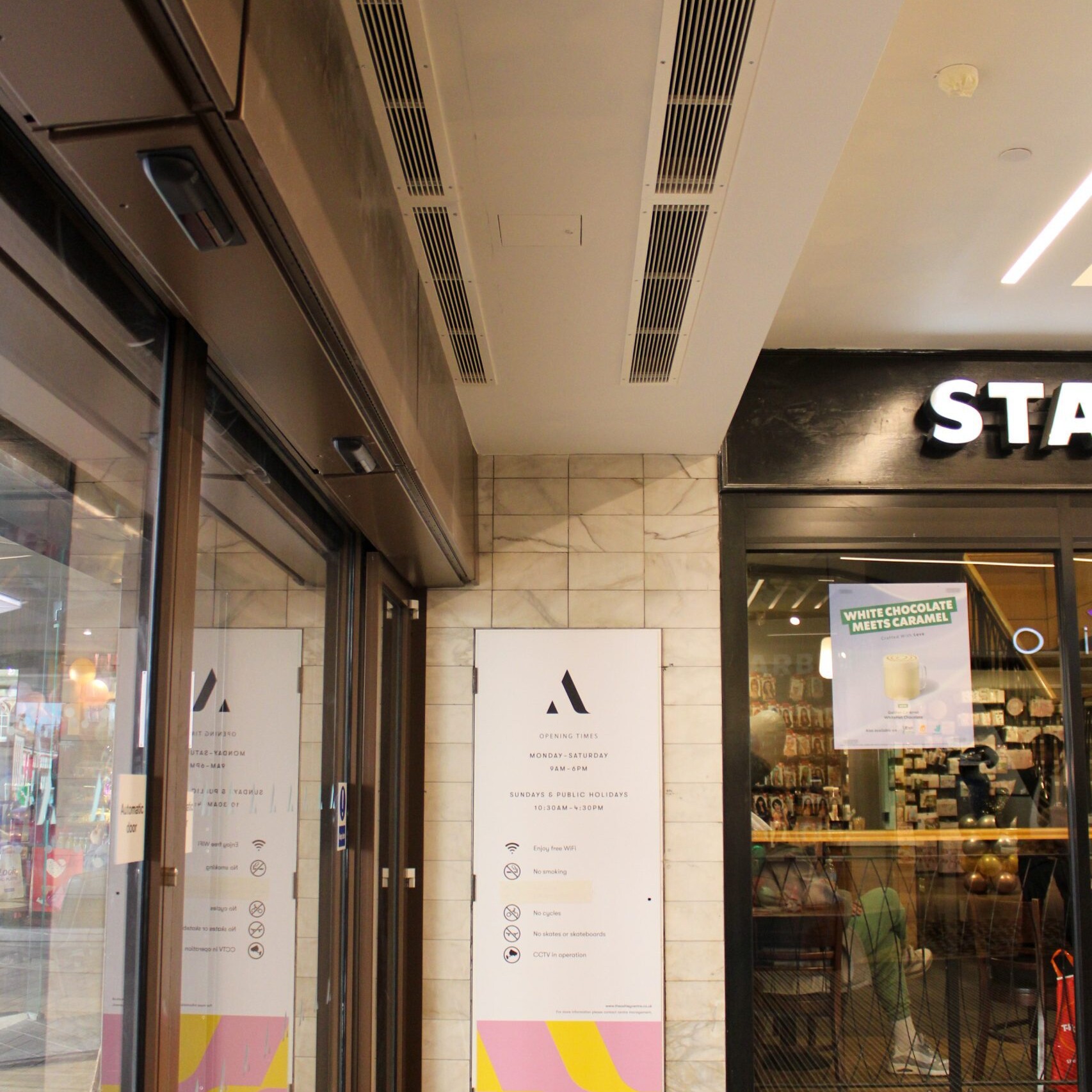
An ambient iForce unit installed above the dock door creates a continuous barrier during loading operations, dramatically reducing warm air infiltration without interrupting vehicle or forklift movement.
Food Production and Processing Facilities
BRCGS, SALSA, and retailer-specific food safety standards all require effective pest and contamination control at entry points. Flying insects are at their highest density in summer. A correctly sized and commissioned air curtain creates a discharge velocity that flying insects cannot penetrate, making it a primary compliance measure rather than a secondary comfort benefit.
The iForce is designed to maintain effective barrier velocity across the full width and height of the opening, not just at the centre of the discharge grille. This consistent coverage is what makes it reliable as a pest control measure.
Logistics and Distribution Centres
High-throughput distribution sites often have multiple dock levellers operating simultaneously across shifts. Keeping physical doors closed is operationally impractical. Air curtains at each bay allow continuous movement of goods while maintaining environmental separation, reducing both the cooling load on the building and the volume of external air, insects, and debris entering the facility.
Cleanrooms and Controlled Manufacturing
Positive pressure environments, such as those found in pharmaceutical manufacturing, electronics assembly, and precision engineering, rely on a controlled differential between internal and external air pressure. An air curtain at the entrance helps maintain separation, reducing the frequency and severity of pressure fluctuations each time the door is in use.
What Makes the iForce Industrial Air Curtain Suitable for Large Openings?
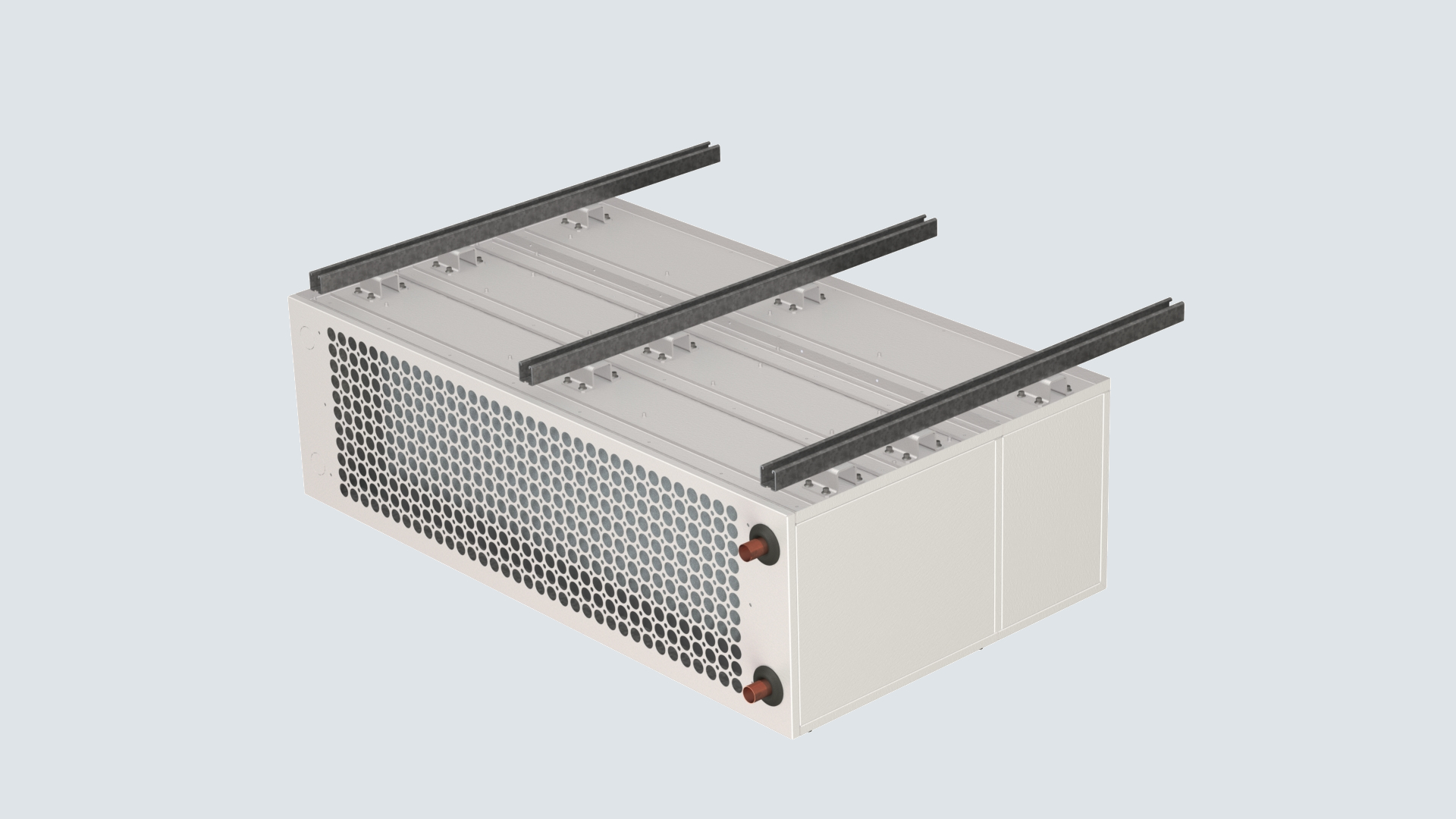
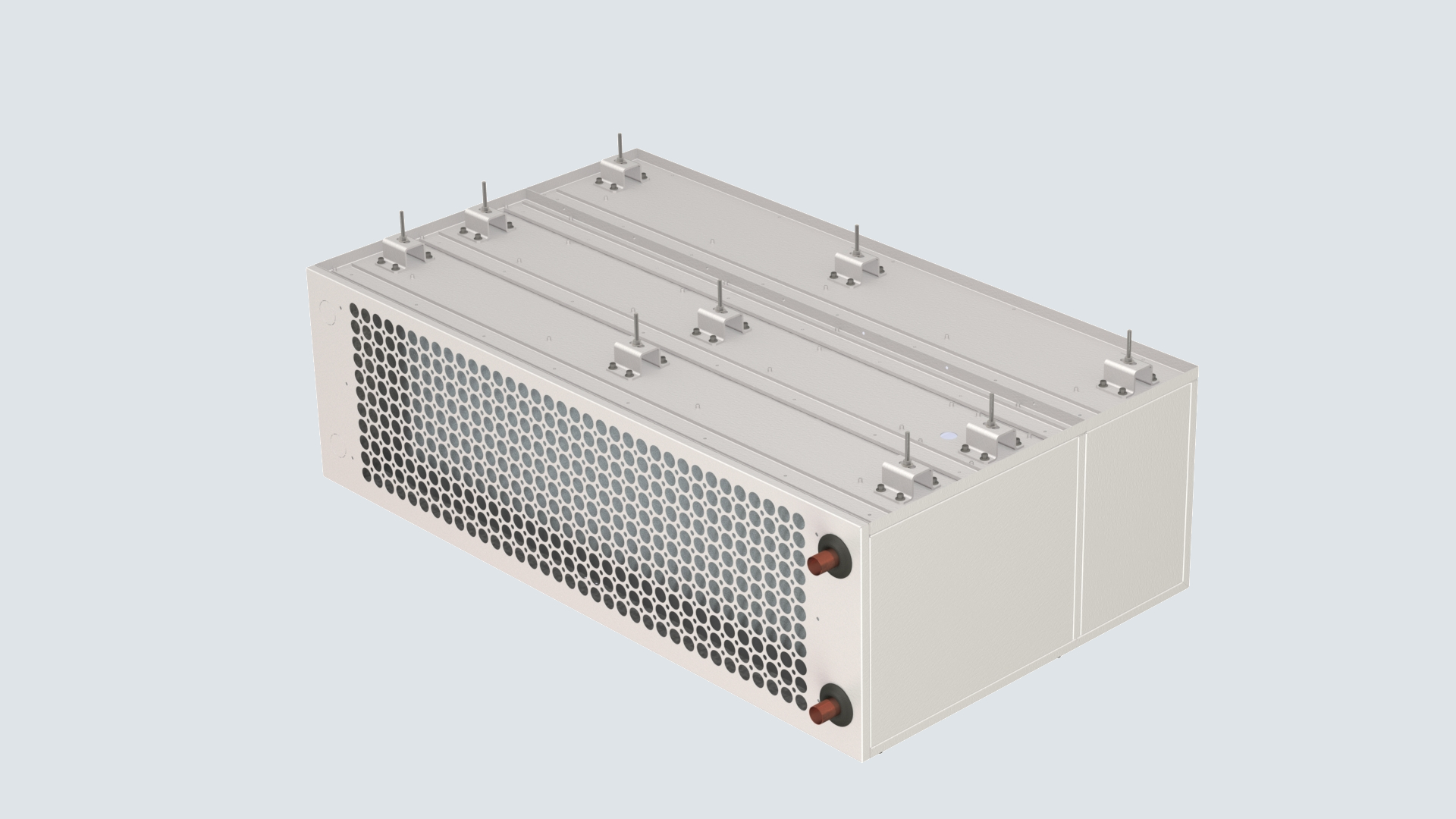
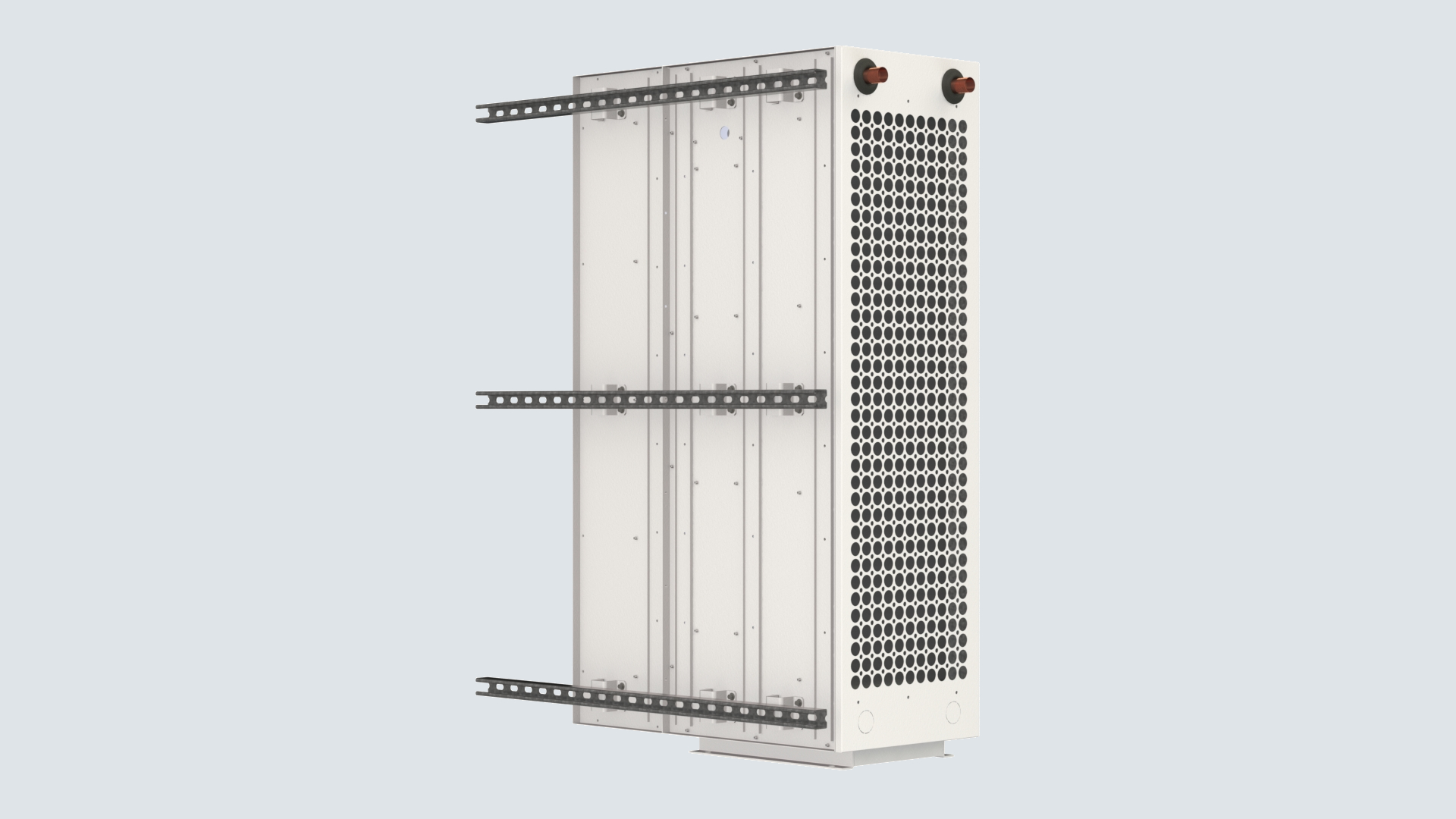
SPC’s iForce Industrial Air Curtain is engineered specifically for heavy industrial and commercial applications. It covers doorway heights up to 6 metres, making it suitable for loading bays, factory entrances, and distribution centre openings that standard commercial air curtains cannot adequately protect.
Key specification details:
- Three variants available: ambient (no heat), low-pressure hot water (LPHW) heated, and electric heated
- Available in widths of 1.5m, 2.0m, and 2.5m – units can be installed side by side horizontally or vertically to cover any opening width
- EC motors with 0-10V fan speed control for energy-efficient operation
- Heat outputs up to 70kW and airflows up to 3.2m³/s
- Heavy-gauge powder-coated steel casing with extruded aluminium outlet grille
- BACnet and BMS integration for full building management system compatibility
- Door contactor input and master/slave control for multi-unit installations
A common specification error worth flagging at the design stage: for summer applications where heating is not required, the ambient variant is the appropriate specification. However, if the same opening needs to perform in winter, the LPHW heated variant is the correct choice, the ambient model has no heating capability and cannot be upgraded after installation.
For sites that require precise waterside temperature control, the SPC Delta Waterside Controller integrates directly with LPHW units, modulating hot water flow for energy-efficient, accurate output.
What Is the Energy Impact of Running an Air Curtain in Summer?
EC motors across the iForce range are designed for continuous operation with low energy draw relative to the energy saved. Uncontrolled air infiltration through an open industrial doorway carries a significant energy cost, particularly where mechanical cooling, refrigeration, or air handling equipment is working to maintain internal conditions.
When an industrial facility has its cooling system running (chillers, DX units, or evaporative cooling), every open doorway represents a direct load on that system. Warm external air entering through an open dock door must be cooled before it reaches the rest of the building. An air curtain’s energy consumption is typically a fraction of the cost of the infiltration it prevents.
For BMS-connected installations, door-contact activation means the unit only runs when the door is open, further reducing unnecessary energy use.
Frequently Asked Questions
For purely summer applications, the ambient iForce variant is the correct specification. It provides the air barrier without heating capability. However, if the same opening will be used in winter and thermal comfort or energy retention is a factor, the LPHW heated variant should be specified from the outset; the ambient model cannot be retrofitted with heating. This is a decision best made at the design stage, not after installation.
Yes. An air curtain’s primary function is to create a physical air barrier across a doorway; heating is an optional addition, not a requirement. Ambient units discharge room-temperature air at high velocity to separate internal and external environments, making them effective at reducing air infiltration, blocking insects and debris, and supporting energy efficiency in cooling-dominated environments, without any heat output.
No. An air curtain is not a cooling device and should not be specified as a substitute for air conditioning. What it does is reduce the load on your existing cooling system by limiting the volume of warm external air that enters through open doorways. The two work together; the air curtain helps the cooling system work more efficiently, reducing run time and energy consumption.
Yes. Multiple units can be installed side by side to cover any opening width. This is a common approach on large loading bay openings and factory entrances where a single unit would not provide full coverage.
Yes, where correctly sized and installed. The iForce can be used across food production, food storage, and cold chain logistics applications. The air barrier helps to prevent flying insect ingress and limits the exchange of external air, both important factors in food hygiene compliance under BRCGS and SALSA standards.
The iForce Industrial Air Curtain provides effective protection for openings up to 6 metres in height. For taller openings, units can be stacked or mounted vertically along the sides of the door.
Yes. BACnet and BMS integration is available, and the unit supports door-contact activation for automatic operation when the door opens. Master/slave control is also supported for multi-unit installations.
Yes, and it is often the preferred choice. A heated air curtain at a cold store entrance would introduce warmth into a refrigerated environment, increasing the load on the refrigeration system. An ambient unit creates the same barrier effect without adding heat – separating the cold internal environment from warm external air during loading operations without disrupting the cold chain.
Specify an iForce Industrial Air Curtain for Your Site
View the iForce Industrial Air Curtain or use our online product configurator to explore configurations for your opening dimensions.
For a site survey or technical advice, contact the SPC team:
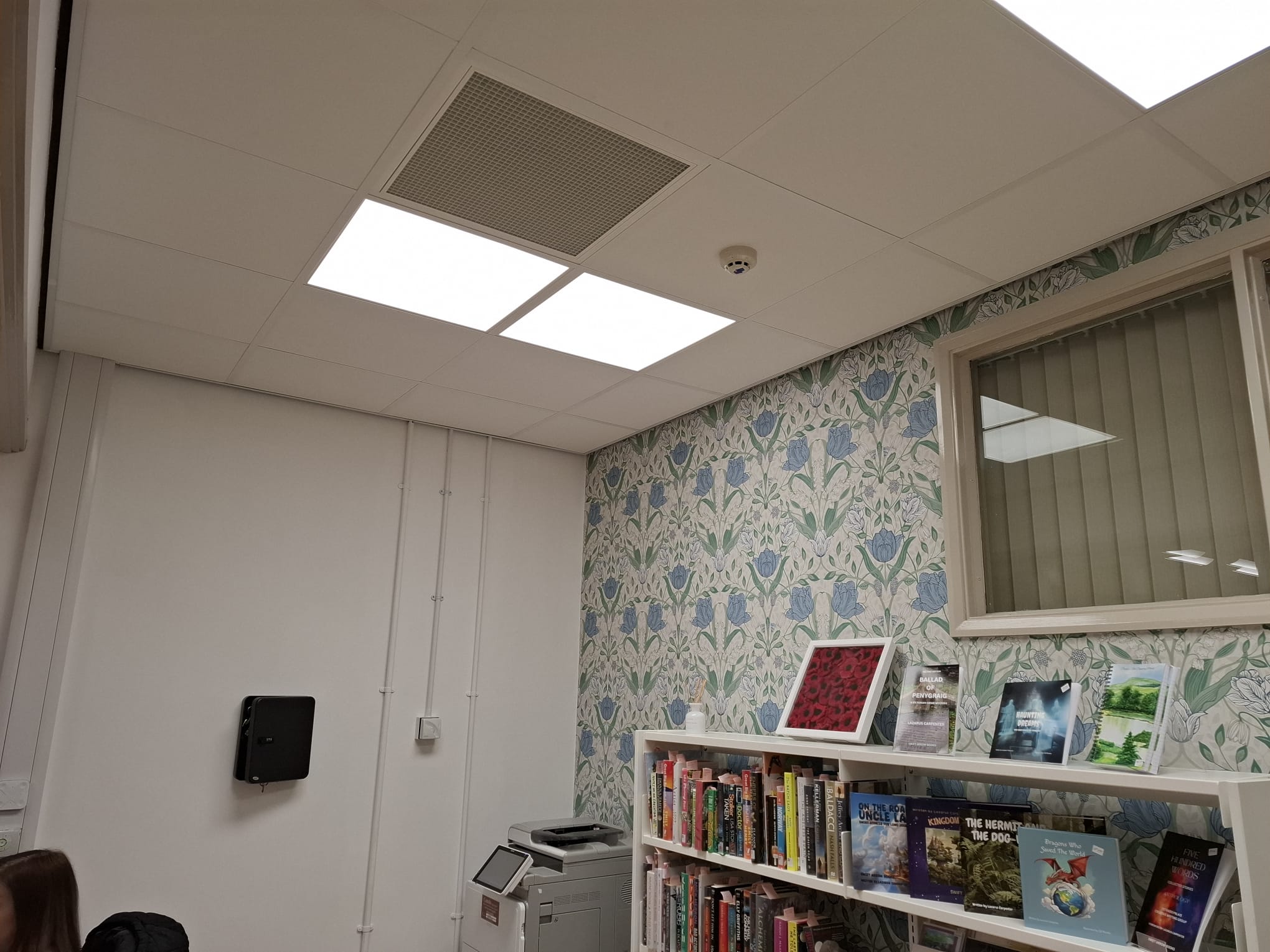
Why Ceiling Tile Fan Convectors Are the Practical Heating Choice for Office Refurbishments
Ceiling tile fan convectors are one of the most practical heating solutions for office and commercial refurbishment projects. Designed to sit flush within a suspended ceiling grid, they deliver immediate warmth without occupying wall space, disrupting existing layouts, or compromising the clean aesthetics that modern commercial interiors require.
SPC’s Belgravia Tilevector range offers ceiling tile fan convectors in a choice of configurations to suit a wide range of commercial environments, including projects where low water temperature systems such as heat pumps or condensing boilers are in use.
Why Do Architects and Specifiers Choose Ceiling Tile Fan Convectors for Office Refurbishments?
Office and commercial refurbishments present
present a specific set of challenges. Existing infrastructure is often fixed, floor space is at a premium, and there is pressure to complete installations with minimal disruption to occupants. Ceiling tile fan convectors address all three.
Because the units sit within the ceiling, they make use of space that would otherwise go unused. There are no wall-mounted units to work around, no floor-standing enclosures to accommodate, and no visible pipework to conceal. This makes them particularly well-suited to CAT A and CAT B fit-outs, open-plan offices where perimeter walls carry glazing, and phased refurbishments where work must be completed zone by zone without disrupting the wider building.
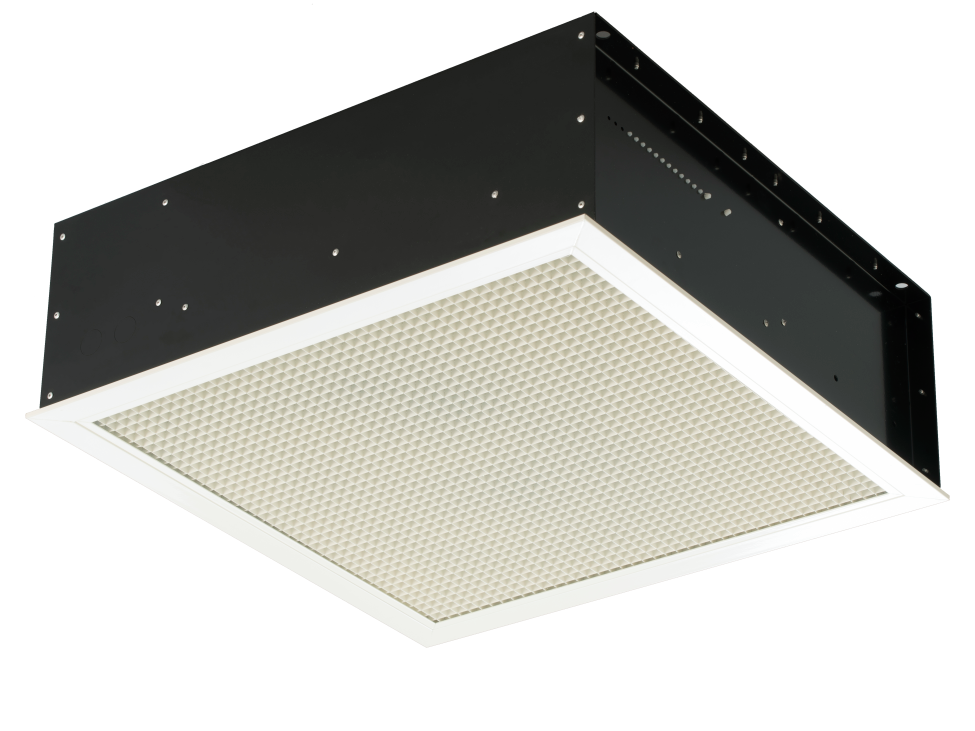
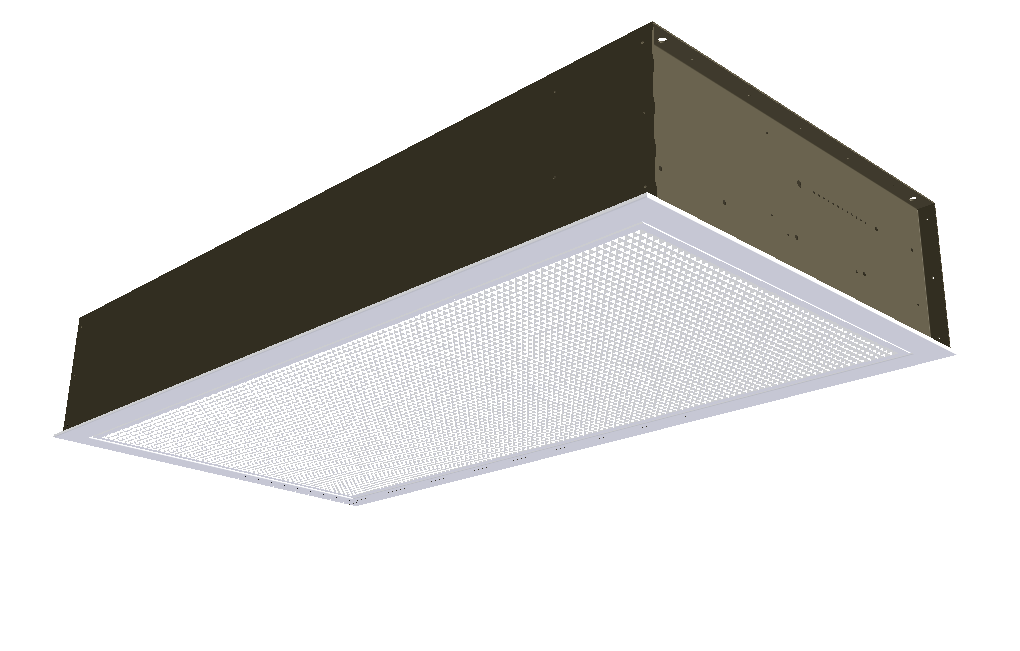
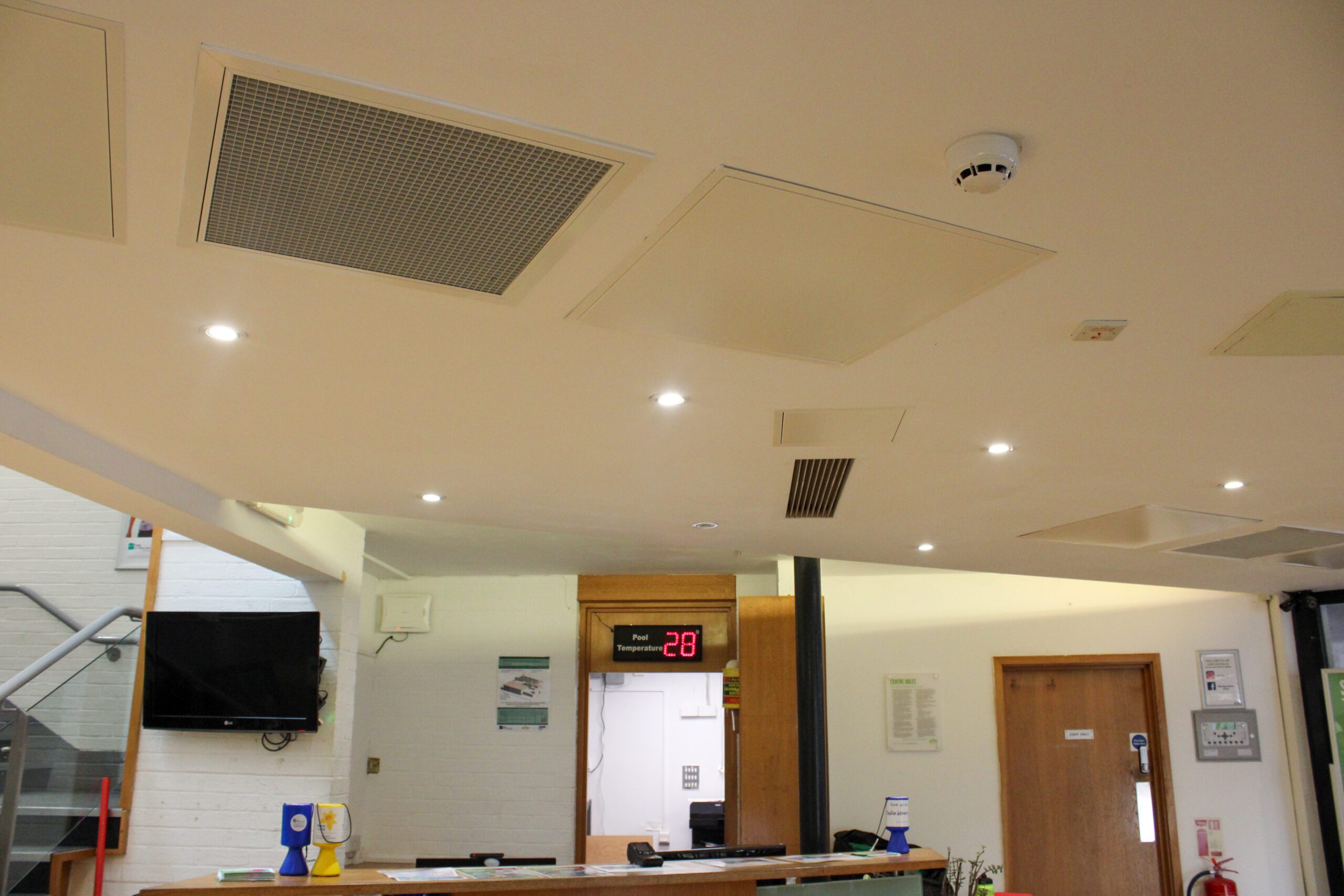
The Belgravia Tilevector units draw in room air and distribute conditioned air using powerful, reliable fans, bringing immediate warmth to the space below. The black casing sits above the ceiling line, and the room-facing grille is finished in white (RAL 9010), giving a clean, unobtrusive appearance within the ceiling plane.
Installation Flexibility Across Ceiling Types
The Belgravia Tilevector range is suitable for installation into T-bar suspended ceiling grids (600 x 600mm) and plasterboard ceilings, and the units can also be suspended from solid ceilings. This flexibility makes them a practical choice across the variety of ceiling types commonly encountered in commercial refurbishment projects, from modern open-plan offices to older buildings with more constrained ceiling construction.
The conventional Tilevector Solo has an overall size of 595 x 595 x 210mm and weighs 18kg, making it suitable for replacing a single standard ceiling tile. The Tilevector Duo measures 1195 x 595 x 210mm and weighs 35kg, replacing two standard tiles. Both units connect via 15mm copper flow and return connections.
What Makes the Belgravia Tilevector Plus Units Suitable for Heat Pump Systems?
Decarbonisation is increasingly a priority for commercial property owners and occupiers, and many office refurbishments now involve replacing gas-fired boiler systems with heat pumps or other low-temperature alternatives. The conventional Tilevector units are designed for optimum operation with the higher water temperatures generated by traditional boilers. Where a project involves a heat pump or condensing boiler, the Belgravia Tilevector Plus units offer an enhanced alternative.
The Tilevector Plus features an enhanced coil and increased airflow to optimise performance against the lower water temperatures produced by heat pump and condensing boiler systems. It is available in both Solo and Duo configurations.
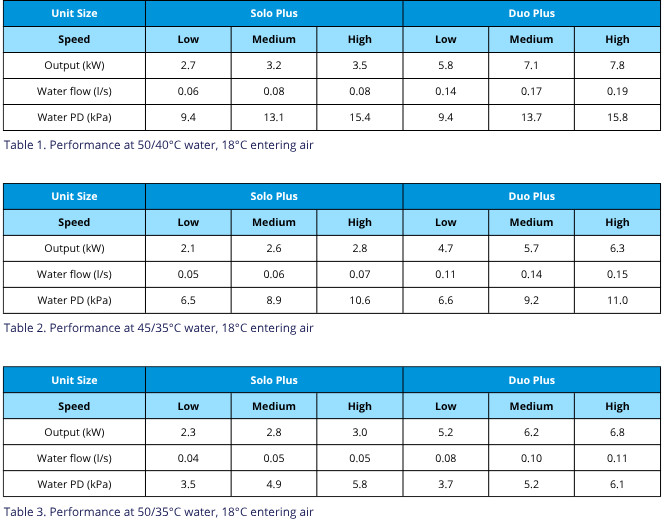
At a flow/return of 45/35°C, the Solo Plus delivers 2.1-2.6kW and the Duo Plus 4.7-5.7kW, against an entering air temperature of 18°C. At 50/40°C, the Solo Plus delivers 2.7-3.2kW and the Duo Plus 5.8-7.1kW. Output figures stated are at low to medium fan speed.
The Plus units use high-efficiency EC (brushless DC) motors with forward curved double inlet fans. On high speed, the Solo Plus draws 30W and the Duo Plus 60W. Both operate quietly, with noise levels of 40 NR (Solo Plus) and 42 NR (Duo Plus) on high speed, dropping to 34 NR and 36 NR respectively on low speed – making them suitable for office environments where acoustic comfort matters alongside thermal performance.
For guidance on low-carbon heating specification, the Carbon Trust provides useful resources for organisations working towards net zero targets.
Which SPC Ceiling Tile Fan Convector Is Right for Your Project?
SPC manufactures four variants within the Belgravia Tilevector range at its Leicester factory, covering both conventional boiler-fed systems and low water temperature applications:
Conventional hot water systems:
Tilevector Solo
595 x 595 x 210mm, 18kg. A compact unit suitable for smaller zones or individual offices, designed for optimum operation with traditional boiler flow temperatures.
Tilevector Duo
1195 x 595 x 210mm, 35kg. A larger unit offering wider coverage for open-plan spaces, designed for optimum operation with traditional boiler flow temperatures
Low water temperature systems (heat pumps and condensing boilers):
Tilevector Solo Plus
The same 595 x 595mm footprint as the standard Solo but with an increased depth of 260mm to accommodate the enhanced coil and heat exchanger. Weighs 20kg.
Tilevector Duo Plus
Overall dimensions of 1195 x 595 x 260mm, weighing 35kg. Enhanced coil and increased airflow for wider coverage in open-plan spaces.
All four units connect via 15mm copper flow and return connections, use high-efficiency EC motors, and feature hinged egg-crate grilles in all-aluminium construction. All variants are suitable for T-bar suspended, plasterboard, and solid ceiling installations.
Frequently Asked Questions
A ceiling tile fan convector is a fan convector unit designed to sit within or be mounted at a suspended ceiling. It uses a built-in fan to draw in room air and distribute heated water from a central plant system, providing discreet and consistent heating from a ceiling-mounted position.
Yes, when the correct unit is specified. The Belgravia Tilevector Plus units feature an enhanced coil and increased airflow, optimised for the lower water temperatures produced by air source and ground source heat pumps, as well as condensing boilers. The conventional Tilevector Solo and Duo units are designed for optimum operation with traditional boiler flow temperatures.
The Belgravia Tilevector range is suitable for installation into T-bar suspended ceiling grids (600 x 600mm) and plasterboard ceilings. The units can also be suspended from solid ceilings where required.
Ceiling tile fan convectors free up perimeter wall space that radiators would otherwise occupy, a significant advantage in offices where walls are needed for glazing, furniture, or storage runs. They also offer faster heat-up than radiators and can be specified with low water temperature coils for heat pump compatibility, which wall-mounted radiators often cannot match at typical ceiling grid spacings.
Yes. SPC’s sales and technical team can provide output data, product selection guidance, and specification support for office and commercial refurbishment projects. Contact the team on 0116 249 0044 or at spc@spc-hvac.co.uk.
Looking for Wall or Floor-Mounted LTHW Fan Convectors?
The Tilevector Plus range is part of SPC’s wider Belgravia fan convector family, which includes the Belgravia Supreme and Belgravia Classic – wall-mounted units also available with enhanced coils for heat pump and low temperature hot water systems.
Whether you need ceiling-mounted, wall-mounted, or floor-level units, SPC’s Belgravia range offers a compatible solution for LTHW projects across commercial, education, and healthcare sectors.

Talk to the Team
For specification support or to discuss your office or commercial refurbishment project, contact the SPC team on 0116 249 0044 or email spc@spc-hvac.co.uk. Full performance data and technical specifications are available to download from our literature page.
SPC Launches the Tilevector Duo Plus: Ceiling Heating Built for Heat Pumps
SPC has launched the Belgravia Tilevector Duo Plus, a ceiling-mounted fan convector designed specifically for use with heat pumps and low temperature hot water (LTHW) systems. The Duo Plus joins the existing Tilevector range as the largest and most capable unit for low temperature applications, delivering up to 7.8kW at 50/40°C flow and return water temperatures.
Standard Fan Convectors and Low Temperature Hot Water Systems
Standard fan convectors are designed for optimum performance at traditional boiler flow temperatures, typically 80/70°C, and work extremely well in those applications. However, heat pumps and modern condensing boilers operate most efficiently at lower flow temperatures, usually in the range of 45-55°C. At these temperatures, a standard fan convector is simply working outside its intended design conditions.
That’s where the Tilevector Plus range comes in. Rather than replacing like for like, the Plus units have been specifically developed with an enhanced heat exchanger and increased casing depth, 260mm compared to 210mm on standard Tilevector units, to optimise performance at low water temperatures. The result is a ceiling fan convector that complements heat pump and LTHW system design, delivering the output those systems need without compromise.
Tilevector Duo Plus: Key Details
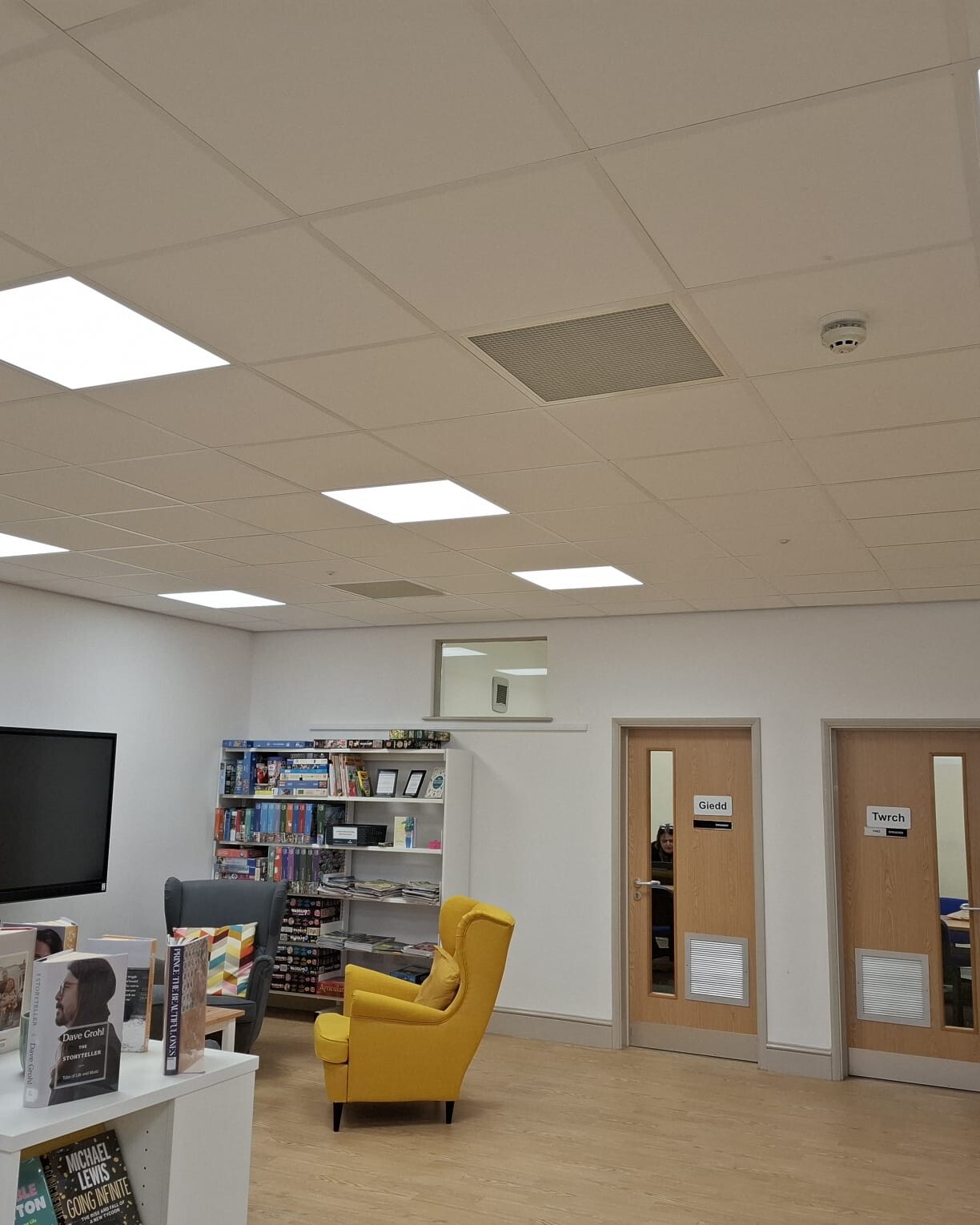
The Duo Plus is a double-tile ceiling unit measuring 1195mm x 595mm x 260mm, suitable for installation into standard 600mm T-bar suspended ceiling grids as well as plasterboard ceilings. Units can also be suspended from solid ceilings.
The unit weighs 35kg and connects via 15mm copper flow and return. EC motors are fitted as standard for energy efficiency, and the full range of Belgravia accessories and controls is compatible, including the SPC Modulo proportional controller.
The full Belgravia Tilevector Plus range
The launch of the Duo Plus completes a four-strong Tilevector lineup:
- Tilevector Solo – single-tile unit (595mm x 595mm x 210mm) for standard hot water systems
- Tilevector Duo – double-tile unit (1195mm x 595mm x 210mm) for standard hot water systems
- Tilevector Solo Plus – single-tile unit (595mm x 595mm x 260mm) for heat pump and LTHW systems
- Tilevector Duo Plus – double-tile unit (1195mm x 595mm x 260mm) for heat pump and LTHW systems
The Solo Plus delivers up to 3.5kW at 50/40°C, making it the right choice for smaller spaces or where a single ceiling tile position is available. Where greater output or larger room coverage is needed, the Duo Plus steps up with more than double the capacity.
Looking for wall or floor-mounted LTHW fan convectors?
The Tilevector Plus range is part of SPC’s wider Belgravia fan convector family, which includes the Belgravia Supreme and Belgravia Classic – wall-mounted units also available with enhanced coils for heat pump and low temperature hot water systems.
Whether you need ceiling-mounted, wall-mounted, or floor-level units, SPC’s Belgravia range offers a compatible solution for LTHW projects across commercial, education, and healthcare sectors.
Frequently Asked Questions
The Plus variants have a deeper casing (260mm vs 210mm) and an enhanced heat exchanger with greater surface area. They are engineered to deliver effective heating output at the lower flow temperatures produced by heat pumps and condensing boilers, typically 45-55°C. Standard Tilevectors are rated at 80/70°C.
Performance data is published for the most commonly specified flow and return temperature combinations – 50/40°C, 45/35°C, and 50/35°C – which reflect the industry standard operating conditions for heat pump and LTHW systems. If your project requires data at different operating conditions, get in touch with the SPC team at spc@spc-hvac.co.uk and we can help.
Yes. The unit is designed to fit into a 600mm T-bar suspended ceiling grid and is also suitable for plasterboard ceilings. It can be suspended from solid ceilings where required.
Yes. The full range of Belgravia accessories and controls is available, including the SPC Modulo proportional touchscreen controller, remote thermostats, BMS connections, and fan speed switches.
The Duo Plus weighs 35kg including the unit casing and grille.
Talk to the Team
To find out more about the Tilevector Duo Plus or the full Belgravia fan convector range, contact the SPC team on 0116 249 0044 or email spc@spc-hvac.co.uk. Full performance data and technical specifications are available to download from our literature page.

Why Does British Manufacturing Matter When Specifying HVAC Products?
British-made HVAC products aren’t just a point of national pride. They offer specifiers, contractors, and facilities managers tangible, practical advantages. Shorter lead times, direct access to technical support, and products engineered specifically for UK building regulations and climate conditions are all reasons why sourcing from a British manufacturer makes a genuine difference on a project.
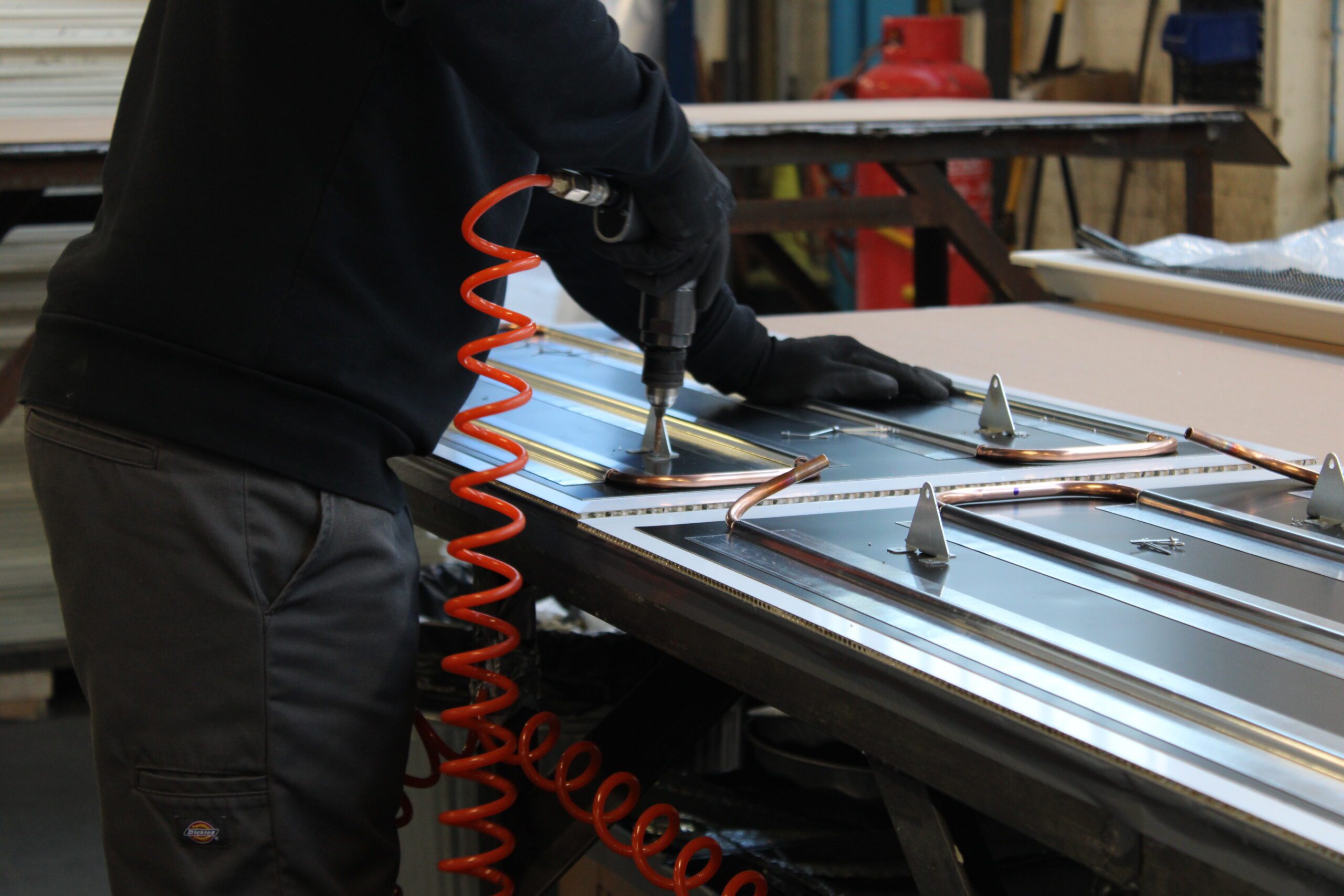
SPC has been designing and manufacturing heating and cooling solutions from its factory in Leicester for over 50 years, supplying commercial and industrial environments across the UK with a complete range of British-built products.
What does specifying British-manufactured HVAC products actually mean for your project?
When a product is designed and manufactured in the UK, the supply chain is shorter. That means more predictable lead times, easier communication when a project specification changes, and faster access to replacement or bespoke items when a project demands it.
For SPC, manufacturing in Leicester means the teams behind the product, from engineering and design through to sales and technical support, are all under one roof. There is no intermediary, no overseas factory to contact, and no language or time-zone barrier between specifier and manufacturer.
This matters most on complex or time-critical projects, healthcare facilities, school refurbishments, and large industrial builds, where delays or specification errors have real consequences.
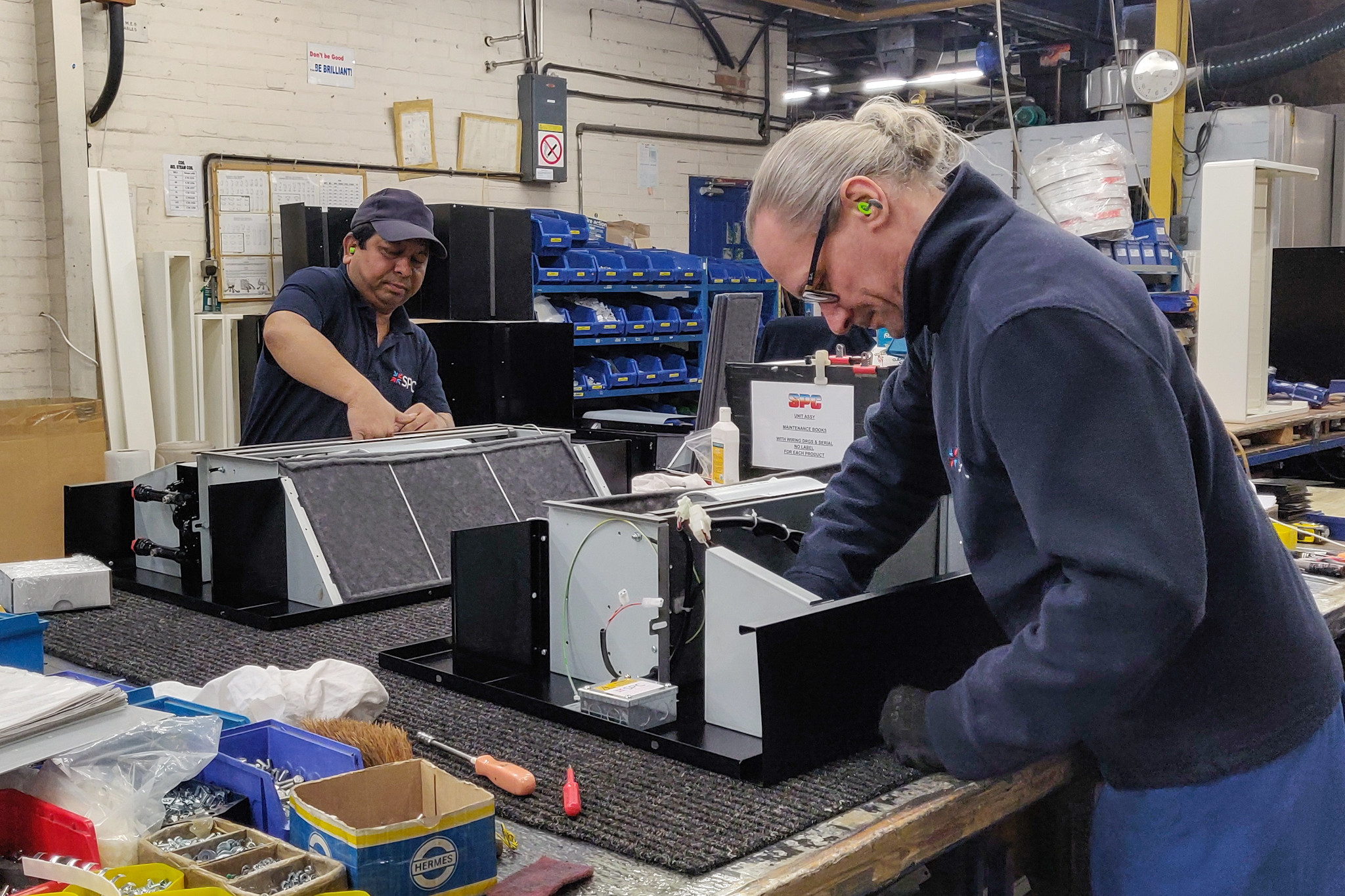
Are British-manufactured HVAC products engineered for UK conditions?
SPC’s Leicester factory produces a complete range of heating and cooling solutions for commercial and industrial applications:
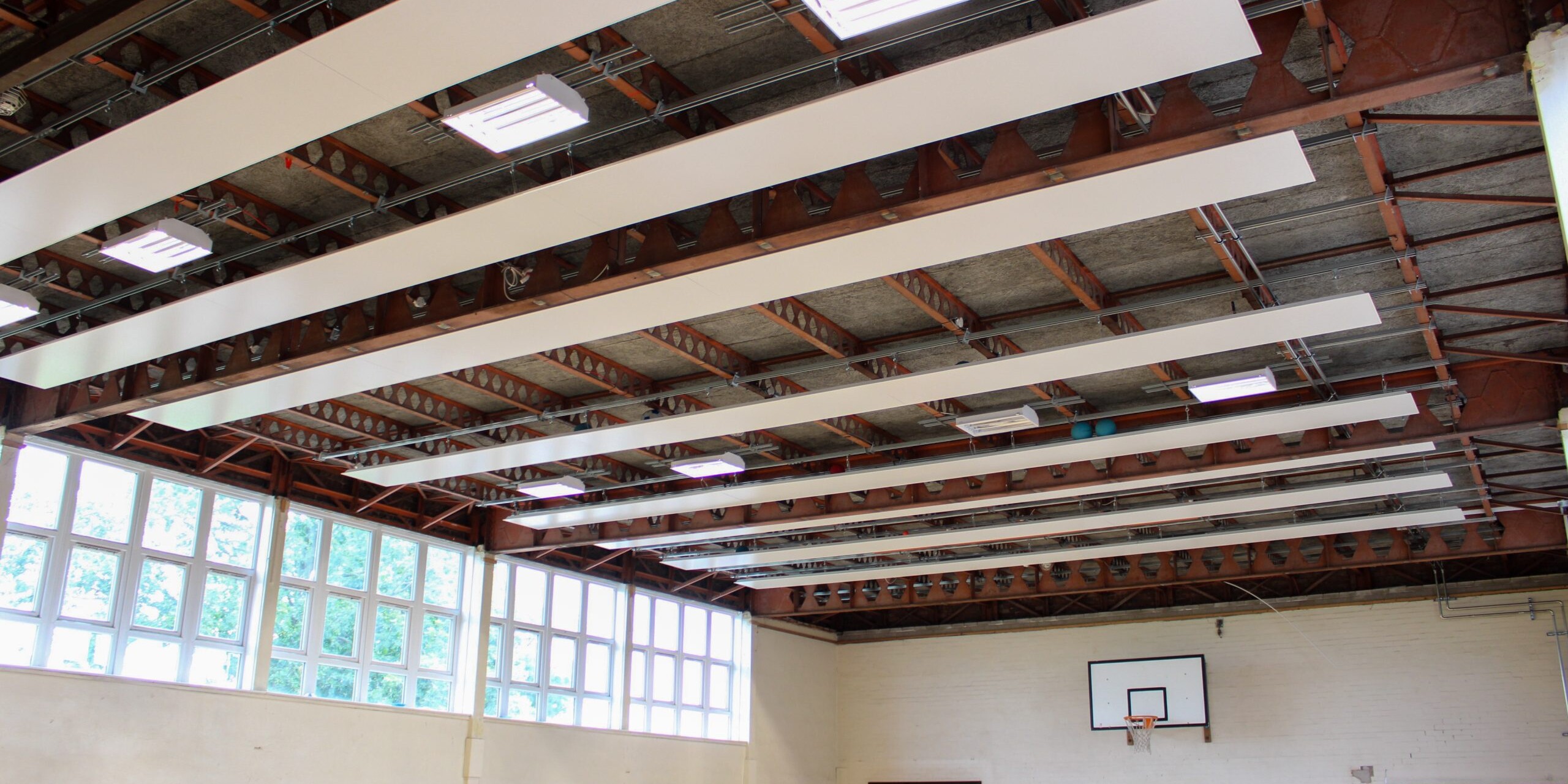
Radiant Heating and Cooling Panels
The Thermatile TEN-TWELVE range provides silent, efficient radiant comfort with no air movement. Heat pump compatible and independently tested to EN 14037. Suitable for offices, schools, sports facilities, and healthcare environments.
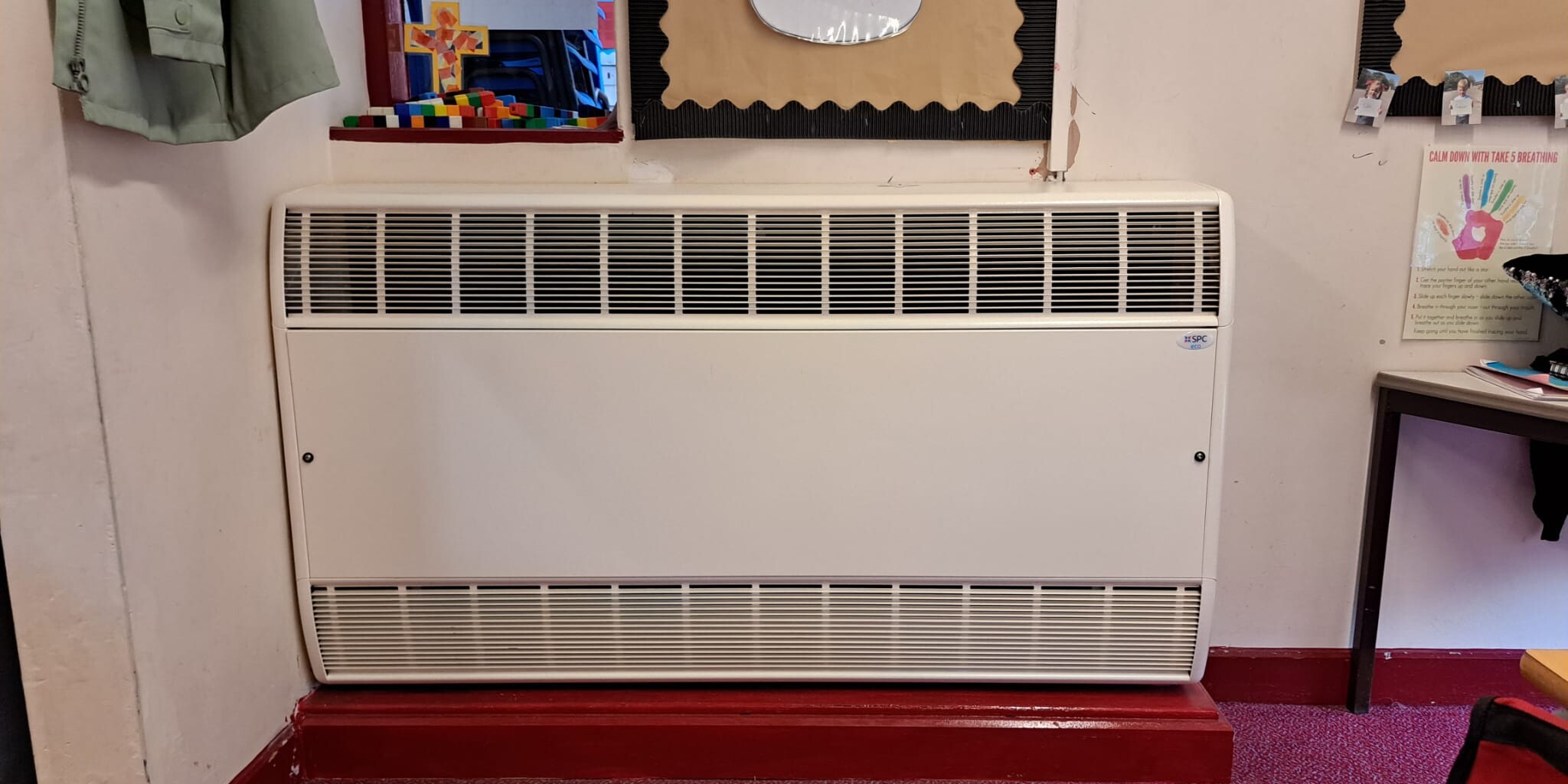
Fan Convectors
The Belgravia Supreme, Belgravia Classic, and Belgravia Tilevector ranges deliver rapid, flexible heating for commercial spaces. Heat pump ready, with Active LST control available for healthcare and educational environments.
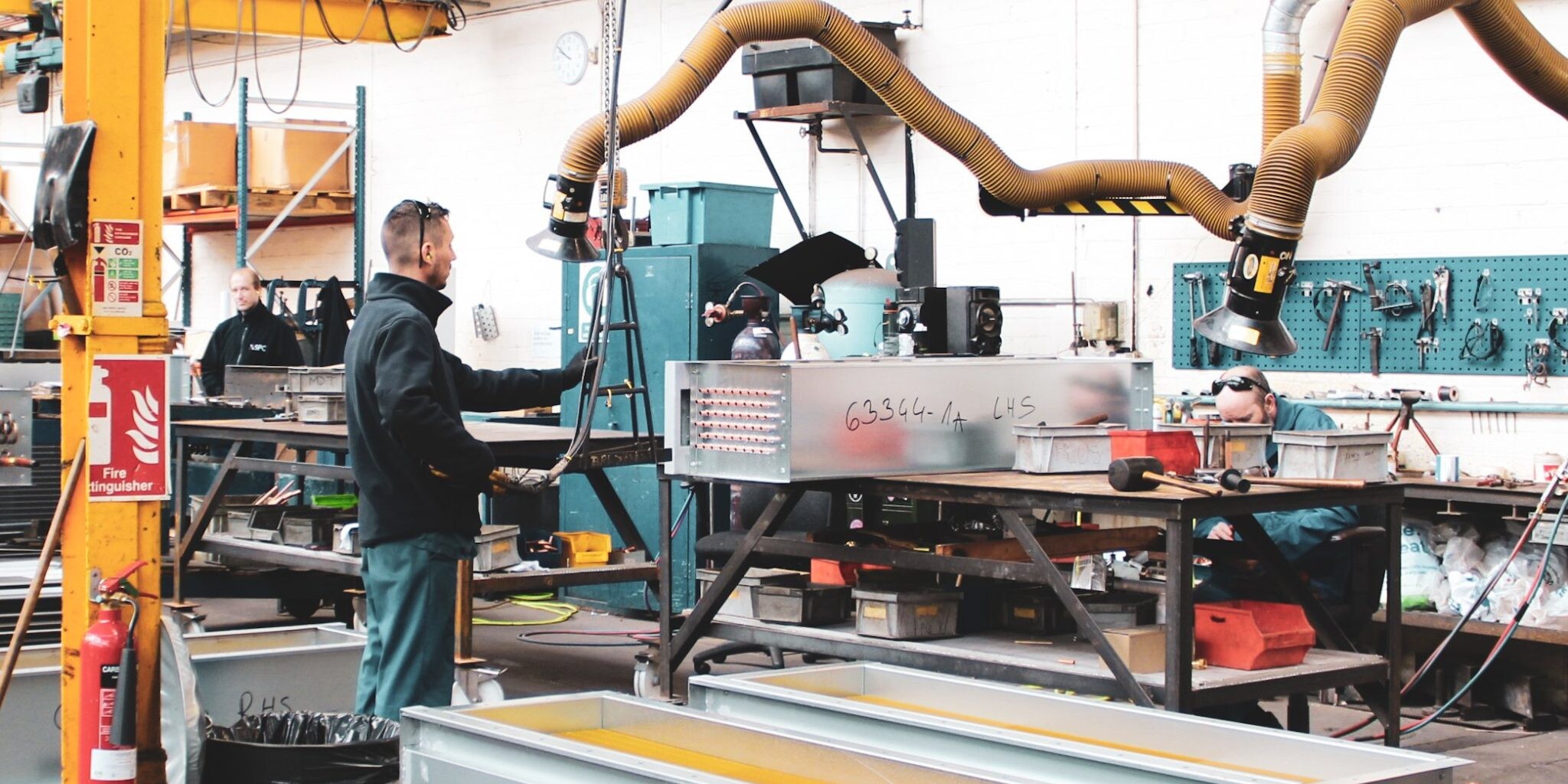
Heating and Cooling Coils
Fully bespoke coil heat exchangers engineered to order for water, steam, refrigerant, and heat recovery applications. Manufactured to exact project specifications with pressure testing to 22 bar.
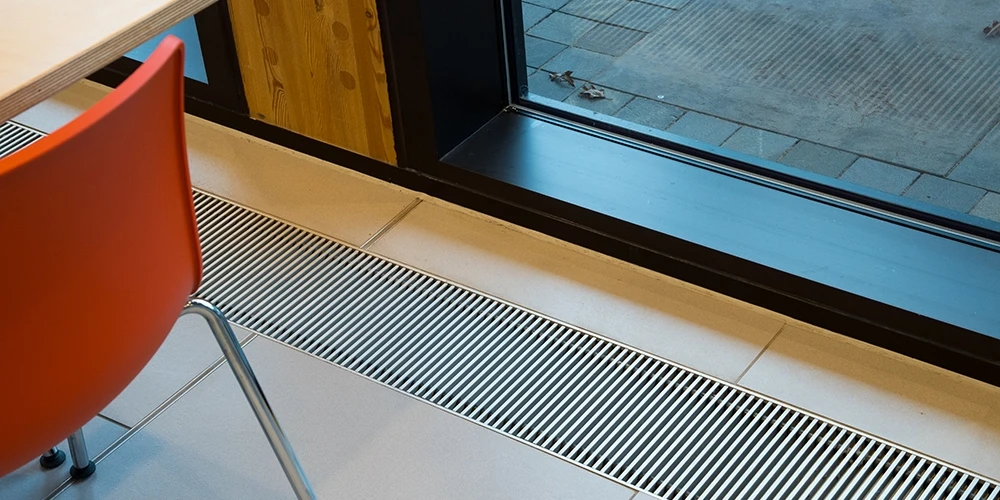
Trench Heating and Cooling
The Metropolitan range offers discreet, high-performance climate control installed beneath floor-to-ceiling glazing, available in powered fan-assisted, cooling, and electric variants.
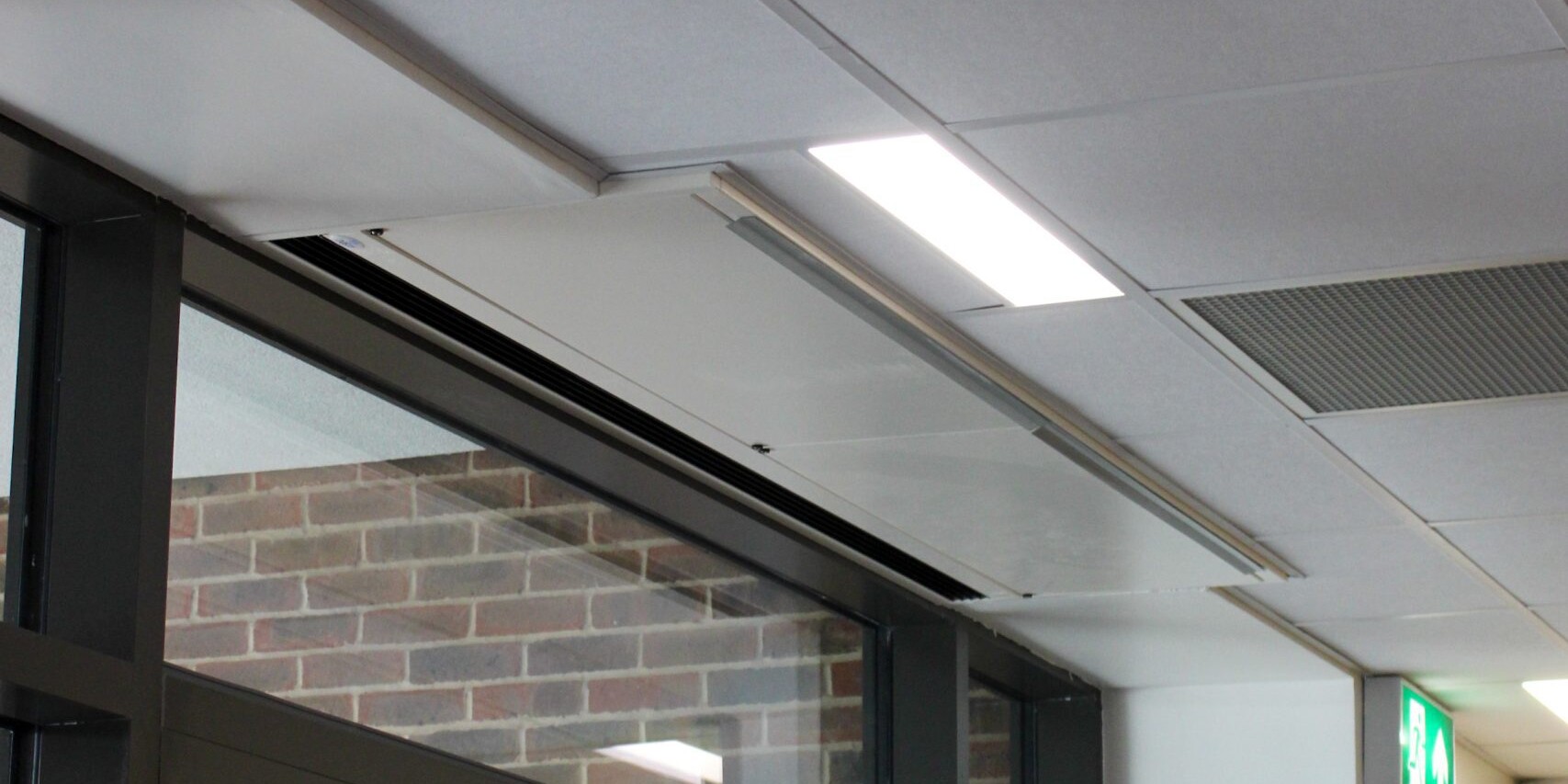
Air Curtains
The AIRDOR Forcefield and iForce Industrial ranges cover commercial and industrial doorways from 3.5 metres up to 6 metres in height, with ambient, electric, and LPHW options.
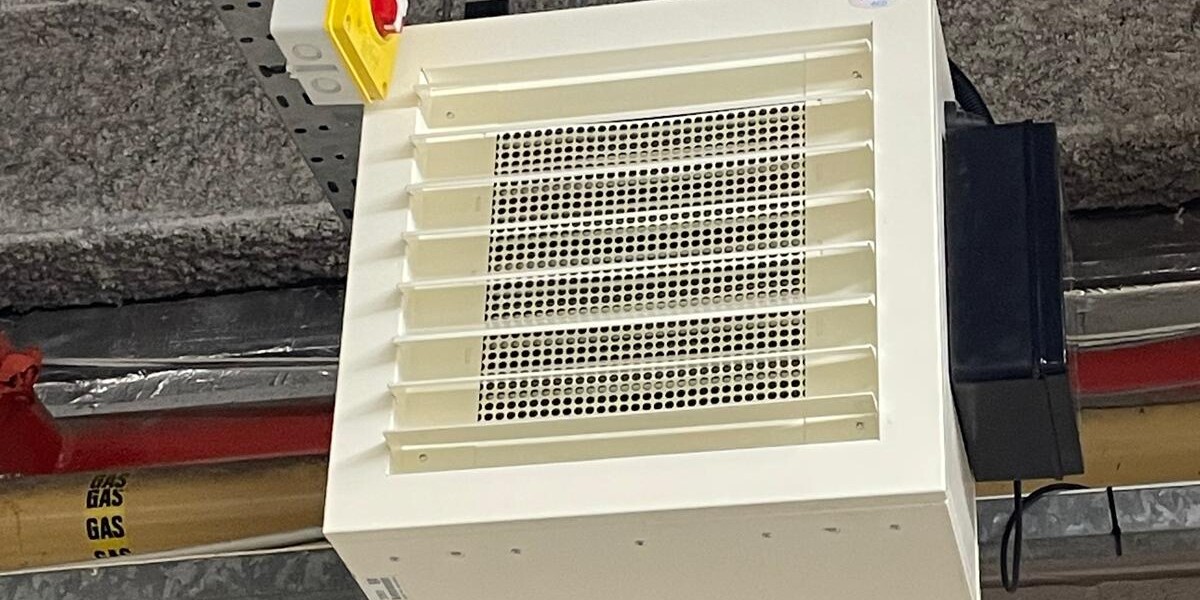
Unit Heaters
The CiRRUS Unit Heater range delivers robust, high-output heating for factories, warehouses, distribution centres, and large industrial spaces.
What support comes with specifying SPC products?
SPC offers specification support, technical advice, and a programme of four CIBSE approved CPD sessions for building services professionals. Our CPDs cover decarbonisation of industrial and commercial heating systems, coil heat exchangers, radiant heating and cooling panels, and trench heating design, all available at no cost to practices and contractors.
ISO 9001:2015 certified, SPC has supplied UK projects across education, healthcare, heritage, industrial, and commercial sectors for over 50 years.
Frequently Asked Questions
British-manufactured products offer shorter and more predictable lead times, direct technical support from the manufacturer, and products designed to meet UK building regulations and climate conditions. For time-critical projects, this can make a meaningful difference to programme and specification confidence.
Yes. The majority of SPC’s range is designed for use with low-temperature hot water (LTHW) heating systems and heat pumps. The Belgravia fan convector range is heat pump ready; the Thermatile TEN-TWELVE radiant panels and industrial radiant panels are heat pump compatible; the Metropolitan trench heating range works with low-temperature systems; and SPC’s coil heat exchangers and CiRRUS unit heaters can be engineered or configured for low-temperature applications. If you’re specifying for a heat pump project, the SPC team can advise on the most suitable product for your application.
SPC supplies products for commercial, industrial, healthcare, education, heritage, and high-end residential projects across the UK. Product ranges are specified by mechanical consultants, M&E contractors, and architects, with direct support available throughout the specification process.
Yes. SPC offers four CIBSE approved CPD sessions covering decarbonisation, coil heat exchangers, radiant heating and cooling panels, and trench heating. Sessions are delivered on-site at your offices and are available at no cost. Contact us to arrange a session.
Contact the SPC team directly on 0116 249 0044 or at spc@spc-hvac.co.uk. Area Sales Managers cover the whole of the UK and are available to support specifications, site surveys, and project queries.
Ready to specify British-manufactured heating and cooling for your next project?
The SPC team is ready to support your specification from initial product selection through to technical sign-off.
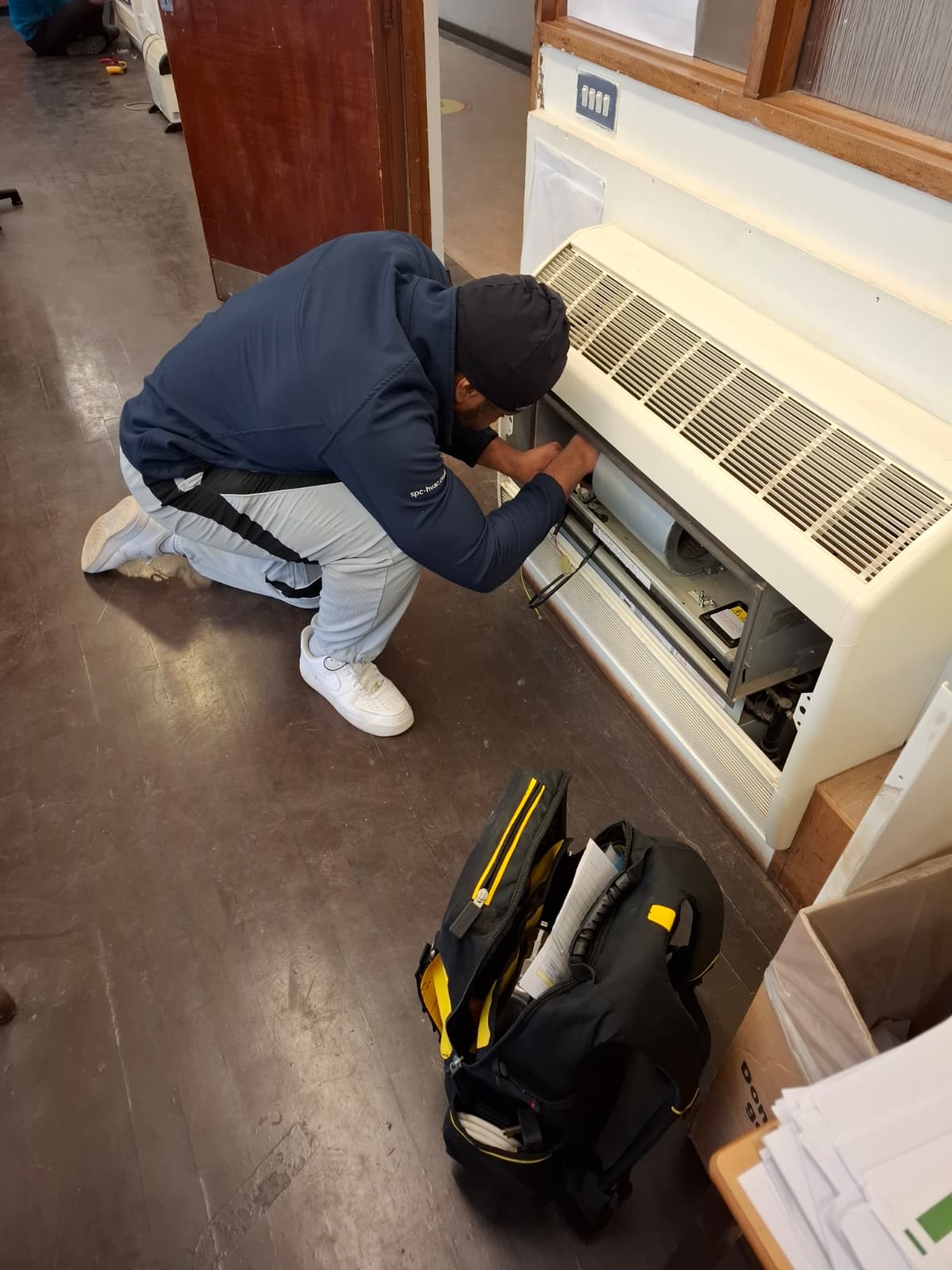
More Than a Manufacturer: The Technical Support Behind Every SPC Product
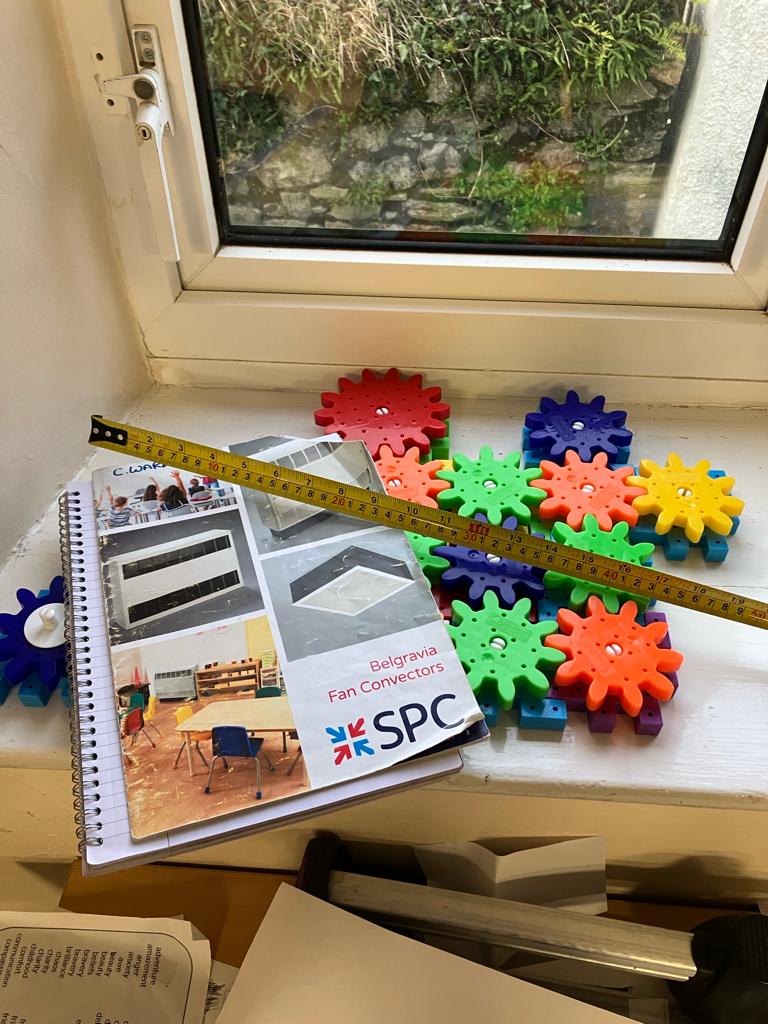
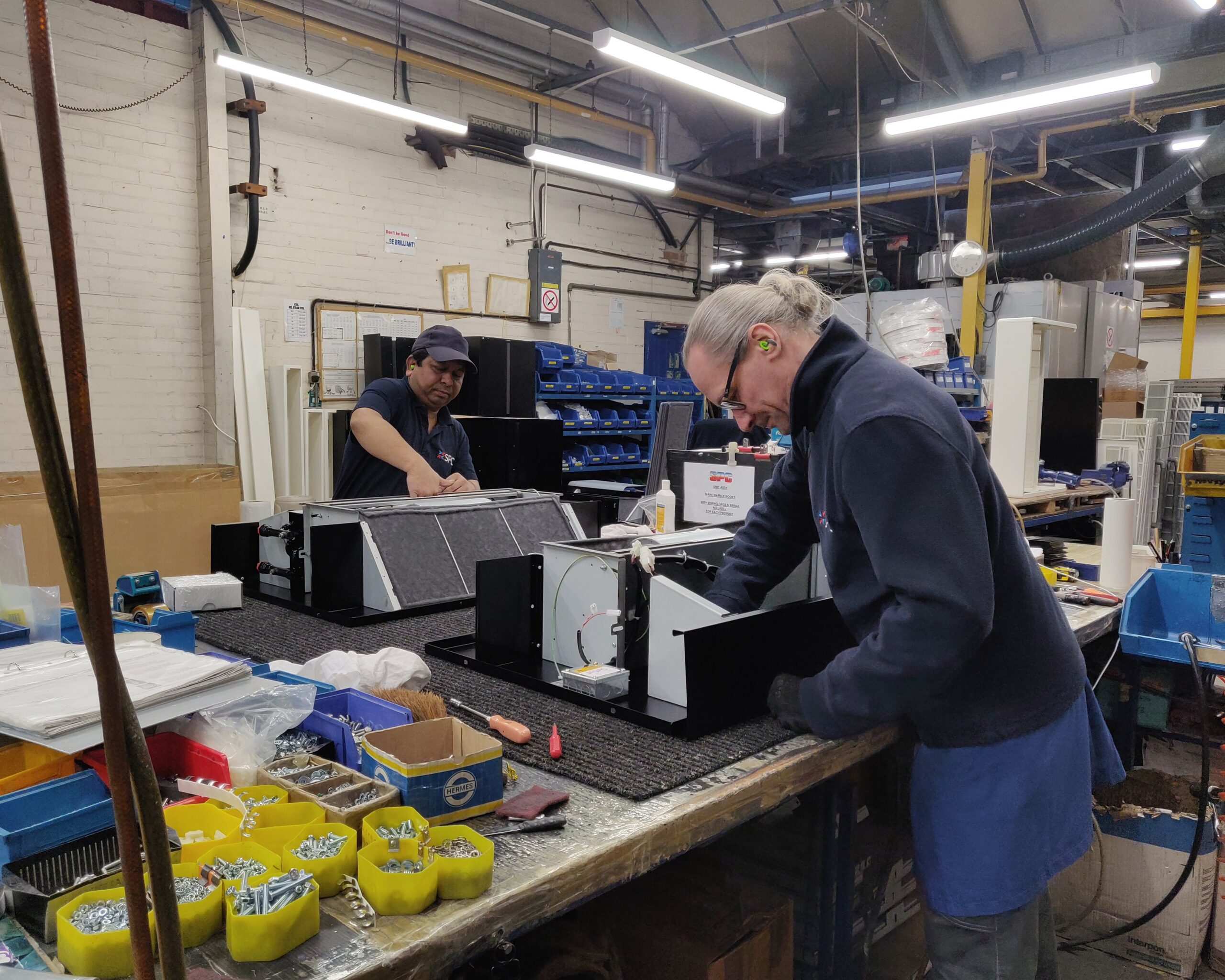
When you specify or install SPC products, you’re not just buying heating and cooling equipment. SPC’s sales and technical team provide support at every stage of a project, from pre-specification site surveys and application advice, through to on-site installation guidance and post-installation troubleshooting.
For contractors, consultants, and facilities managers working on live projects, that kind of hands-on involvement can be the difference between a smooth programme and an avoidable delay.
What Does SPC's Technical Support Include?
SPC’s support offer covers three stages of a project.
Before specification, Area Sales Managers can attend site to advise on product selection, application suitability, and design considerations. This is particularly useful on complex projects, such as a hospital refurbishment with strict LST requirements, a warehouse with unusual ceiling heights, or a school building where installation needs to fall within a short holiday window.
During installation, our teams are on hand to answer questions and provide guidance. In some cases, our Area Sales Managers or technical team may visit site to see how things are progressing. This is part of how SPC builds long-term working relationships.
After installation, support continues if questions arise in the field. The same people who know the products are available to provide guidance, not a generic helpline.
This applies across SPC’s full product range: Fan Convectors, Radiant Heating and Cooling Panels, Heating and Cooling Coils, Trench Heating and Cooling, Air Curtains, and Unit Heaters.
Why Does It Matter Who Supports You After the Sale?
Manufacturers who operate at arm’s length can leave contractors and consultants carrying problems that shouldn’t fall solely to them. With SPC, the team that knows the products is the team that shows up on site.
That means faster answers, more accurate advice, and fewer delays on site, regardless of whether the project is a commercial office fit-out, a school heating upgrade, or an industrial installation.
SPC has been manufacturing HVAC products in Leicester for over 50 years, and our technical support offer is an extension of that: the same standards of quality applied not just to the products, but to the relationship.
Frequently Asked Questions
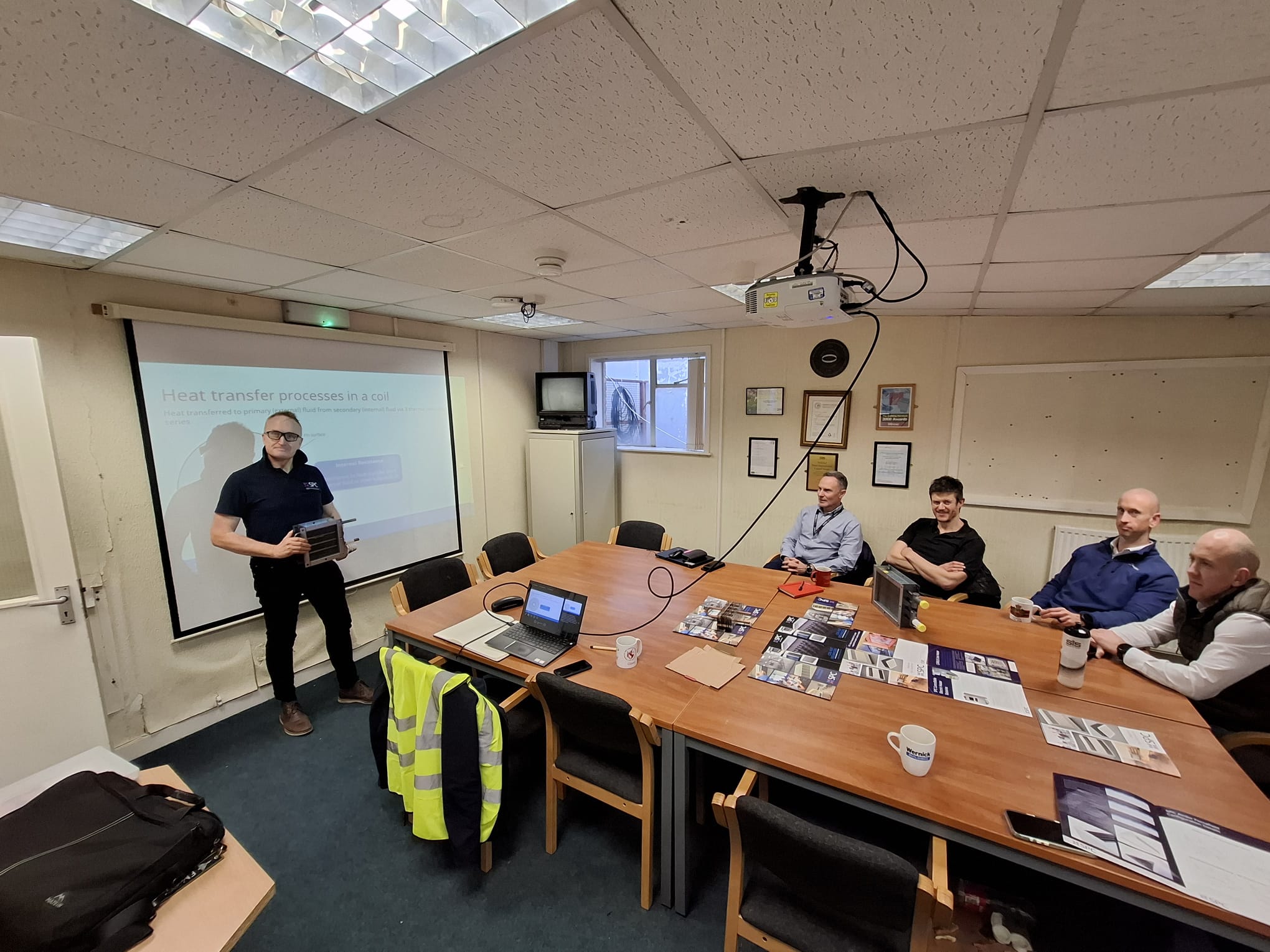
SPC’s sales and technical team are available throughout a project to answer questions, provide application guidance, and advise on product selection. Support can range from remote guidance to an ASM visiting site where the relationship and circumstances make it useful, but the focus is on being genuinely accessible and knowledgeable.
Yes. SPC’s Area Sales Managers can visit site ahead of specification to assess the application, advise on the most suitable product from the range, and identify any design or installation considerations. This service is available across all SPC product families.
Support is available across all SPC product ranges, including fan convectors, radiant panels, heating and cooling coils, trench heating, air curtains, and unit heaters.
SPC has Area Sales Managers covering territories across the UK, including the South West and Wales, London and the South East, the Midlands and East Anglia, and the North West and Yorkshire. On-site support is available nationally.
Many manufacturers provide support only at the point of sale or through a generic technical helpline. SPC’s approach is different: the same team that knows the products is available to answer questions throughout a project, and in some cases, where the relationship warrants it, an Area Sales Manager may visit site to see how an installation is progressing. It’s a more personal, knowledgeable partnership than most manufacturers offer.
Talk to the Team
Whether you’re at the specification stage or dealing with a question on a live project, SPC’s team is ready to help. For further guidance on specifying HVAC products, the Chartered Institution of Building Services Engineers (CIBSE) publishes technical guidance relevant to heating and cooling system design at cibse.org.
How to Heat a Warehouse, Factory or Workshop: Three Key Considerations
Selecting the right industrial heating system for a warehouse, factory, or workshop depends on getting three things right: managing heat stratification in high-ceilinged spaces, controlling heat loss through loading bays and open doors, and deciding whether to heat the full air volume or deliver warmth directly to the occupied zone. SPC has been manufacturing heating and cooling products for over 50 years, and these are some factors that determine whether an industrial heating installation performs well or wastes energy.
Why does ceiling height affect industrial heating performance?
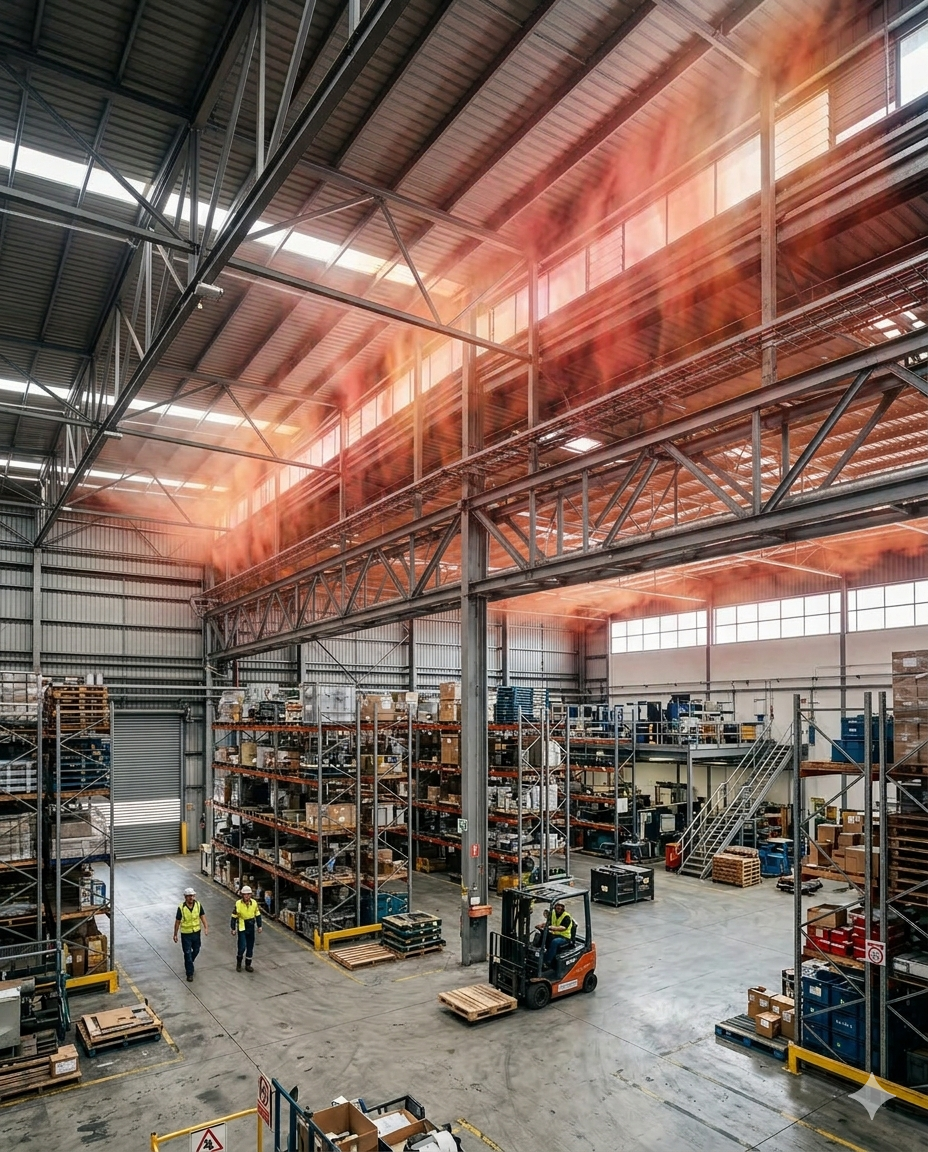
In high-bay buildings, warm air naturally rises and stratifies near the roof, well away from the people and processes that need it. The result is that a significant proportion of the energy going into the system ends up heating unoccupied space at height, while the floor-level working zone remains cold.
The right industrial heating system needs to either deliver heat directly to the occupied zone, or generate enough air momentum to overcome stratification and push warmth down to where it is needed. This is one of the primary reasons products designed specifically for industrial environments differ from standard options.
How do loading bays and roller shutter doors affect heat retention?
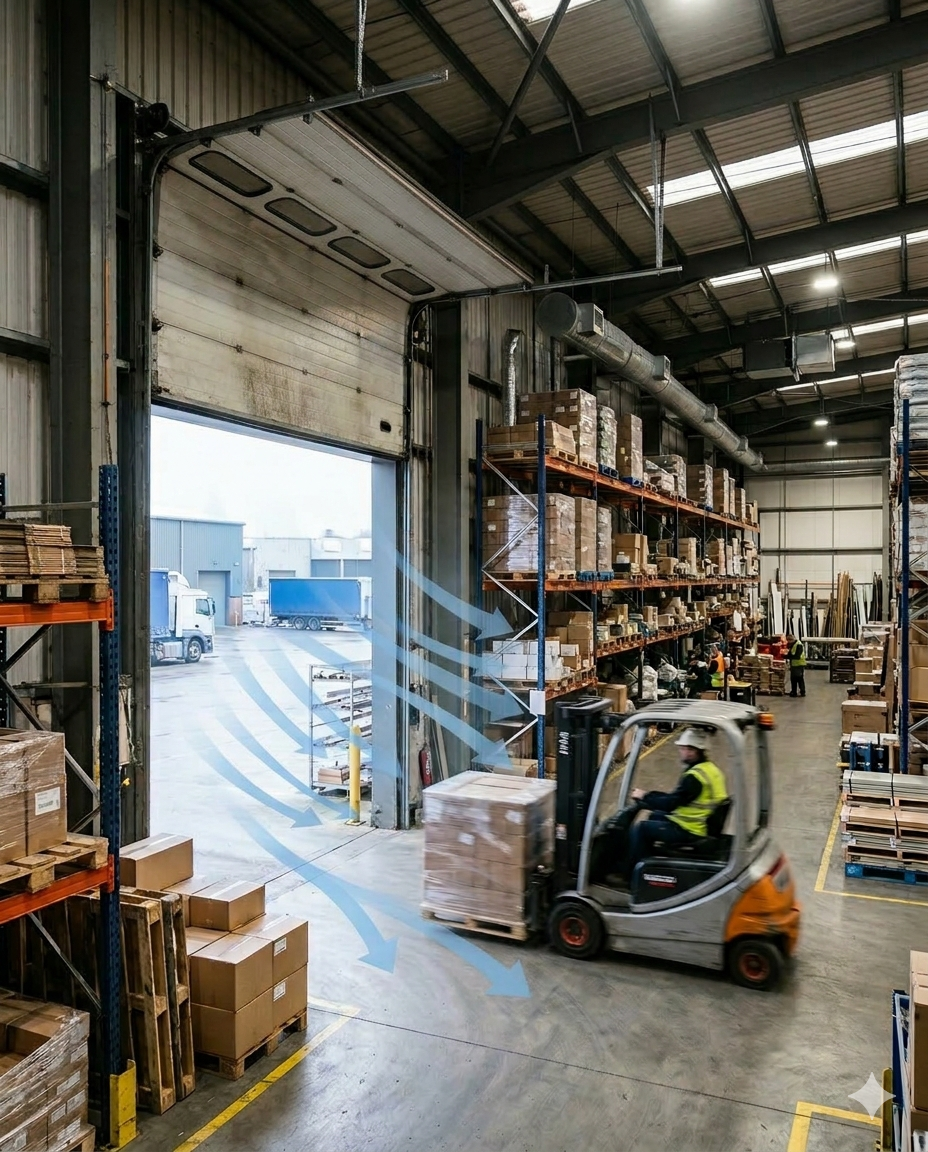
Loading bays, roller shutter doors, and natural ventilation create a constant drain on any industrial heating system. Every time a large door opens, conditioned air escapes and cold air enters. In buildings with regular vehicle or forklift traffic, this can happen dozens of times a day and significantly increase the energy required to maintain a stable working temperature.
Reducing heat loss at the point of entry is one of the most effective ways to improve overall system efficiency. Industrial air curtains are specifically designed for this role, creating a high-velocity air barrier across the doorway that limits the exchange of internal and external air without obstructing access.
SPC’s iForce Industrial Air Curtain is available in ambient, LPHW, and electric versions and protects openings up to six metres in height, making it suitable for large warehouse loading bays where standard commercial air curtains are undersized.
Is it always necessary to heat the entire air volume of an industrial space?
In many industrial buildings, the answer is no. Heating the full air volume of a large, high-ceilinged space is energy-intensive and, in some environments, impractical. Radiant heating takes a different approach: rather than warming the air, radiant panels emit infrared radiation that warms surfaces and occupants directly; the same principle as the warmth you feel from sunlight on a cold day. The air temperature may be low, but the radiant heat reaching you feels warm. This makes radiant heating particularly effective in spaces where the air volume is large relative to the occupied area, or where air movement needs to be minimised.
Frequently Asked Questions
In high-bay spaces, the main challenge is stratification: warm air rising to roof level and away from the occupied zone. Unit heaters with powerful fans can project warm air across large spans at height, while radiant panels deliver heat directly to occupants and surfaces without relying on air circulation. The right choice depends on ceiling height, occupancy pattern, and whether air movement in the space is acceptable.
Yes. SPC’s industrial radiant panels operate effectively at low flow temperatures, making them well suited to heat pump systems. CiRRUS unit heaters can also be specified with coil configurations suited to LTHW systems, though outputs will vary depending on coil row count and airflow. Air curtains are also available with enhanced heat exchanger options suited to condensing boilers and heat pump systems. Contact SPC’s technical team for guidance on system selection for heat pump-connected installations.
Industrial air curtains create an air barrier across open doorways that significantly reduces the volume of warm internal air escaping and cold external air entering. In buildings with high door-opening frequency, this can meaningfully reduce the load on the main heating system. Units are available in ambient (no heat), LPHW, and electric versions, so they can be integrated into existing systems or specified as standalone installations.
Yes. The CiRRUS Unit Heater supports BMS integration via 0-10V or BACnet, and the iForce Industrial Air Curtain can be connected to door contactors with delay relays for automatic operation. SPC’s technical team can advise on control strategies for individual projects. Contact us on 0116 249 0044 or at spc@spc-hvac.co.uk.
SPC Industrial heating products
SPC manufactures three product ranges designed specifically for industrial environments:
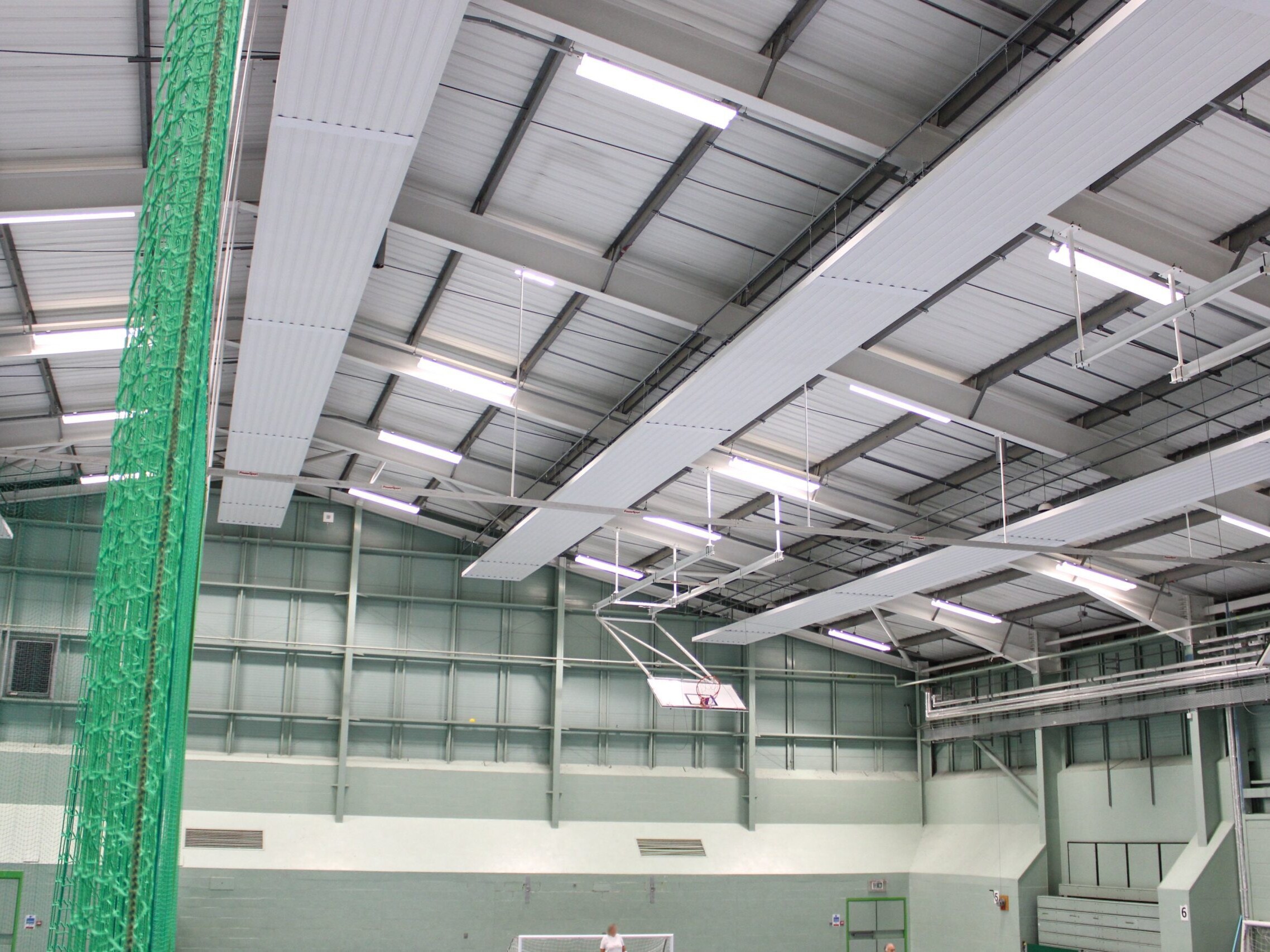
Our Industrial Radiant Panels use water-based radiant heating with anti-convective edge profiles that deliver 81% radiant output. Individual modules extend to six metres, with panel runs of up to 70 metres suitable for large industrial bays and aircraft hangars.
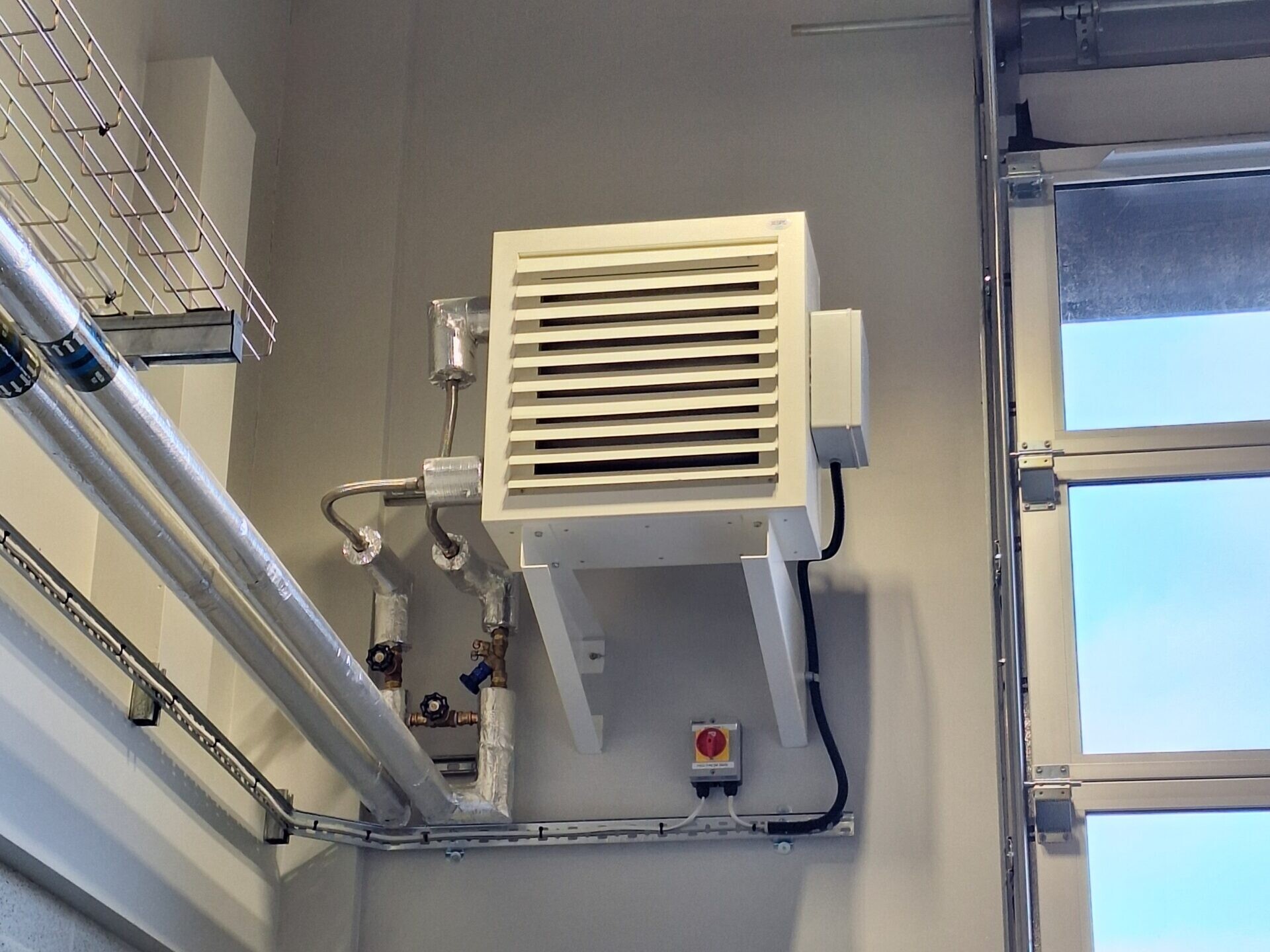
Our CiRRUS Unit Heaters use a powerful axial fan to project warm air into the space. The Ci8 delivers a throw of up to 27 metres at high speed and can be mounted at heights of 2.5 to 6 metres. Available with LPHW water coils; an electric version is also available as the Ci5.
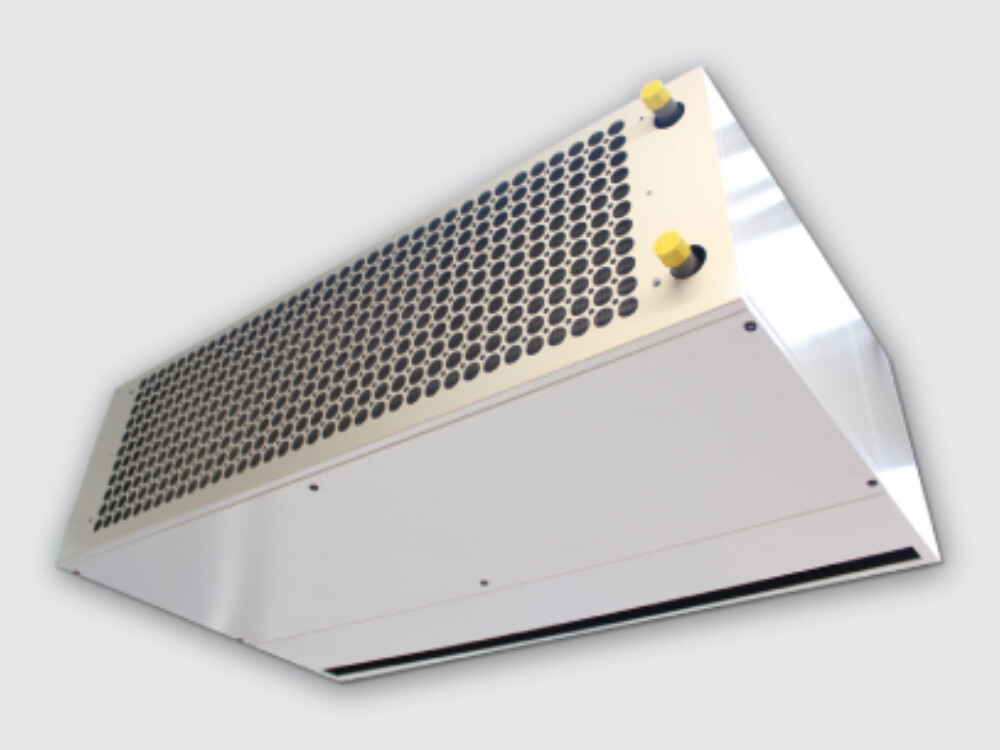
Our iForce Industrial Air Curtains protect doorway openings up to six metres in height. Available in ambient, LPHW, and electric versions, including a three-row coil option suited to condensing boilers and heat pump systems.
Planning an Industrial Heating Project?
Whether you’re specifying radiant panels for a high-bay space, unit heaters for a factory floor, or air curtains for loading bay doors, our team can advise on system selection, sizing, and configuration.
What Is the Thermatile TEN-TWELVE and Which Installation Type Do You Need?
SPC’s Thermatile TEN-TWELVE is a water-based radiant heating and cooling panel range designed for integration into suspended ceilings. The range consists of two panel types: the Thermatile TEN, which uses 10mm copper D-tube technology for individual panels and shorter runs up to 3,600mm, and the Thermatile TWELVE, which uses 12mm copper D-tube for longer continuous runs where maintaining manageable pressure drops is essential.
Both share an identical smooth, matt white room-facing finish, so panels from either type can be mixed within the same space. Panels are also available in any RAL colour to suit interior design requirements, including black panels for drama studios or spaces where aesthetics are a key consideration.
What is the difference between the Thermatile TEN and the Thermatile TWELVE?
The names refer directly to the copper tube diameter used inside each panel’s heating cartridge.
Thermatile TEN
The Thermatile TEN uses 10mm D-tube technology. The D-tube design involves flattening a circular copper tube to maximise contact between the tube and the aluminium panel, resulting in 360° contact and high heat transfer performance. This makes the Thermatile TEN ideal for individual panels and runs up to 3,600mm, where the smaller tube diameter ensures turbulent water flow and efficient heat transfer.
Thermatile TWELVE
The Thermatile TWELVE uses 12mm D-tube and is the preferred option when panel runs exceed 3,600mm. The larger tube diameter keeps pressure drops at manageable levels across extended configurations. Individual Thermatile TWELVE panels are connected together using push-fit interconnecting hoses to form continuous runs of any length.
Both panel types are built on the same 3-layer composite aluminium panel (maximum 5.5mm thick), and both are independently tested to EN 14037. The maximum operating temperature is 85°C, and the maximum operating pressure is 10 bar (tested to a minimum of 16 bar). SPC’s in-house selection software automatically determines whether TEN or TWELVE panels are required, based on run length and water flowrate.
What installation types are available for the Thermatile TEN-TWELVE?
The Thermatile TEN-TWELVE is available in various installation configurations, designed to suit the ceiling systems most commonly found in commercial and public sector buildings.
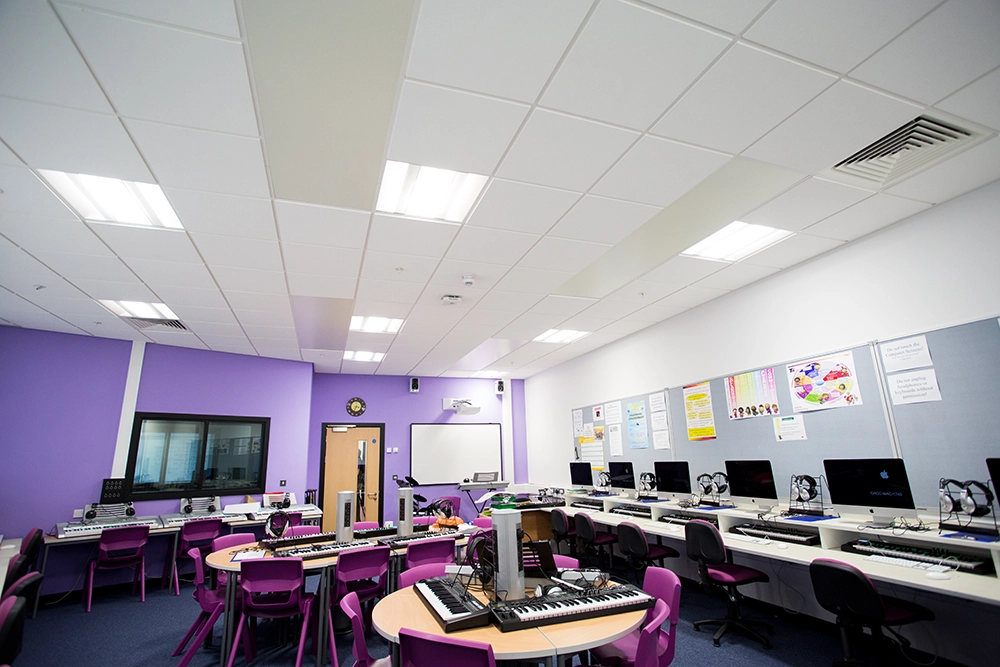
T-Bar Grid – The standard configuration. Panels are sized to fit directly into the aperture created when one or more tiles are removed from an exposed T-bar suspended ceiling grid. Panels are supported on independent wire hangers, with SPC’s hanging wire kits providing easy single-handed height adjustment via discreet 1.5mm stainless steel wire.
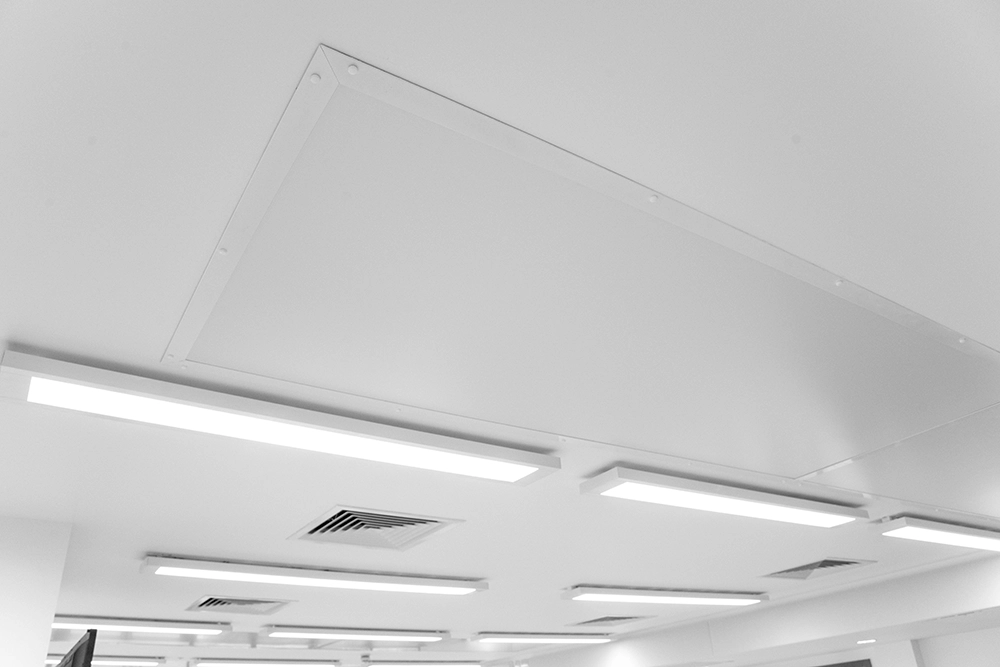
Plasterboard – For projects where radiant panels need to be inserted into a finished plasterboard ceiling, this version uses a pre-fitted frame that is screwed into a supported aperture. Where repeatable access is required, for maintenance or system changes, a two-part frame with push-fit locking is also available.
Free-Hanging – Panels can be suspended freely from a structural soffit using wire or rod suspension systems, suitable for spaces without a suspended ceiling, such as open-plan offices, atria, or industrial environments.
Wall-Mounted / Angled Panels – Where ceiling installation isn’t possible or practical, panels can be wall-mounted at an angle using brackets, directing radiant heat down into the occupied zone below.
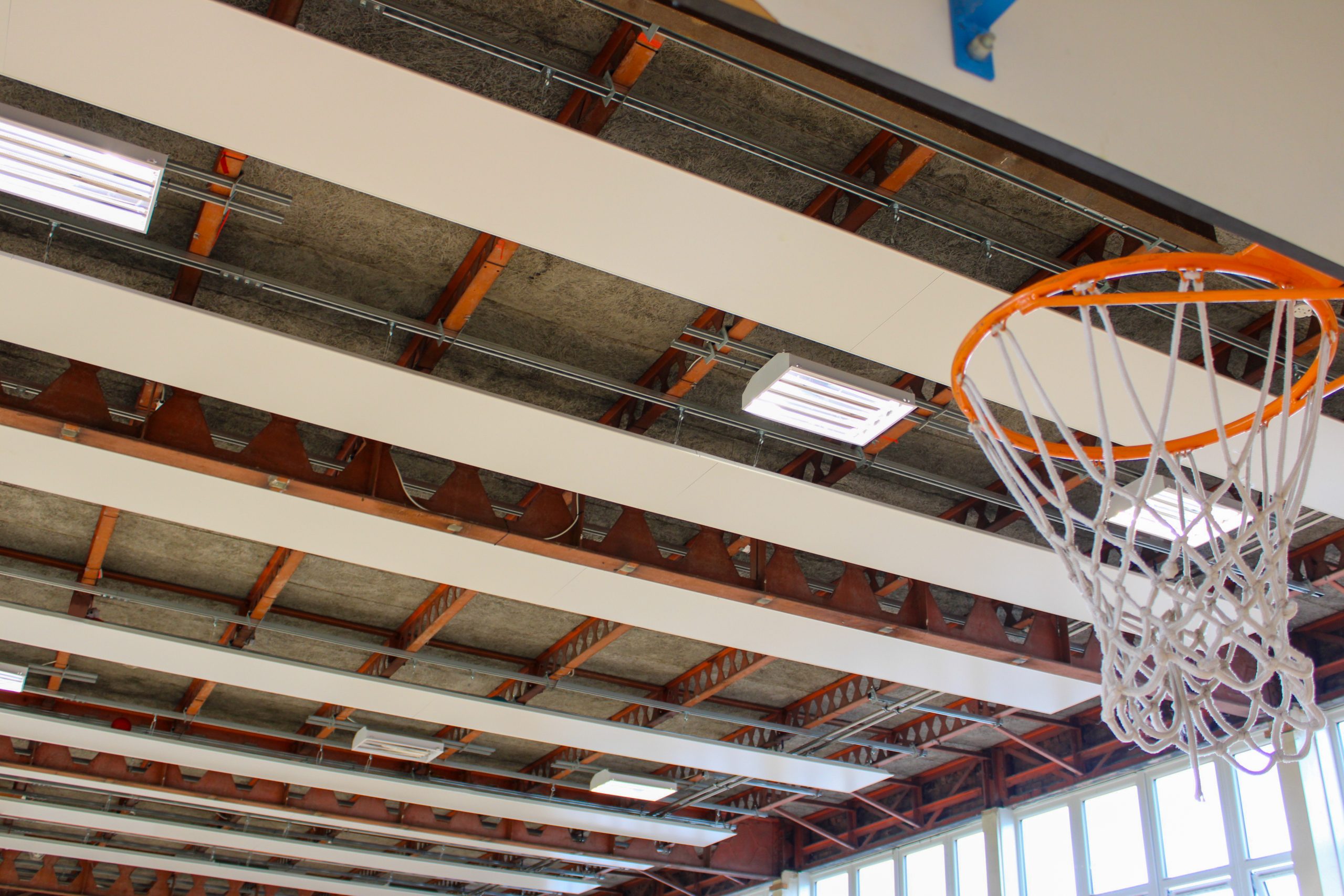
Sportsline Panels – A configuration designed specifically for sports halls and gymnasiums. Ball guards are fitted over the panels to protect them from impact, making this the recommended installation type for high-activity environments.
Need custom RAL coloured panels?
SPC can manufacture Thermatile TEN-TWELVE panels in any RAL colour to suit your project. Whether you need black panels for a drama studio, a colour matched to an interior scheme, or something more distinctive! Get in touch with the team to discuss your requirements.

Frequently Asked Questions
The Thermatile TEN uses 10mm copper D-tube and suits individual panels and runs up to 3,600mm. The Thermatile TWELVE uses 12mm copper D-tube for longer continuous runs, where the larger diameter keeps pressure drops manageable. SPC’s selection software automatically determines which type is required. Both have the same visible finish and can be mixed within a single installation.
Yes. Both panel types work effectively at low water temperatures, typically 45–50°C, which is the normal operating range for heat pump systems. Their large surface area allows them to deliver meaningful heat output at these temperatures, making them more suitable for heat pump applications than radiators, which typically require higher flow temperatures.
Yes. Both Thermatile TEN and TWELVE panels can provide radiant cooling by circulating chilled water instead of hot water. For cooling applications, the panel surface temperature must be controlled to prevent condensation, typically requiring either a dehumidification system or careful chilled water temperature management. Contact SPC’s technical team for cooling system design guidance.
SPC’s zone control kit includes a Belimo valve and actuator, digital thermostat, and black bulb temperature sensor. The black bulb sensor measures resultant temperature, a combination of air and radiant temperature, which is a more accurate indicator of occupant comfort in radiant-heated spaces. Multiple panels can be controlled as a single zone, and the system can be integrated with a BMS for centralised control.
Yes. Active BIM objects are available for Revit, pre-populated with project-specific data from SPC’s selection programme, covering configurations and specifications for architects, designers, and contractors.
Specify the Thermatile TEN-TWELVE for Your Next Project
SPC’s technical team can support your Thermatile specification from initial design through to installation — including site surveys, selection software outputs, and full technical drawings provided with every quotation.