

When specifying heating for a warehouse, factory, or large industrial space, two technologies come up most often: fan convectors and unit heaters. Both use forced-air convection to distribute warmth, both are widely available, and both can be connected to low-temperature hot water (LTHW) systems, but they are designed for fundamentally different environments and applications.
This guide compares the two technologies across the factors that matter most for industrial and large commercial projects: heat output and throw, ceiling height suitability, energy efficiency, installation requirements, and overall running costs.
What Is a Unit Heater?
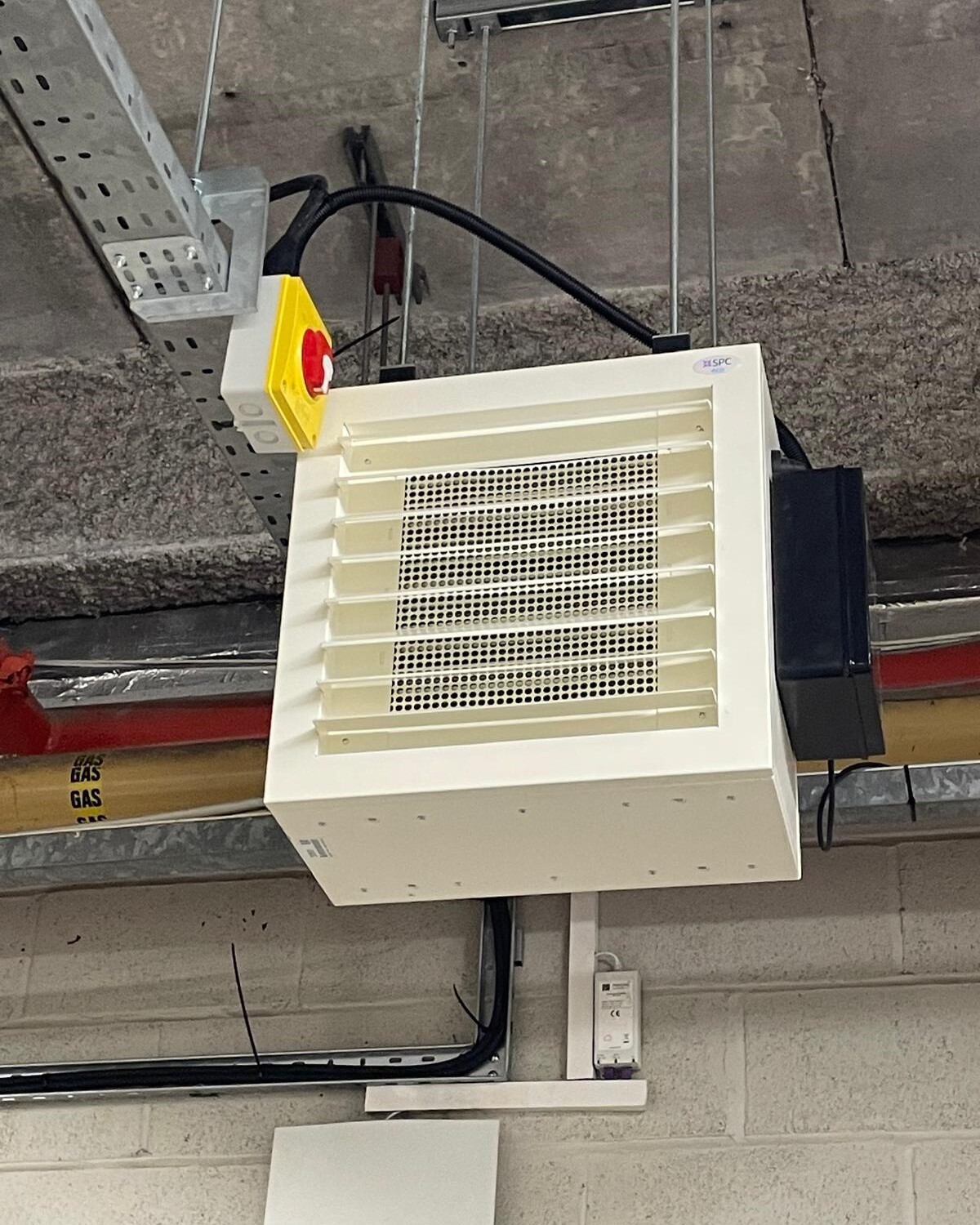
A unit heater is a self-contained air heating device designed for large commercial or industrial environments. It combines a heat exchanger coil with a powerful axial or centrifugal fan to project warm air across large distances and volumes. Unit heaters are typically ceiling or wall-mounted and are built to operate effectively in high-bay spaces where heat stratification is a significant challenge.
SPC’s CiRRUS Unit Heater is a purpose-built low temperature hot water (LTHW) unit heater available in two configurations:
- Water – powered by a low temperature hot water circuit, with a throw of up to 27 metres at high speed. Suitable for mounting heights of 2.5 to 6 metres
- Electric – an electric version for spaces without an existing hot water circuit
Both versions support BMS integration via 0-10V or BACnet, making them straightforward to incorporate into building management systems.
What Is a Fan Convector?
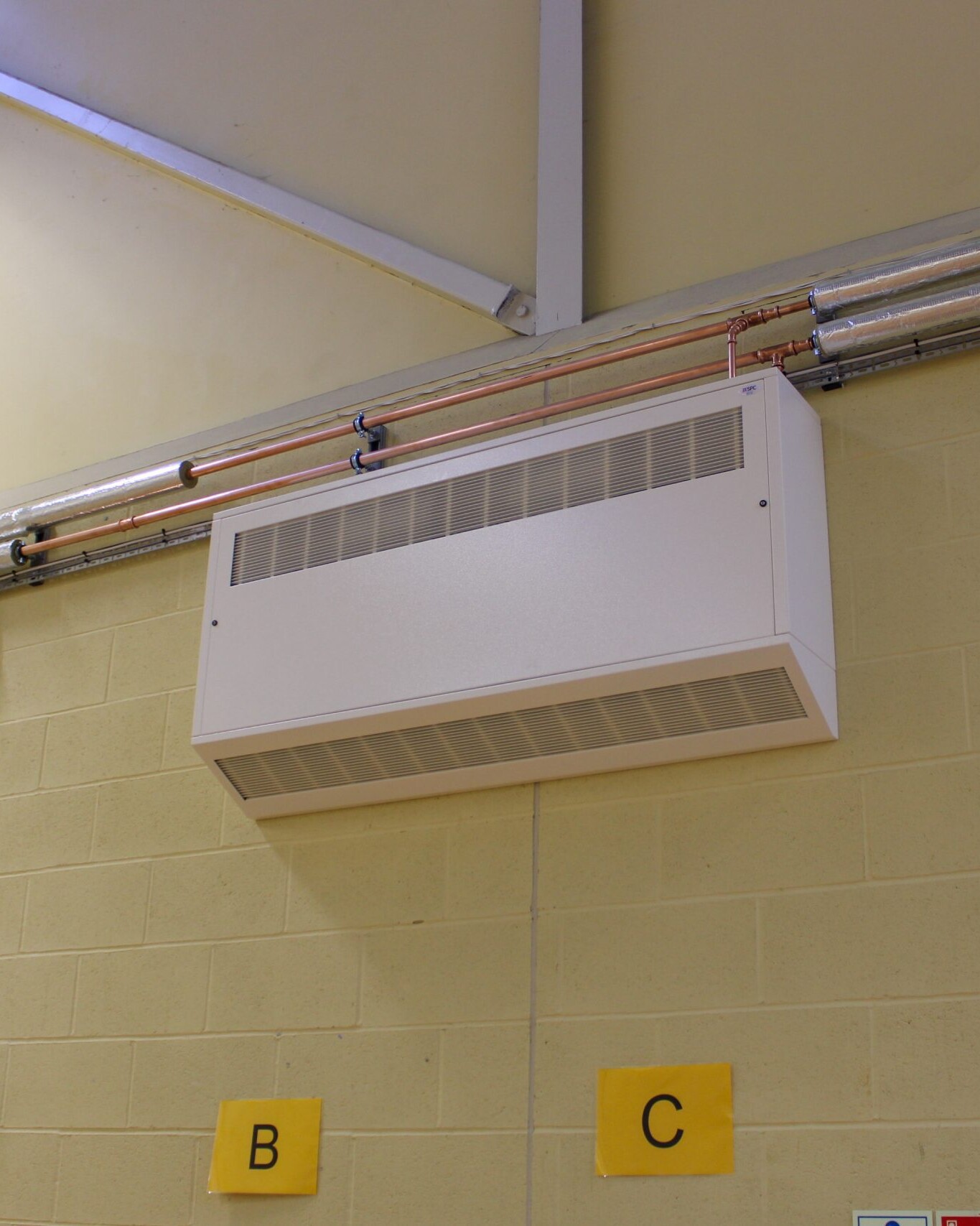
A fan convector is a forced-air heating unit that draws room air over a heat exchanger and recirculates it into the space. Fan convectors are most commonly found in commercial and light commercial environments such as schools, offices, retail spaces, healthcare buildings, where comfort heating across a moderate floor area is the primary requirement.
SPC’s Belgravia Fan Convector range is designed for exactly these environments. Available in wall-mounted, floor-standing, and ceiling tile formats (including the Tilevector Plus range for suspended ceiling grids), Belgravia units offer heating and cooling in a compact, aesthetically considered package well suited to occupied commercial spaces.
Which Is Better for Warehouse Heating?
For the majority of warehouse, factory, and workshop applications, a unit heater is the correct choice.
Here is why:
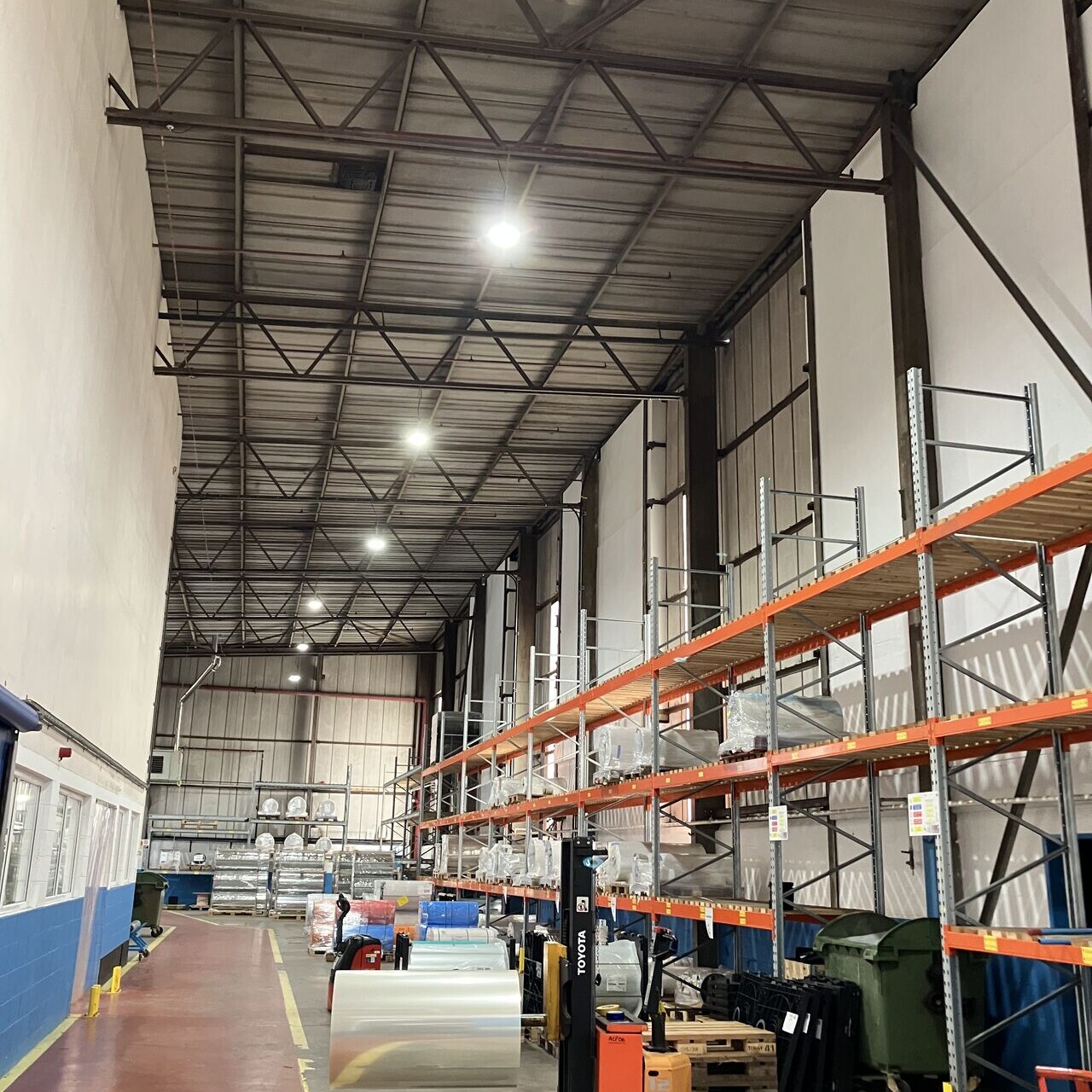
Heat stratification is the primary challenge in any high-bay space. Warm air rises naturally and accumulates near the roof, well away from the people and processes that need it. Unit heaters are specifically engineered to overcome this; the powerful axial fan on a CiRRUS unit heater projects warm air at high velocity across up to 27 metres, breaking up stratification layers and driving warmth down to floor level.
Fan convectors recirculate air within a defined zone. In a standard commercial room with a ceiling height of 2.5 to 3 metres, this works well. In a warehouse with a ceiling height of 6, 8, or 10 metres, the short throw and lower air momentum of a fan convector means it will struggle to overcome stratification, and a significant proportion of heat output will be lost to the roof void.
The exception: Fan convectors are a strong choice for welfare areas, offices, reception spaces, or mezzanine levels within a warehouse building, anywhere with a lower ceiling height and a requirement for comfort heating in an occupied zone. In these cases, a Belgravia fan convector will outperform a unit heater on both comfort and aesthetics.
What About Heat Loss at Loading Bays?
Both unit heaters and fan convectors address the temperature of the air within the building. Neither addresses the root cause of heat loss in warehouses with active loading bays: the exchange of internal and external air every time a roller shutter door opens.
In buildings with regular vehicle or forklift traffic, this can happen dozens of times a day. The most effective way to reduce this heat loss is an industrial air curtain installed across the doorway opening. SPC’s iForce Industrial Air Curtain protects openings up to six metres in height and is available in ambient, LTHW, and electric versions.
Pairing a CiRRUS Unit Heater with an iForce Air Curtain at each loading bay door is the most energy-efficient approach for most warehouse heating projects.

Can These Systems Work with Heat Pumps?
Yes, both can with the right coil specification.
The CiRRUS unit heater can be specified with coil configurations suited to LTHW systems operating at the lower flow temperatures typical of air source and ground source heat pumps. Output will vary depending on coil row count and airflow, so it is important to confirm the specification with SPC’s technical team for heat pump-connected installations.
The Belgravia Fan Convector range includes enhanced coil options specifically designed for low temperature heating systems, making them well suited to heat pump applications in commercial environments.
Frequently Asked Questions
Fan convectors are designed for commercial environments with ceiling heights up to approximately 3.5 metres. In high-bay warehouses, the short air throw and lower fan momentum mean they are unlikely to overcome heat stratification effectively. Unit heaters are the more appropriate choice for the main warehouse space. Fan convectors remain a good option for offices, welfare areas, or mezzanine spaces within the same building.
Both use a fan to circulate air over a heat exchanger, but unit heaters are built for industrial environments – they have more powerful fans, longer air throw, and are designed for mounting at height in large spaces. Fan convectors are designed for comfort heating in commercial rooms, with a focus on quiet operation, aesthetics, and the option to provide cooling as well as heating.
SPC’s CiRRUS unit heater have a throw of up to 27 metres at high speed, making it suitable for large warehouse bays and open industrial spaces. Fan convectors are designed for room recirculation rather than long-distance throw.
Yes, CiRRUS unit heaters can be specified with LTHW coil configurations suited to heat pump systems. SPC’s technical team can advise on coil row count and flow temperature requirements for your specific installation.
A combination of unit heaters for the main space and industrial air curtains at loading bay doors is the most energy-efficient approach. The unit heaters maintain temperature across the floor area; the air curtains reduce heat loss every time a door opens.
Talk to SPC About Your Warehouse Heating Project
SPC has been manufacturing heating and cooling products for industrial and commercial environments for over 50 years. Whether you are specifying a new warehouse heating system, replacing ageing equipment, or looking to improve efficiency on an existing installation, our technical team can advise on product selection, sizing, and system configuration.