

Industrial unit heaters are one of the most practical and cost-effective heating solutions available for warehouses, factories, workshops, and distribution centres. SPC’s CiRRUS range covers outputs up to 50.9kW from a wall or ceiling-mounted position, with no floor space lost and full BMS integration capability, making them a strong specification choice for both new-build industrial projects and retrofit upgrades.
But not every industrial building has the same heating challenge. A high-bay distribution centre, a busy vehicle workshop, and a factory with a mezzanine floor all have different ceiling heights, airflow patterns, occupancy types, and control requirements. Specifying the wrong unit heater (or the wrong type of heating altogether) means wasted energy, uncomfortable working conditions, and a system that never quite performs as expected.
This guide is designed to help specifiers, contractors, and building owners work through the key questions before choosing CiRRUS Unit Heaters, including the scenarios where a different product may actually be the better fit.
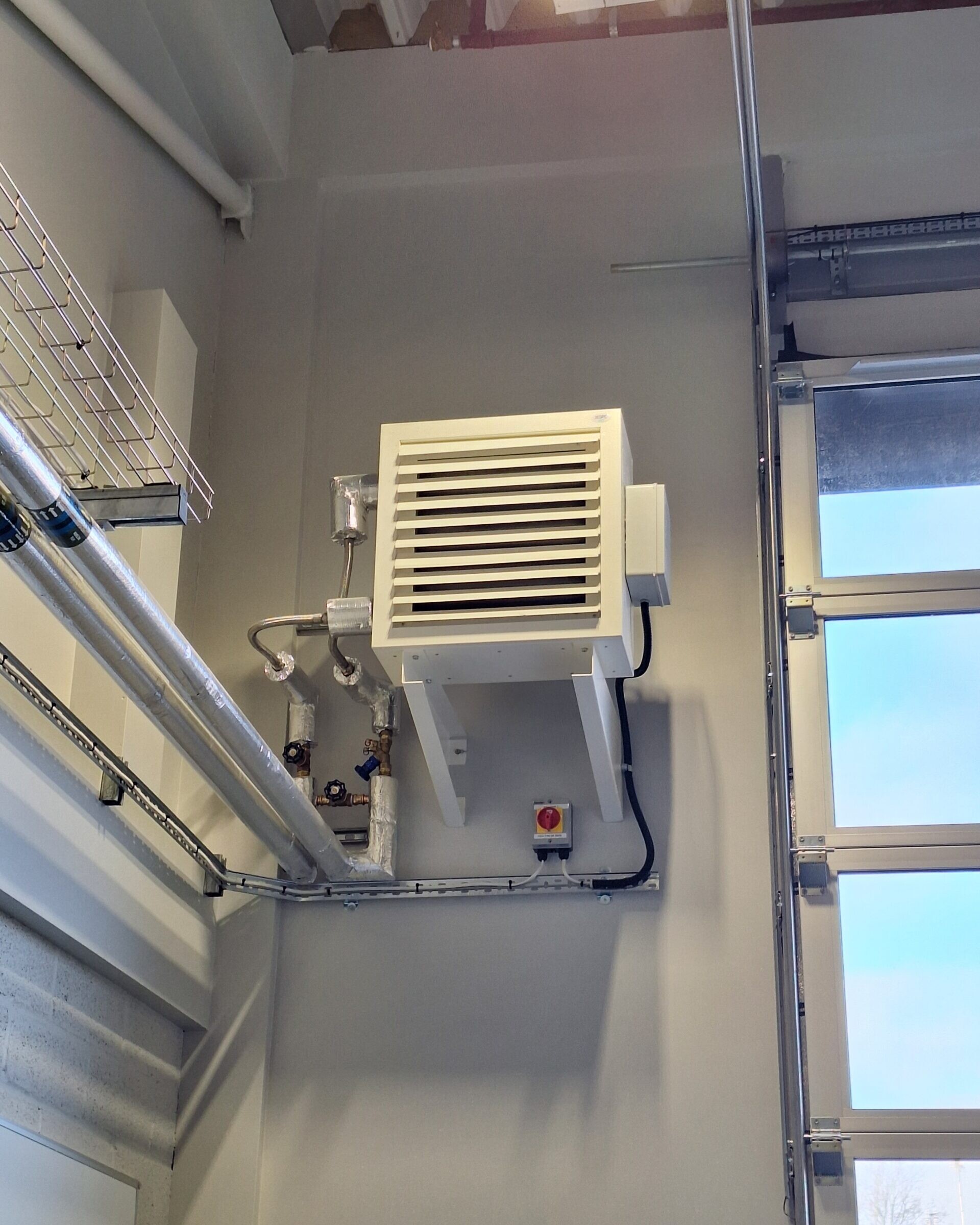
What Is an Industrial Unit Heater and How Does It Work?
An industrial unit heater combines a heat exchanger, fed by a hot water circuit or electric elements, with a powerful axial fan that distributes warm air across a large area. Unlike a boiler or radiant system, the heat is delivered convectively: the fan draws in cool room air, passes it over the heated exchanger, and throws warm air out into the space.
This makes unit heaters particularly effective where:
- Fast heat-up times are required at the start of a shift
- Heating is intermittent rather than continuous
- Large floor areas need to be covered from a small number of mounting points
- Installation simplicity and low maintenance are priorities
What Makes CiRRUS Different from a Standard Unit Heater
Unit heaters as a product category are well established in industrial heating. What separates the CiRRUS range from a generic warm air unit is the level of control and flexibility built into the specification.
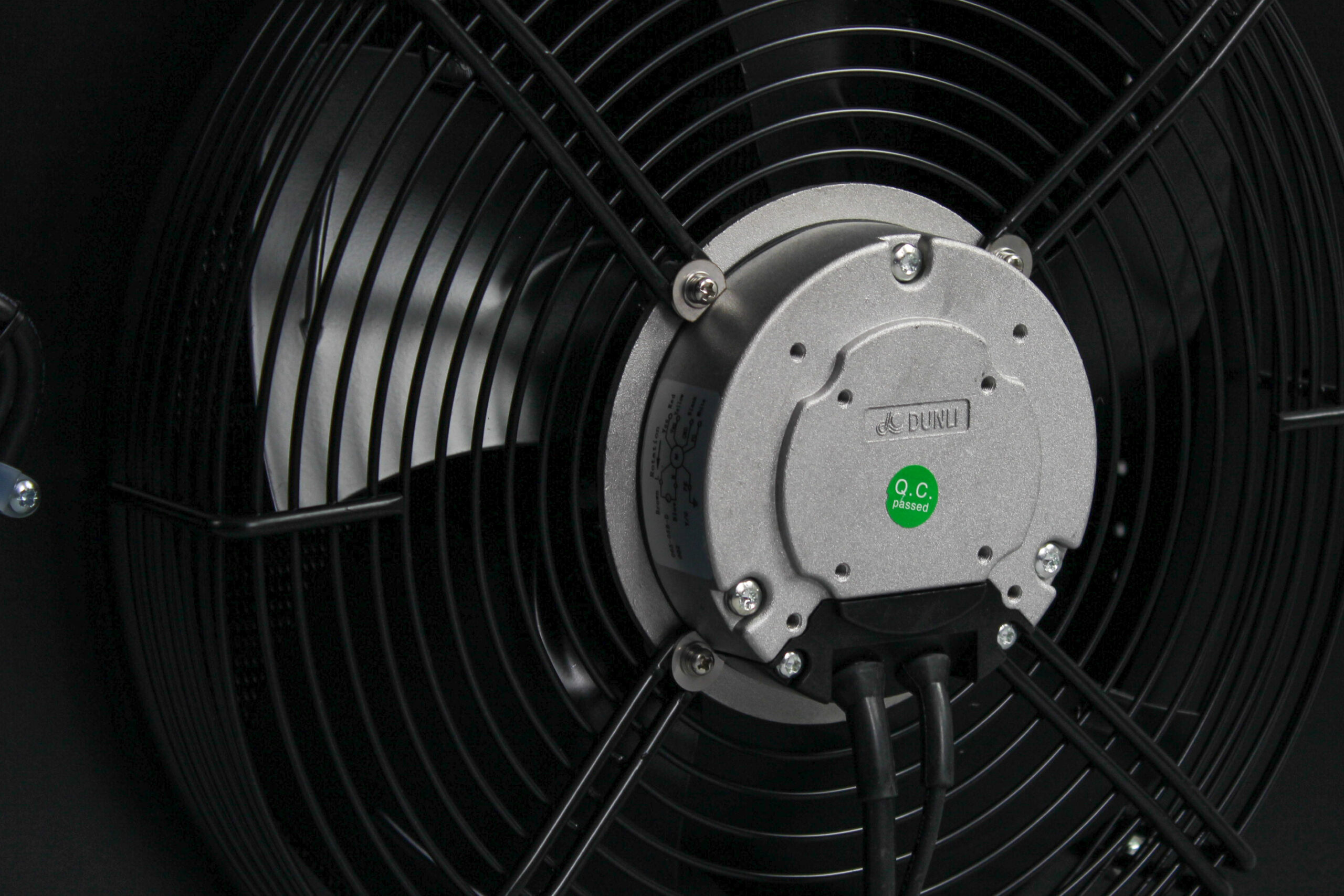
EC motor with 0-10V control
The CiRRUS uses an electronically commutated (EC) axial fan that is continuously variable via a 0-10V signal. This means fan speed, and therefore air throw, can be precisely matched to the mounting height, rather than being locked to fixed speed settings. This matters in practice: mounting a unit too high on a fixed-speed motor means the heated air loses momentum before it reaches the occupied zone. The EC motor removes that constraint.
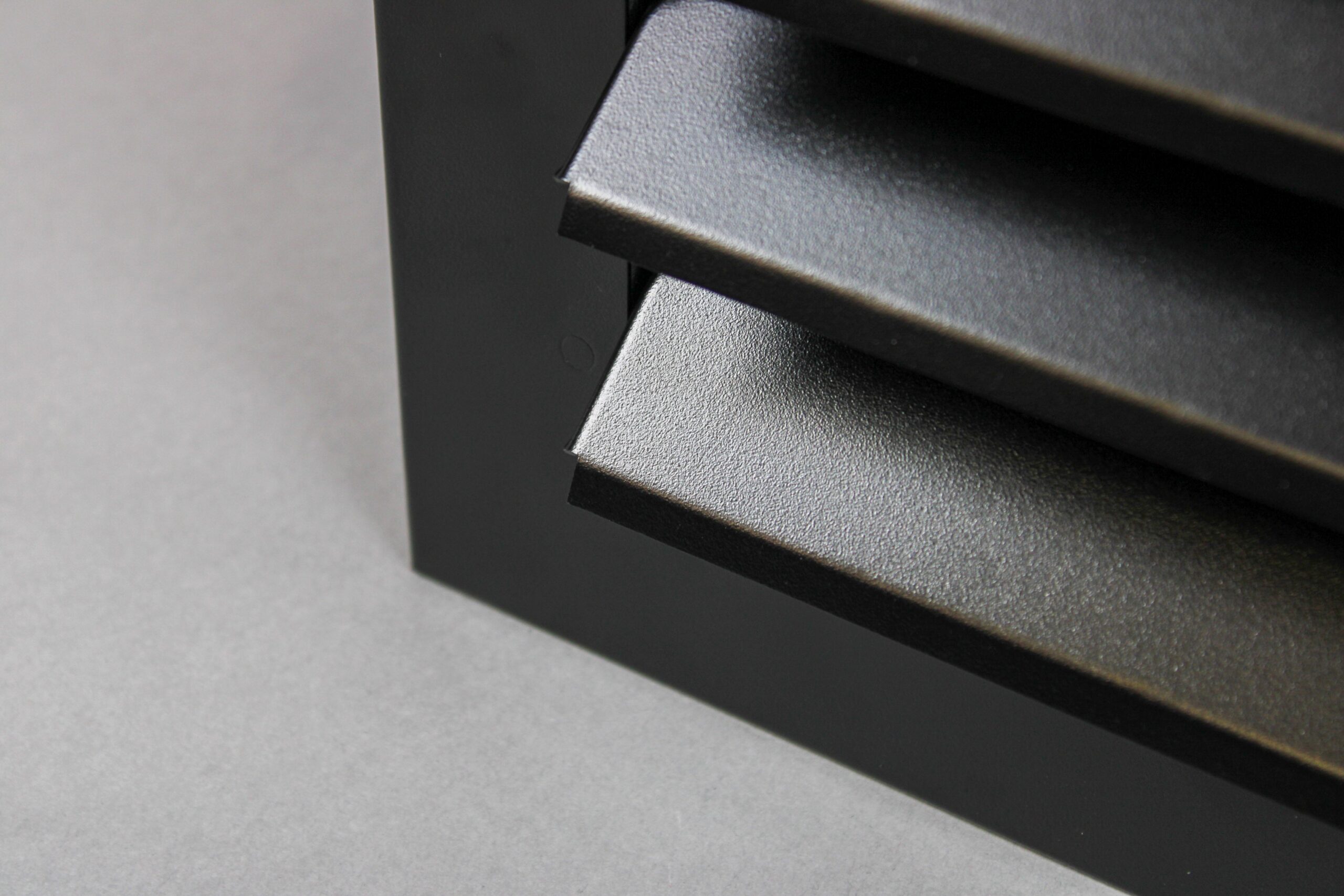
Adjustable louvre blades
The discharge louvres on horizontal units are manually adjustable, allowing the installer to direct airflow at the correct angle for the space. In a deep-plan warehouse this can make the difference between even coverage and cold spots.
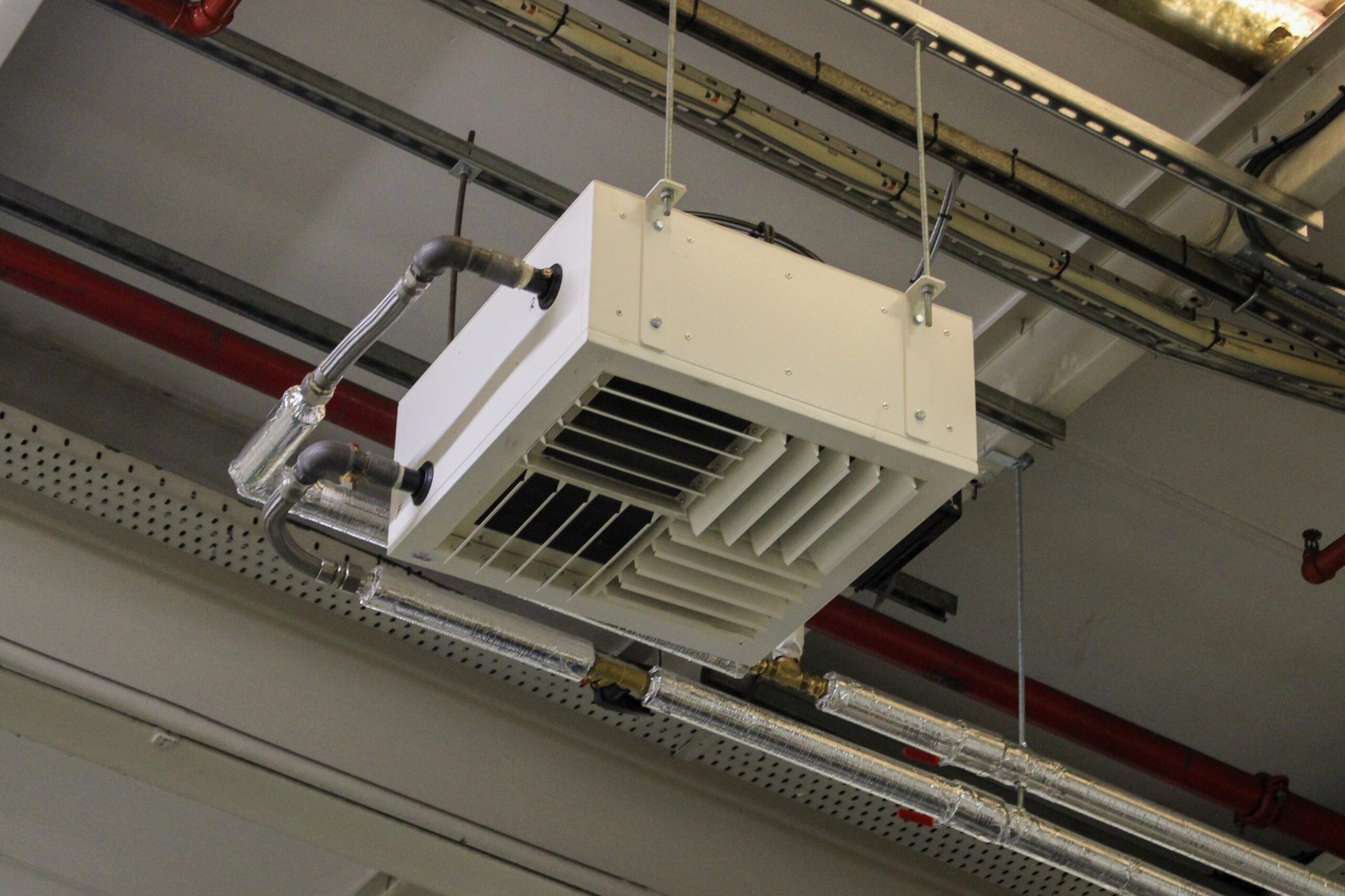
Horizontal and vertical configurations
Horizontal units are wall-mounted and direct heated air across the space via angled louvres. Vertical units are ceiling-suspended and discharge directly downward, with a 4-way diffuser option available for wider coverage. The choice depends on ceiling structure, available wall space, and the airflow pattern the space requires.
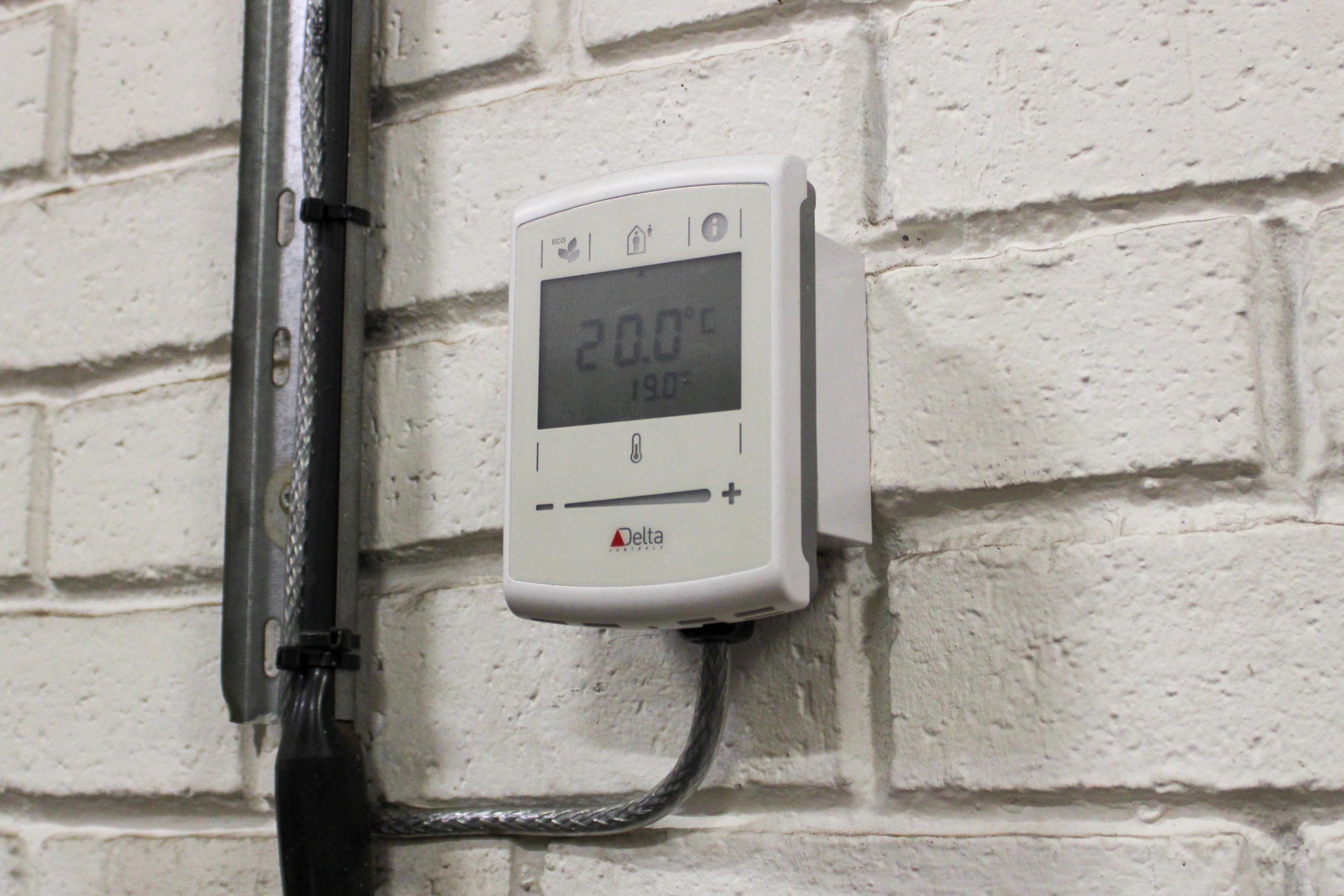
Delta Waterside Controller compatibility
The CiRRUS is designed to work with SPC’s Delta Waterside Controller, which modulates the hot water flow to the coil rather than cycling fan speed to control output. More on this in the control section below.
BMS and BACnet integration
The unit can be supplied for manual, automatic, or full BMS control with BACnet compatibility. For larger facilities or multi-zone installations, this allows CiRRUS units to be integrated into a building-wide energy management strategy.

What Output Do CiRRUS Unit Heaters Deliver?
The CiRRUS range spans four sizes, Ci5 to Ci8, with water-heated models available in multiple coil configurations.
The largest water-heated model, the Ci8 with a 3-row coil at 82/71°C, delivers up to 50.9kW of thermal output with a throw distance of 27 metres and coverage of up to 25 x 25 metres per unit. A single Ci8 is capable of heating a significant floor area, reducing the number of units, pipework runs, and commissioning points required.
EC axial fans with sealed-for-life bearings keep running costs and maintenance requirements low across the range.

Where Does CiRRUS Excel?
The CiRRUS range has been engineered for industrial and heavy commercial environments. These are the applications where it performs best:
High-bay warehouses (6m+ ceiling height)
The EC motor’s variable speed control is particularly valuable at height. Units can be set to deliver the airflow momentum needed to push warm air down to floor level without creating excessive draught at the occupied zone. The Ci8’s 27m throw makes it suitable for very high-bay facilities.
Factories with open floor plans
Large, unobstructed floor areas allow the horizontal throw from wall-mounted units to cover significant distances. The adjustable louvres help direct heat toward workstations or high-activity zones.
Sports halls
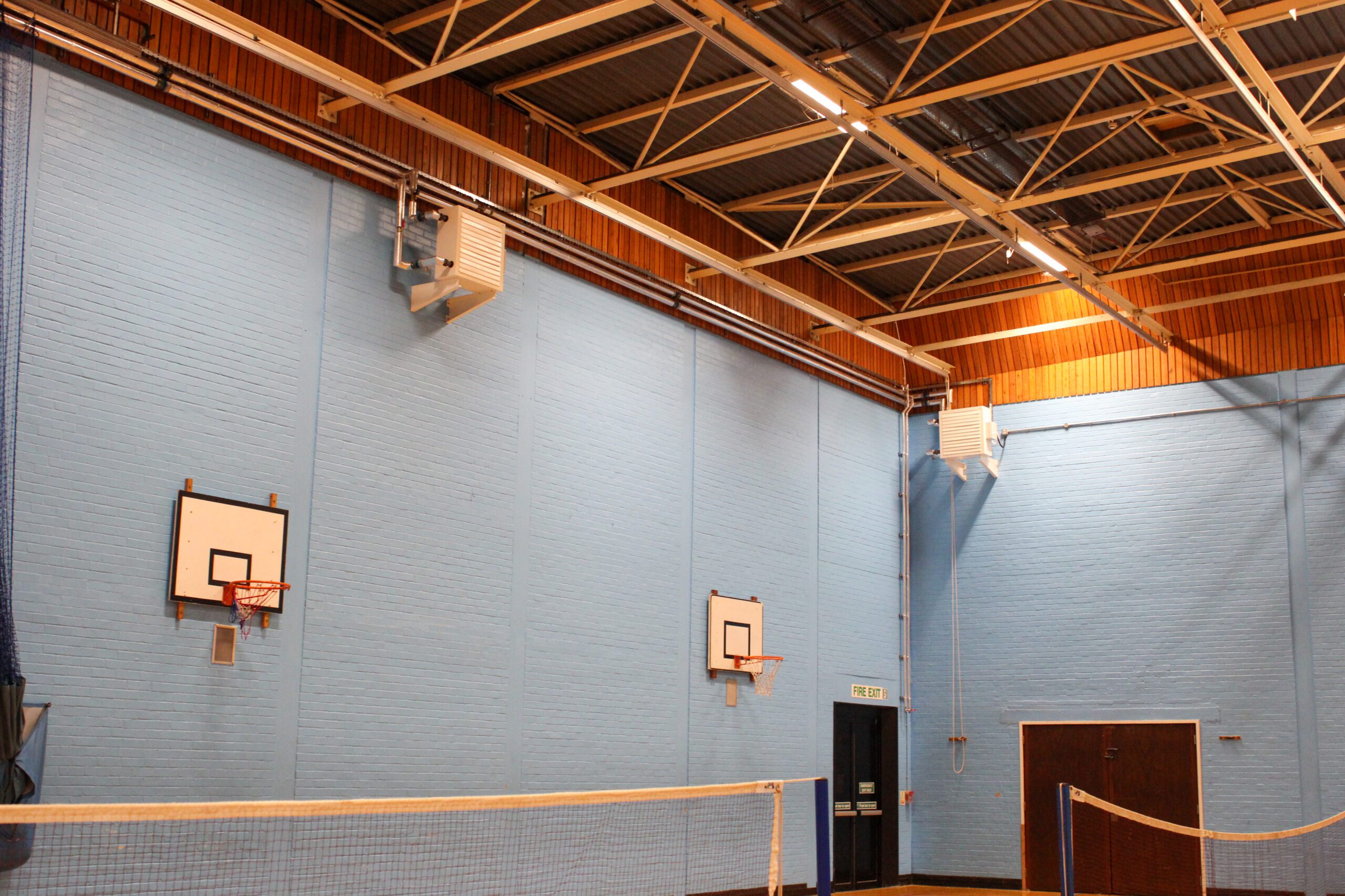
High ceilings, large volumes, and intermittent occupancy make unit heaters a practical choice. The ability to zone heating and control fan speed means the space can be brought up to temperature quickly before use.
Loading bay areas and back-of-house retail spaces
Applications where robust, low-maintenance heating is required and noise is not a primary concern.
Distribution centres with frequent door openings
Loading bay doors create significant infiltration. Unit heaters respond quickly to temperature drops and can be zoned to concentrate heating near doorways, compensating for heat loss without heating the entire building.
Garages and vehicle workshops
Robust steel casing and industrial-grade components handle the environment well. Vertical ceiling-suspended units work particularly effectively in workshop bays, delivering downward airflow directly over working areas.
Where CiRRUS May Not Be the Best Fit
This is the question most product guides avoid answering. The honest answer is that CiRRUS is not the right specification for every building, and understanding the limitations saves costly mistakes.
Low-ceiling spaces (below 2.0m)
The CiRRUS range has defined minimum mounting heights. The absolute minimum across the range is 2.0m, applicable only to the Ci5 model at low fan speed. Below this height, the airflow momentum creates unacceptable draught levels. If your ceiling height is below 2.0m, the CiRRUS range is unsuitable regardless of model selection.
For spaces between 2.0m and 3.0m, the Ci5 at low speed is the only viable option – and only in non-noise-sensitive applications. The larger models require progressively greater minimum heights:
| Model | Low Speed | Medium Speed | High Speed |
| Ci5 | 2.0m | 2.5m | 2.5m |
| Ci6 | 2.5m | 2.5m | 3.0m |
| Ci7 | 2.5m | 3.0m | 3.0m |
| Ci8 | 2.5m | 3.0m | 3.5m |
Note also that wall-mounted horizontal units require a minimum clearance of 250mm from the wall at the air intake side to ensure sufficient airflow.
Noise-sensitive environments
The CiRRUS handles high airflow volumes and generates noise levels as a result. It is not suitable for offices, libraries, classrooms, or any space where occupant noise sensitivity is a primary concern. In these applications, a Belgravia Fan Convector or a radiant panel solution will be more appropriate.
Spaces requiring both heating and cooling
Unit heaters are heating-only products. If your building requires year-round temperature control, a radiant panel system such as SPC’s iTwenty Eight Industrial Radiant Panels is worth considering, as these can operate in both heating and cooling modes from a single installed product.
Spaces with very low air change requirements
In environments where air quality or contamination control is critical, the high airflow volumes from unit heaters can be counterproductive. Radiant heating, which warms surfaces and occupants directly without moving large volumes of air, may be the more appropriate specification.
Can CiRRUS Unit Heaters Work with a Heat Pump?
CiRRUS Unit Heaters are compatible with heat pump systems and low-temperature hot water (LTHW) circuits, making them a practical choice for decarbonisation projects and net zero specifications. The key is designing the system correctly from the outset.
At heat pump flow temperatures (typically 45/35°C), thermal output is lower than at conventional boiler temperatures, but SPC offers enhanced 3 or 4-row coil options specifically to address this. These maintain a sufficient leaving air temperature (ideally 30°C to 45°C) to ensure the air jet retains the momentum needed to reach the occupied zone.
In practice, a heat pump specification will require either a larger model or additional units compared with a conventional high-temperature system. A load that a Ci6 with a standard 2-row coil handles at 80/70°C may require a Ci8 with a 4-row coil at 45/35°C to meet the same demand. This is a sizing consideration, not a product limitation, and it applies equally to any convective emitter on a low-temperature circuit.
SPC can provide output selection data for specific flow temperatures and coil configurations. If you are designing for a heat pump primary plant, confirm the coil specification at project stage.
What Control Options Are Available?
CiRRUS Unit Heaters support a range of control configurations to suit different project requirements:
- Manual on/off and speed rocker switches for straightforward local control
- Automatic local thermostatic control with waterside modulating valves
- BMS integration via 0-10V signal or BACnet for full remote management and monitoring
This flexibility makes them suitable for standalone installations and for larger projects where centralised building management is required.
Why Waterside Control Outperforms Airside for Unit Heaters
Most unit heaters are controlled airside, meaning output is regulated by adjusting fan speed. When the thermostat calls for less heat, the fan slows down. This sounds logical, but it creates a practical problem: reducing fan speed reduces the throw of the unit. A unit mounted at 6m running at 30% fan speed may no longer be delivering heated air to the occupied zone at all. The heat is being generated, but it is not reaching the people who need it.
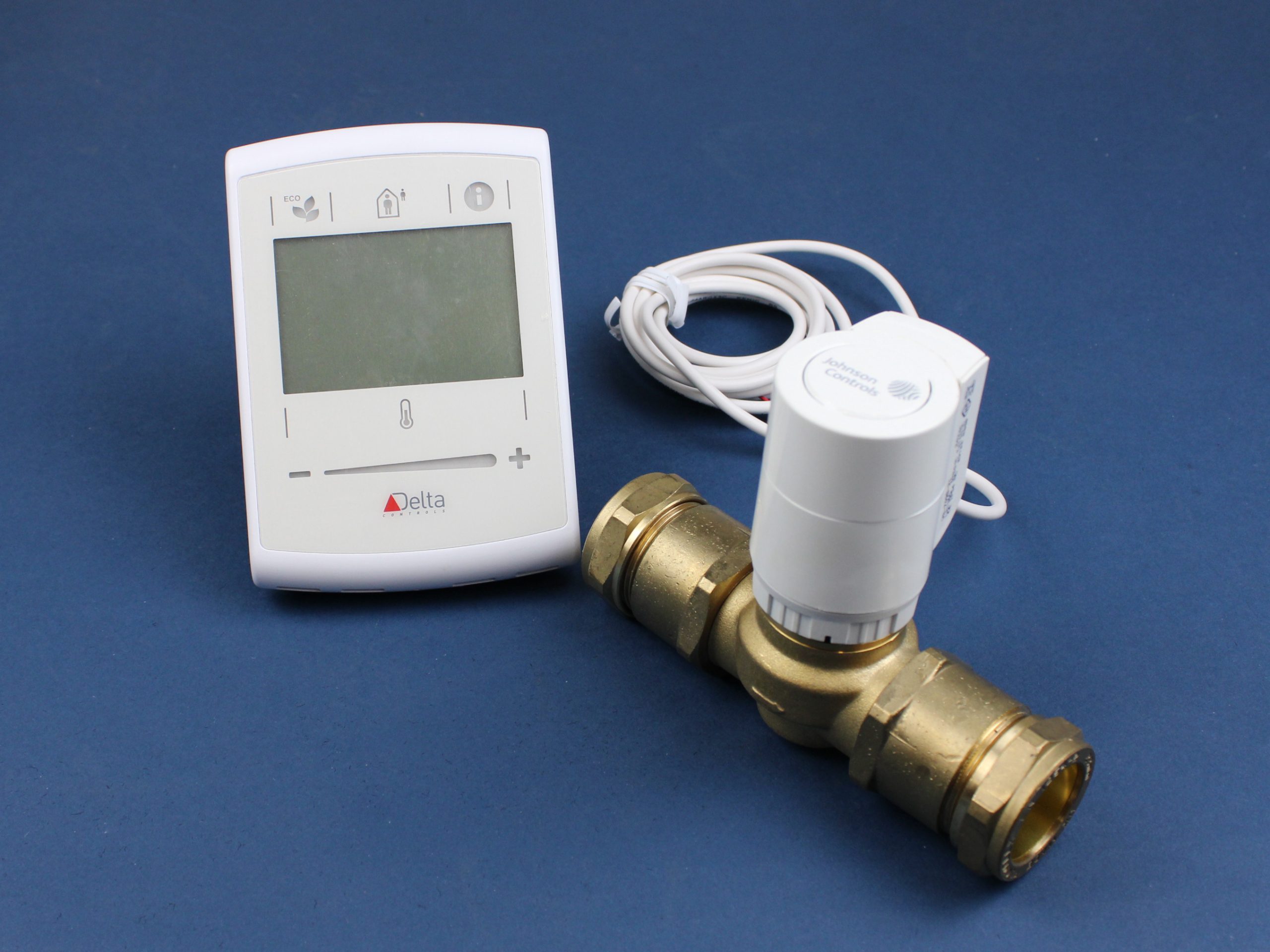
The SPC Delta Waterside Controller takes a different approach. Rather than modulating the fan, it modulates the flow of hot water through the coil using a proportional valve. The fan continues to run at the speed appropriate for the mounting height, maintaining throw and coverage. The heat output is controlled by varying the water flow rate, not the airflow.
The practical result is more consistent comfort, particularly in buildings with high ceilings where throw distance is critical. Additional benefits include:
- Proportional valve control for energy saving
- Precise thermostatic control for consistent comfort
- Master/slave configuration for multiple units
- Volt-free terminals for integration flexibility
- BACnet compatibility for BMS integration
Is There an Electric Version of the CiRRUS?
Yes. The Ci5 is the electric variant in the range, featuring self-regulating ceramic PTC heating elements and multiple overheat protection switches. It runs on 400V 3-phase power and delivers a fixed 9kW output, making it suitable for locations where a hot water circuit is not available or practical.
Key Specification Questions
Before selecting CiRRUS, work through these questions:
What is your ceiling height?
This determines which model is viable and at what fan speed. Use the minimum mounting height table above as your starting point. The recommended installation height range is 2.0 to 6.0m.
What is the nature of the space?
Industrial and heavy commercial applications are well suited to CiRRUS. Offices, classrooms, and noise-sensitive spaces are not.
Do you need heating only, or heating and cooling?
If cooling is required, consider radiant panels rather than unit heaters.
Do you need BMS integration?
CiRRUS supports BACnet and can be supplied for full BMS control. Confirm this at specification stage.
How frequently are large doors opened?
High infiltration benefits from the fast response and zonal flexibility of unit heaters. Consider whether SPC iForce Industrial Air Curtains should also be specified to reduce heat loss at doorways.
How many units are required?
For multi-unit installations, the Delta Waterside Controller’s master/slave capability allows multiple units to be controlled from a single point.
Frequently Asked Questions
The water-heated Ci8 delivers up to 50.9kW at 82/71°C with a 3-row coil configuration. Output varies by model size, coil specification, and water temperature – SPC can provide selection data for specific project conditions.
The recommended installation height range is 2.0 to 6.0 metres. Minimum heights vary by model and fan speed, the Ci8 requires a minimum of 3.5 metres at high speed, while the Ci5 can be installed as low as 2.0 metres at low speed. A minimum wall clearance of 250mm is required at the air intake side for horizontal wall-mounted units.
Horizontal units are wall-mounted and use adjustable louvre blades to direct heated air across the space at a downward angle. Vertical units are ceiling-suspended and discharge directly downward, with a 4-way diffuser available for wider coverage. Vertical units are better suited to spaces where wall mounting is not practical or where a downward airflow pattern is preferred, such as over individual workstations or vehicle bays.
EC axial fans use sealed-for-life bearings, reducing routine maintenance requirements. The main service tasks are periodic coil cleaning and checking that air intake and discharge paths remain clear. Louvres are fully adjustable and can be repositioned without specialist tools.
As a UK-manufactured product, CiRRUS unit heaters benefit from shorter lead times than imported alternatives. Contact the SPC team directly for current availability on specific models and configurations.
Ready to Specify CiRRUS for Your Project?
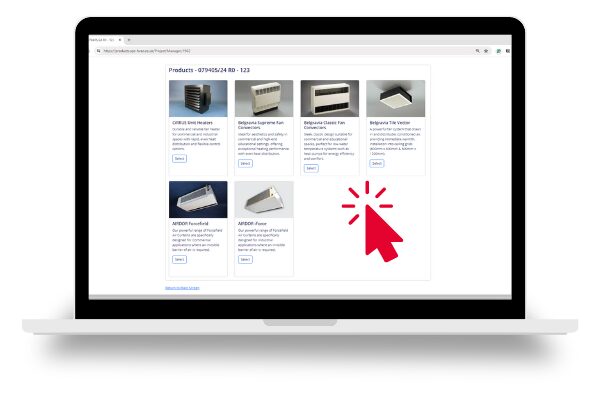
If CiRRUS is the right fit for your building, the next step is selecting the right model and configuration. SPC’s online product configurator includes the full CiRRUS range and allows you to specify units, configure outputs, and generate a project quote.
If you would prefer to speak with a member of the team directly, our Area Sales Managers cover the whole of the UK and can carry out a site survey to confirm the right specification for your project. Please fill in the form below.
If you would prefer to speak with a member of the team directly, our Area Sales Managers cover the whole of the UK and can carry out a site survey to confirm the right specification for your project. Please fill in the form below.