

The main benefits of trench heating are comfort at full height glazing, clear walls and sightlines, and a choice of heating, cooling or electric units from one floor-recessed installation. Trench heating suits buildings with long runs of floor-to-ceiling glass, such as offices, hotels, libraries, museums, education buildings and apartments. SPC’s Metropolitan range covers natural convection, fan-assisted, fan-assisted electric and Metropolitan HC heating and cooling units, so the trench can be matched to the heat loss, the floor depth and the services available.
The Metropolitan range is manufactured in Leicester by S & P Coil Products Limited, an ISO 9001:2015 certified manufacturer with over 50 years of HVAC experience.
What are the benefits of trench heating for architects and M&E consultants?
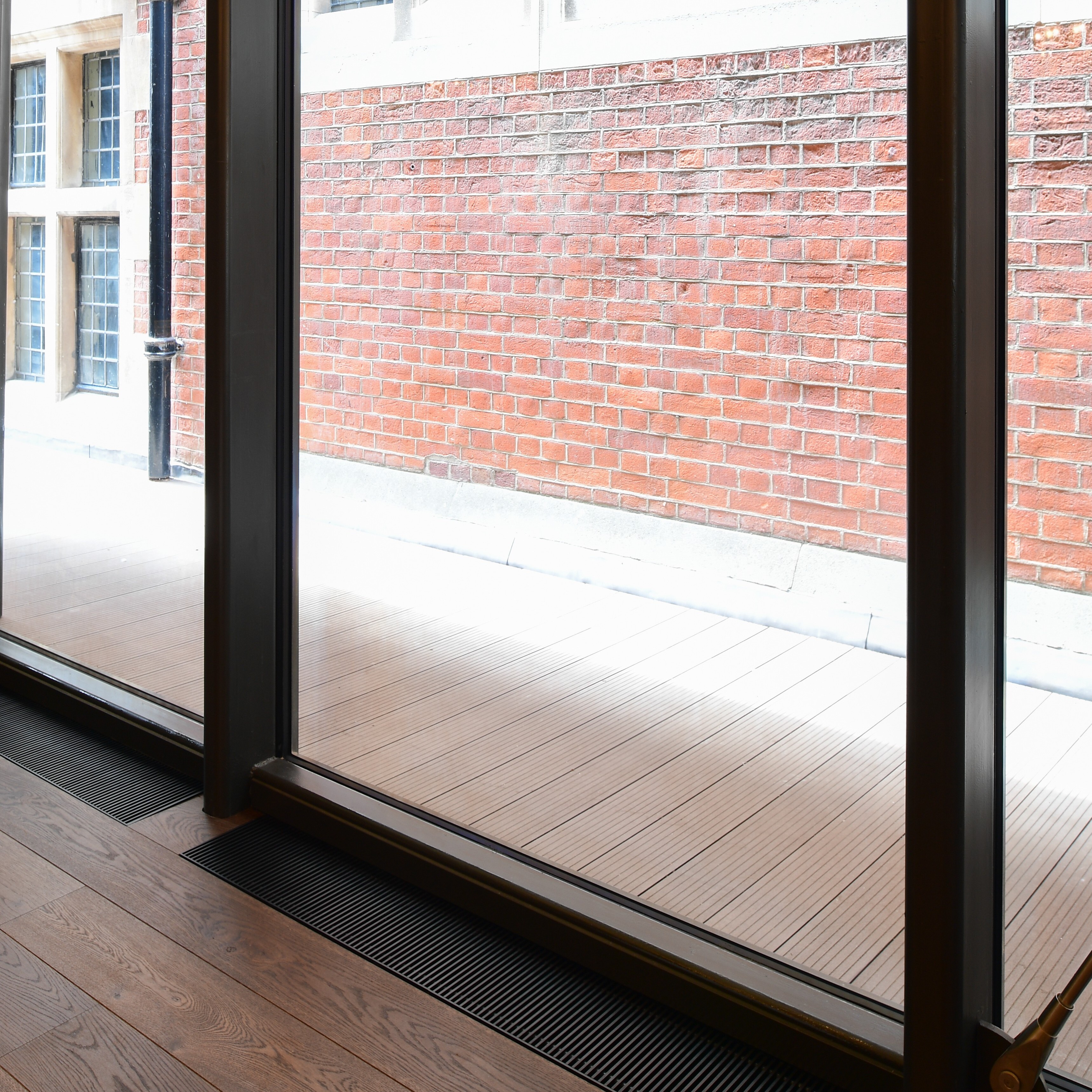
- Heat where the loss happens. A trench heater sits in the floor beneath the glazing, so warm air rises up the glass to meet the cold air falling from it. See How Do You Stop Cold Down-Draughts from Full Height Glazing?
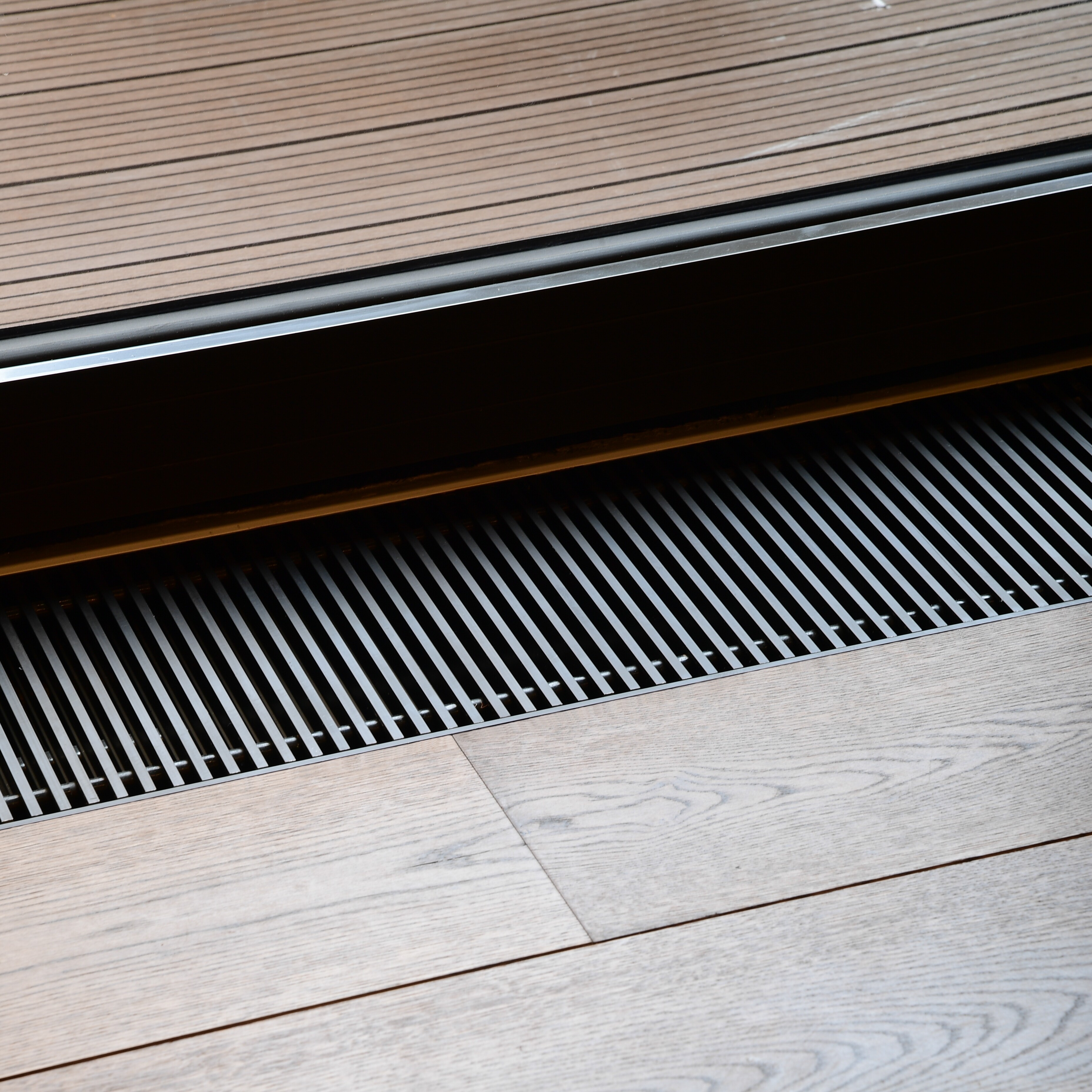
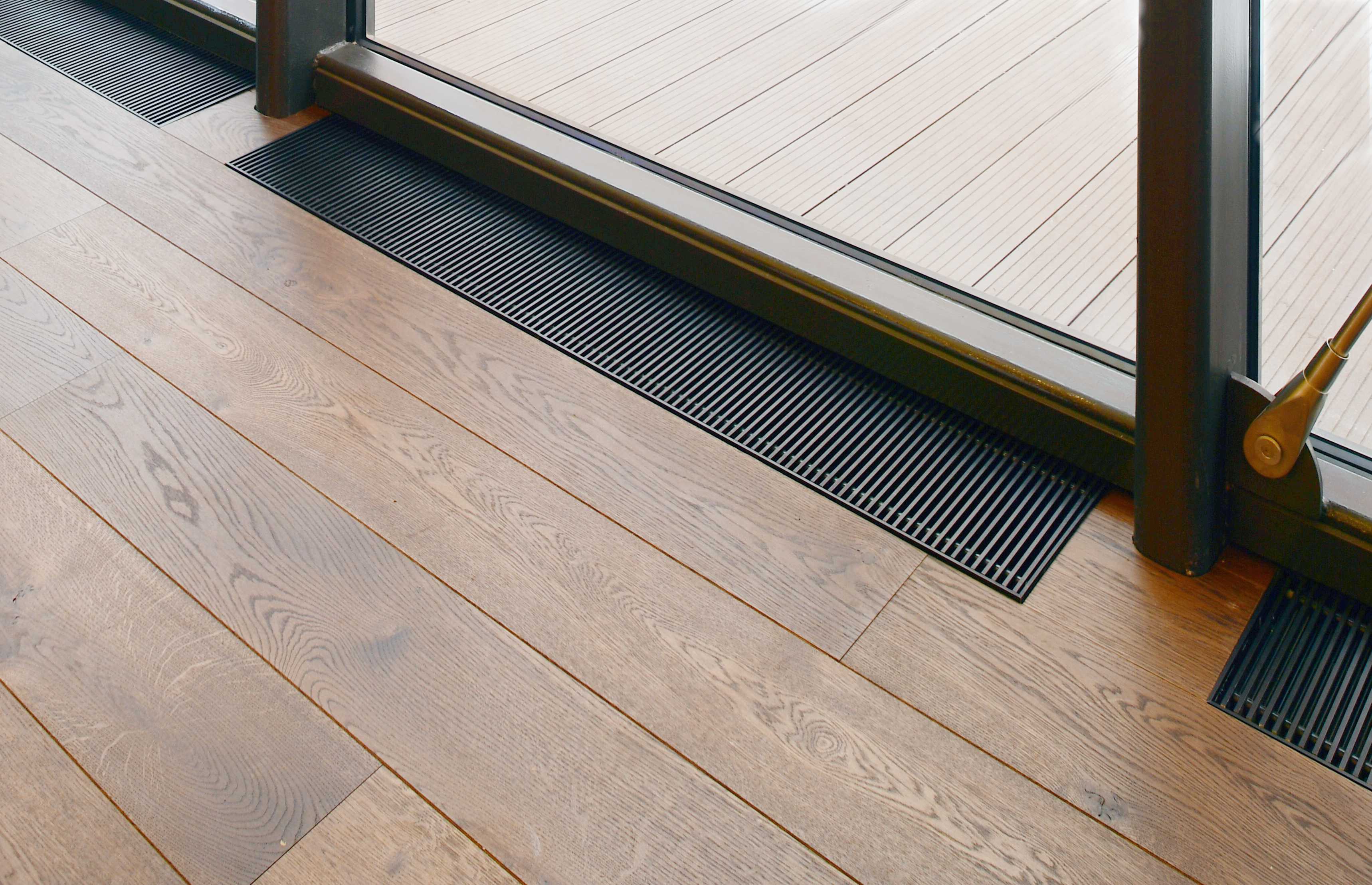
- Clear walls and sightlines. Metropolitan grilles sit level with the floor, so no radiators interrupt the facade.
- Year-round comfort. Metropolitan HC provides heating, dry cooling or both, in 2-pipe or 4-pipe configurations, from the same trench.
- Ready for lower flow temperatures. Fan-assisted Metropolitan units move more air across the heat exchanger, helping them meet the load at heat pump temperatures.
- Quiet operation. Metropolitan Natural units have no fans, Metropolitan Powered units run below 30 dBA at 2 m on medium fan speed, and Metropolitan HC is rated NR17 to NR39 depending on length and fan speed.
Which buildings is trench heating best suited to?
The benefits of trench heating are greatest where glazing runs down to floor level and people sit or work close to it:
- Offices and reception areas, such as 8 Salisbury Square in London and 42 Park End Street in Oxford
- Hotels and hospitality, such as The Grand York Hotel and The Orangery at Aynho Park
- Libraries, museums and visitor centres, such as Hanley Library, the Museum of Two Halves and the Midlands Goods Shed at King’s Cross
- Education buildings, such as Berkhamsted Sixth Form
- Residential schemes, where floor-to-ceiling glazing leaves little wall space for radiators
Trench heating is not suitable for doorways, areas of constant footfall or outdoor use. Where glazing stops above floor level, SPC’s Belgravia fan convectors or radiant panels are usually a better fit.
Which Metropolitan trench unit is right for your project?
The Metropolitan range has four unit types. Metropolitan HC is an addition to the range, not a replacement for the existing units.
| Unit | How it works | Key figures | Best for |
|---|---|---|---|
| Metropolitan Natural | Natural convection, no fans or power | 120 to 2,388 W at 80/60°C; 90, 145 or 200 mm high | Lower loads, silent spaces |
| Metropolitan Powered (fan-assisted) | EC/DC fans, 0-10V speed control | 470 to 3,551 W at 80/60°C, medium speed; 110 mm high | Higher output from a shallow floor |
| Metropolitan Electric (fan-assisted electric) | PTC elements and EC/DC fans, 230 V | 1, 2 or 3 kW; 225 x 125 mm | No LTHW system, extensions, refurbishments |
| Metropolitan HC | EC crossflow fans; heating, cooling or both | Up to 11,760 W at 75/65°C, 7,056 W at 55/45°C, 4,116 W cooling at 7/12°C (360 x 210 mm, 3 m, high speed) | High loads, heat pumps, heating and cooling |
Natural or fan-assisted trench heating: how do you choose?
Natural trench heating suits glazing with a modest heat loss per metre, a system running at traditional flow temperatures, and spaces where no power supply to the trench is wanted. Metropolitan Natural units are silent because they have no fans.
Fan-assisted trench heating suits higher heat losses, lower flow temperatures, shallow floors and projects needing BMS control or cooling. Metropolitan Powered units fit a 110 mm floor depth, Metropolitan HC adds cooling and the highest outputs, and Metropolitan Electric units heat the perimeter where there is no hot water system. For how fans change output and response, read Why Does Active Airflow Matter in Trench Heating?

How do grilles, sizing and low temperature systems affect trench selection?
Grilles
Metropolitan Natural, Powered and Electric units come with an anodised aluminium roll-up grille with a 60% free area, in satin silver, black or Anolok bronze, gold, umber and blue-grey, with stainless steel on request. Metropolitan HC can also take a linear stainless steel grille, or an architectural grille. Roll-up grilles suit occasional foot traffic, not point loads such as chair legs.
Sizing
Trench output depends on width, height, length, fan speed and water temperature, so each run is sized to the heat loss along the glazing. The trench should sit close to the glass, with the heat exchanger on the window side, running continuously along the glazed section. Send SPC your drawings and design conditions and the team will select unit sizes and lengths.
Low temperature systems
Approved Document L (2021 edition) expects new and fully replaced wet heating systems to be designed for a maximum flow temperature of 55°C or lower. Lower flow temperatures reduce emitter output, and a floor void limits unit size. Metropolitan Natural and Powered outputs are published at 80/60°C, so a lower temperature design needs a larger or longer run. Metropolitan HC performance is published at 55/45°C, making it the first unit to consider for heat pump systems.
What support does SPC offer when specifying trench heating?
- Trench CPD. Design Considerations for Trench Heating is SPC’s CIBSE approved CPD for architects, mechanical consultants and contractors, covering trench types, sizing, controls, installation and grille choices in about an hour.
- BIM objects. Free BIM objects for Metropolitan Natural, Powered and HC units are on SPC’s bimstore page.
- Site surveys and selection. SPC can review trench positions on site and select units from your drawings, and your local Area Sales Manager can help with installation queries.
Frequently Asked Questions
Yes. Fan-assisted trench heating suits heat pumps best, because the fans increase heat transfer at lower water temperatures. SPC’s Metropolitan HC gives up to 7,056 W at 55/45°C from a 360 x 210 mm unit, 3 m long, at high fan speed.
Yes, with a fan-assisted unit. Metropolitan HC comes as heating-only, cooling-only or combined, in 2-pipe or 4-pipe configurations, with chilled water down to 5°C. Natural convection trench heaters cannot provide cooling.
No. Metropolitan Natural units have no fans and need no power. Metropolitan Powered, Electric and HC units each need a 230 V supply plus control wiring.
Metropolitan Natural units are 90, 145 or 200 mm high, Powered units 110 mm, Electric units 125 mm and HC units 130 to 210 mm, all with adjustable feet for levelling.
Specify Metropolitan Trench Heating on Your Next Project
To discuss the benefits of trench heating for your building, send us your layout for a unit selection, request a site survey or book the Trench CPD. Call 0116 249 0044 or email spc@spc-hvac.co.uk, or use the form below.
Product information and literature were correct at the time of publishing. For the latest brochures, IOMs and data sheets, visit our Literature page.