

Cold down-draughts from full height glazing are stopped by intercepting the falling cold air using a rising curtain of warm air, most commonly generated by a trench heater recessed into the floor directly beneath the glazing. SPC’s Metropolitan HC range does this with an active, fan-driven air jet, and switches to cooling in summer from the same floor-recessed unit.
Manufactured in Leicester UK, ISO 9001:2015 certified, and trading for over 50 years, the range is built specifically for buildings where glazed facades create year-round comfort challenges.
Why do glazed facades cause cold down-draughts?
Glass loses heat far faster than an insulated wall. Warm room air in contact with the cold inner pane cools, becomes denser and accelerates down the glass, reaching the floor as a cold draught at ankle height, even when the rest of the room feels warm. The taller the glazing and the greater the temperature difference between room air and glass, the faster and deeper the down-draught runs. The same cold surface also drives radiant discomfort and condensation risk.
Where does trench heating sit in relation to the glazing?
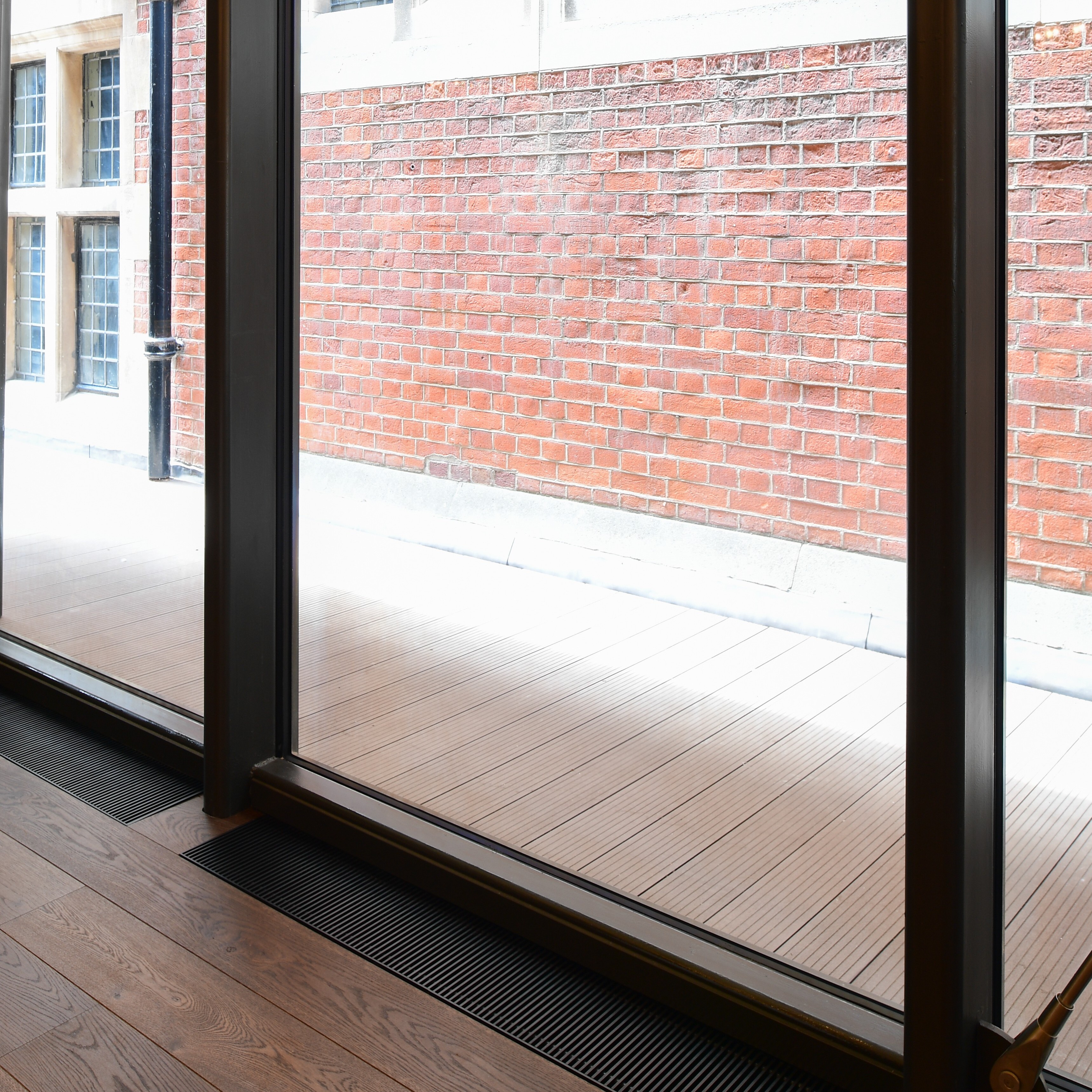
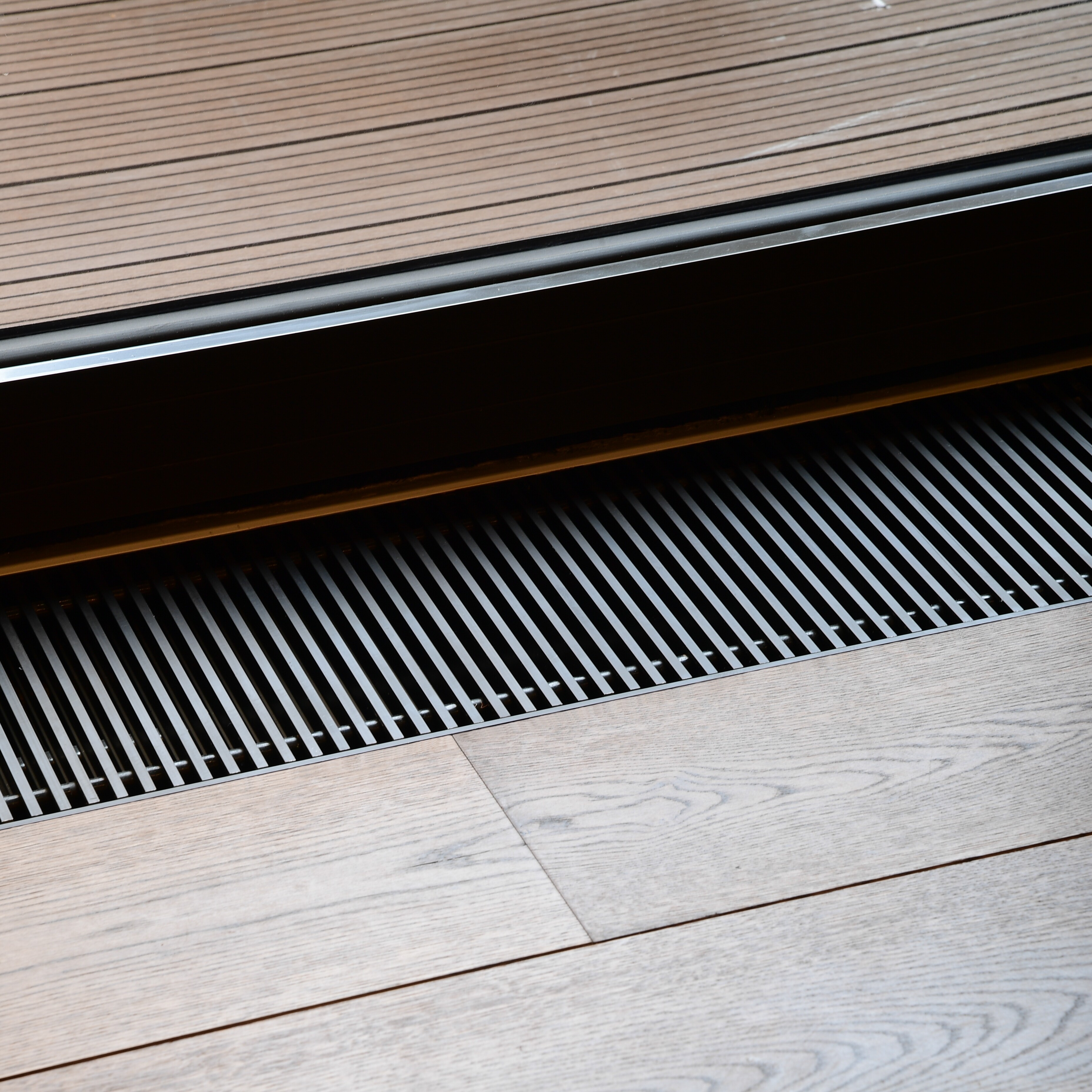
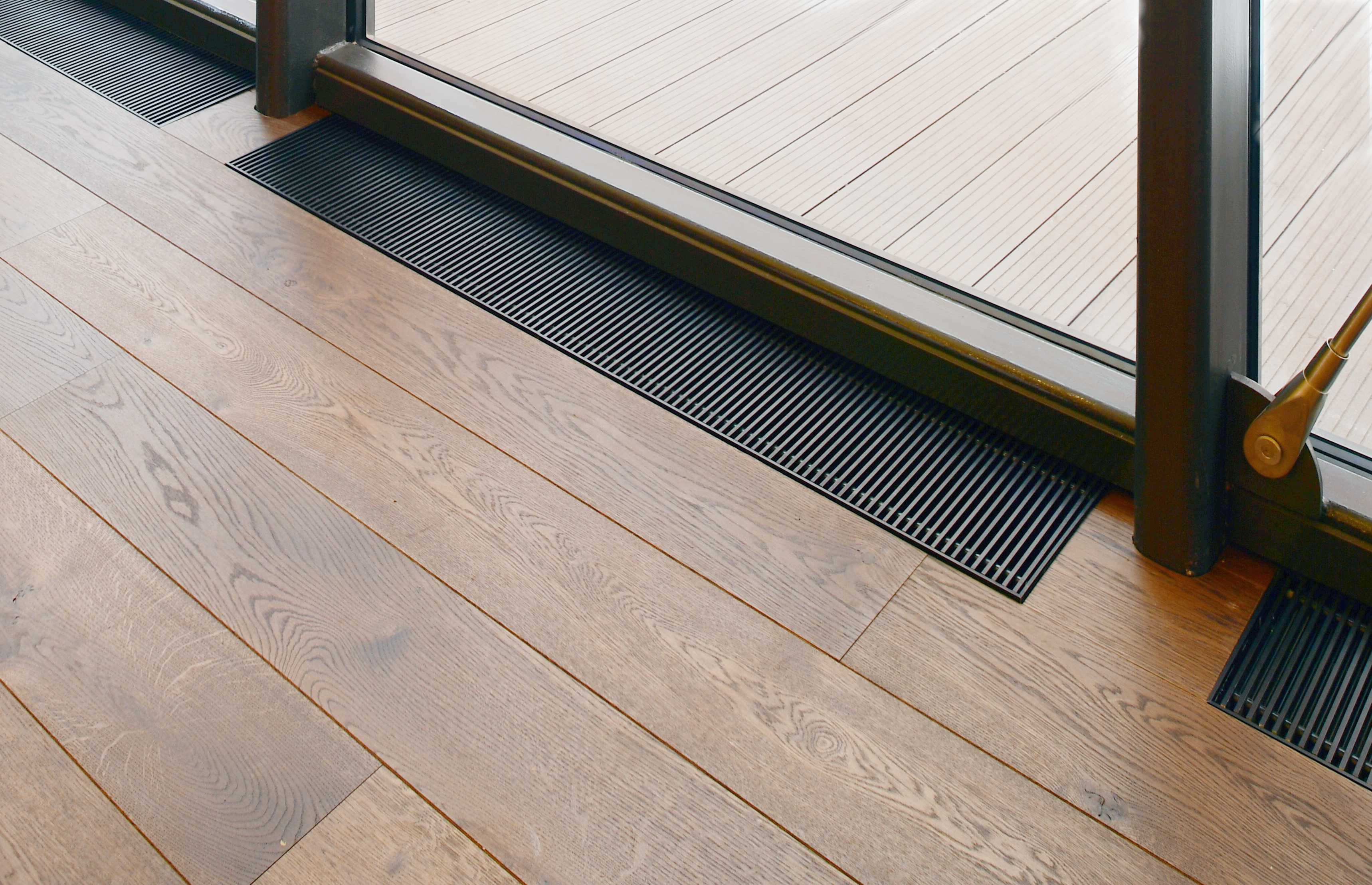
Trench heating is installed in a floor void running directly beneath the glazing, so it sits exactly where the cold film reaches the floor. The unit is finished with a grille flush with the floor, so no equipment is visible at wall or ceiling level, which matters where sightlines along a glazed facade are part of the design intent. To intercept the falling air rather than let it spread into the room, the trench needs to run close to the glazing and continuously along the full glazed section.
How does trench heating counter the down-draught?
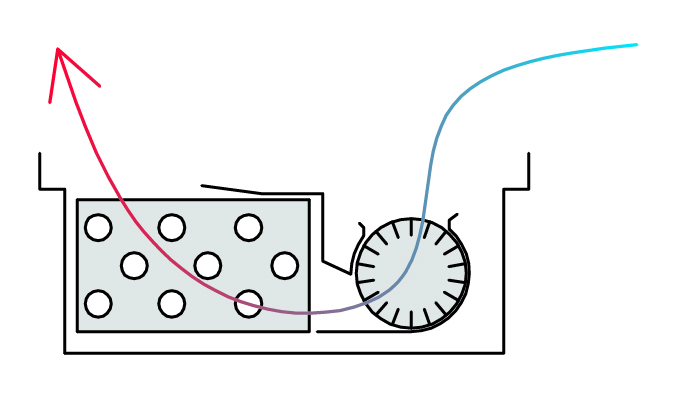
Inside the trench, air passes over the heat exchanger, gains heat and rises back out of the grille as a continuous curtain of warm air travelling up the glass. This rising jet meets the descending cold film, warms it and strips away its momentum before it reaches the floor.
SPC’s Metropolitan HC range uses crossflow fans driven by direct-coupled brushless DC (EC) motors to actively blow air through the heat exchanger, rather than relying on the buoyancy cycle alone. An internal separation plate keeps the inlet and outlet apart to prevent short-circuiting and fan speed is adjustable via a 0 to 10V signal to match the load on a given day. Because active airflow increases the rate of heat transfer across the coil, it also performs well at the lower flow temperatures typical of heat pumps and condensing boilers.
Does the same trench handle summer solar gain too?
The same glazing that causes a winter down-draught also lets in unwanted solar gain in summer. Metropolitan HC is available in heating-only, cooling-only, or combined 2-pipe and 4-pipe configurations, with chilled water supplied down to a minimum flow temperature of 5°C.
A 4-pipe unit can even supply heating and cooling to different zones of the same run at once, for example a north-facing section calling for heat while a south-facing section is in cooling. That means the same floor void that counters a winter down-draught can offset solar gain at the glazing line in summer, without a second system.

Why is trench heating specified ahead of a perimeter radiator?
A radiator under a window still warms the room, but its plume rises into the space rather than being directed up the glass, and it takes up wall space along the facade. Trench heating puts the heat exactly where the down-draught forms, organises it as a counterflow against the falling cold film, keeps the inner pane surface warmer (which also helps suppress condensation), and leaves sightlines along the glazing clear.
Where does this approach fit best?
Full height glazing paired with a need for year-round comfort is common in offices, reception areas, education buildings such as sixth form centres and libraries, and hospitality or leisure spaces with large atria. In each case, continuous occupation close to the facade makes down-draughts, and solar gain, a recurring specification issue rather than an occasional one.


Frequently Asked Questions
Keeping the inner pane surface warmer, which trench heating does as part of neutralising the down-draught, also reduces the risk of condensation forming on the glass. It works alongside, rather than instead of, appropriate glazing specification and ventilation.
Lowering the glazing U-value raises the inner surface temperature and weakens the down-draught, but research shows the effect only holds up to a limited glazing height before an active measure is needed as well. On full height facades, trench heating is typically specified alongside good glazing performance rather than as an alternative to it.
To intercept the falling cold air effectively, trench heating is generally positioned close to the glazing line, within the depth of the window reveal or immediately in front of it. Exact positioning depends on the floor build-up and glazing detail, which SPC can review as part of specification support.
The heat exchanger should be examined every three months initially, then at suitable intervals after that depending on the environment and how much dust or debris the location produces. Light fouling can be cleared with a brush or vacuum without removing the unit from the trench.
Metropolitan HC is a fan-assisted addition to SPC’s existing Metropolitan trench heating and cooling range. The Natural, Powered, and Fan-Assisted Electric trench ranges remain available, giving specifiers a choice of format to match a project’s heat loss, glazing height, and system water temperature.
Specify Metropolitan HC on Your Next Project
For specification support on countering cold down-draughts at full height glazing, contact the SPC team on 0116 249 0044 or spc@spc-hvac.co.uk, or view the Metropolitan HC product page.