

An open doorway lets warm air spill out at the top and cold air in at the bottom, and an air curtain limits that exchange by blowing a continuous air stream across the opening. How to choose an air curtain depends on door height, door width, wind exposure and the heat source available. SPC’s AIRDOR Forcefield suits commercial entrances up to 3.5 metres high, the iForce Industrial Air Curtain suits industrial doorways up to 6 metres, and both come in ambient, electric and LPHW versions.
This guide shows M&E consultants, contractors and facilities managers how to choose an air curtain, size it, control it and check existing units before winter. For heating the space itself, see our guide to heating a cold warehouse.

What does an open door cost in winter?
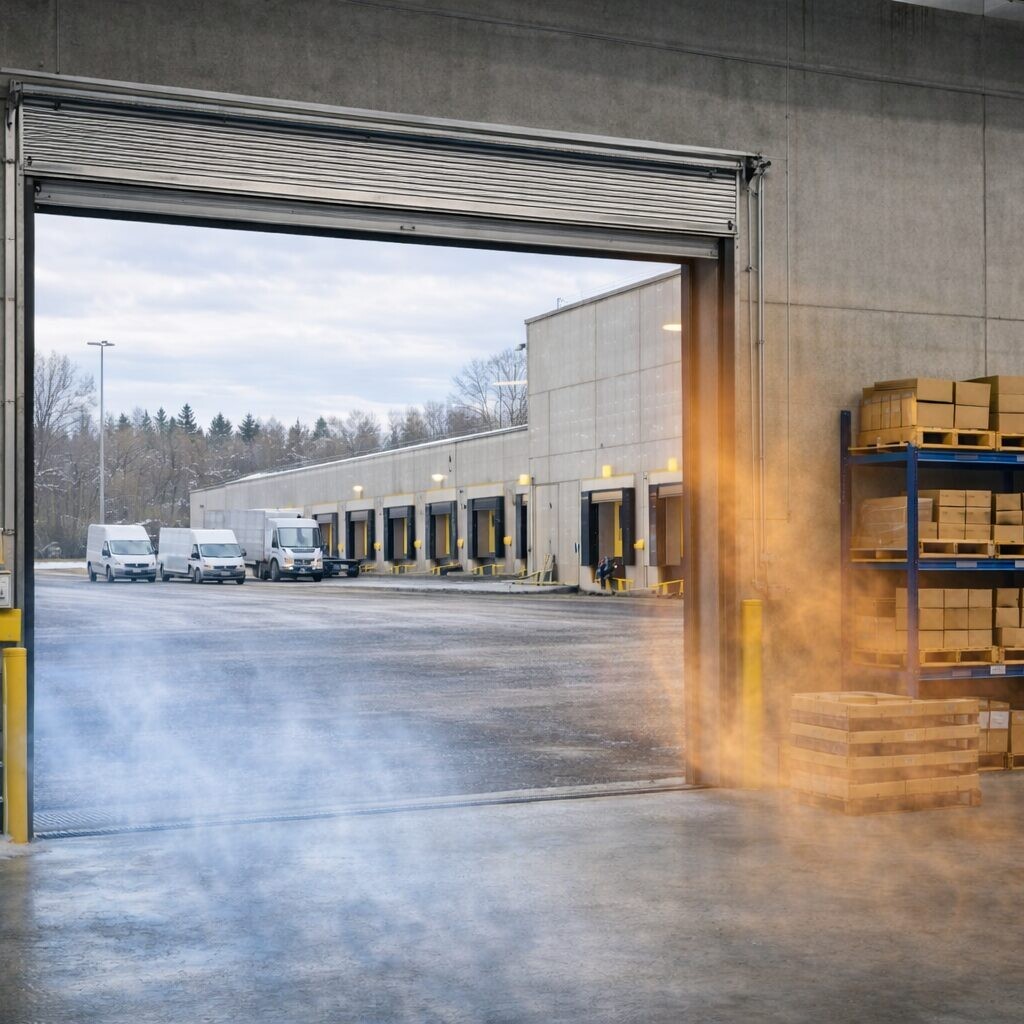
Every open door costs heat, comfort and working conditions. Warm air leaves through the top of the opening and cold air replaces it at the bottom, which is the main route for heat loss through an open doorway.
Staff near loading bay doors work in cold draughts, and the HSE says the Approved Code of Practice suggests indoor working temperatures should normally be at least 16°C, or 13°C where much of the work involves rigorous physical effort. In commercial entrances, customers feel the same chill within the first few metres inside the door. SPC’s AIRDOR Forcefield and iForce air curtains are designed to limit this at the doorway.
How does an air curtain work?
An air curtain blows a continuous stream of air across a doorway, from above or beside the door. The air stream disrupts the flow of warm air out of the top of the opening and cold air in at the bottom.
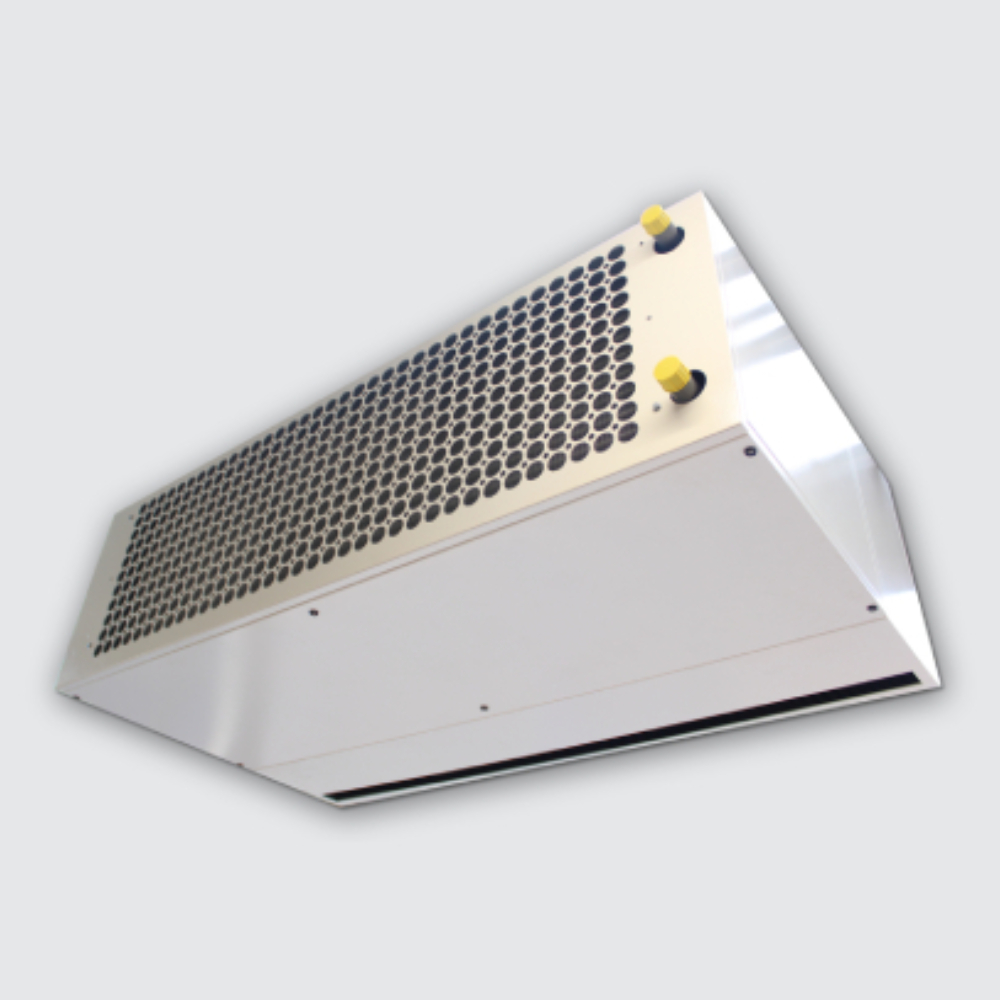
The AIRDOR Forcefield and iForce each use individual EC fans, so air movement can be controlled continuously.
How to choose an air curtain: AIRDOR Forcefield or iForce?
The AIRDOR Forcefield is designed for public, commercial and industrial entrances, and the iForce Industrial Air Curtain for industrial and large commercial doorways.
| Range | Suits | Widths | Maximum heat output | Maximum airflow |
|---|---|---|---|---|
| AIRDOR Forcefield | Up to 3.5m high | 1.0m to 2.5m | LPHW 28.4kW (80/60°C), electric 24kW | 1.07 m³/s |
| iForce Industrial | Up to 6m high | 1.5m, 2.0m, 2.5m | LPHW 69.6kW (IAC25 at 82/71°C), electric 36kW | 3.2 m³/s |

Ambient, LPHW or electric: which version suits your building?
- Ambient: The ambient AIRDOR Forcefield and iForce have no heat exchanger. An unheated air stream can still reduce energy loss where conditions are not extreme, so ambient units suit entrances next to separately heated or air conditioned space.
- LPHW/LTHW: LPHW/LTHW units suit buildings with a wet heating system, and the iForce unit comes with a 2-row or enhanced 3-row coil to suit the water temperatures in use.
- Electric: Electric units suit entrances without hot water and run on a 400V three-phase supply, so confirm electrical capacity early. An electric air curtain should not be treated as a space heater, so the building’s main heating should be designed separately.
How do you size an air curtain for a doorway?
The HEVAC Air Curtain Units Guide points designers to BSRIA Application Guide 2/97, Air Curtains: Commercial Applications, for calculating airflow and thermal capacity. The practical basics are:
- Width: The air curtain should be wider than the opening, because a narrower unit is ineffective.
- Height: The AIRDOR Forcefield covers mounting heights up to 3.5 metres and the iForce doorways up to 6 metres, and the air stream must reach the floor.
- Mounting position: Horizontal units sit above the door as close to the opening as possible, and vertical units sit beside it. Vertical iForce units must be fixed to both floor and wall.
- Exposure: Orientation, prevailing wind, extract systems and stack effect all raise air velocity at the door, and strong wind or a leaky building can compromise an air curtain.
- Heat output: Output must temper the incoming air.
The SPC team can size a scheme from the door dimensions, orientation, door usage and heat source.
What controls do air curtains need, and can they connect to a BMS?
Controls are essential for avoiding unnecessary energy use. Both ranges can be switched by a door contactor, with a delay timer in the unit, or enabled and disabled from a BMS. The AIRDOR Forcefield sends a general fault signal to the BMS as standard. The iForce accepts a 0 to 10V fan speed signal, and BACnet is optional.
On LPHW units, the SPC Delta Waterside Controller varies hot water flow through a two-port valve as sensed temperature changes, so heat output follows demand without reducing the throw of the air stream.
What should you check on existing air curtains before winter?
Before the first cold spell, check each unit and use the IOM for maintenance detail: iForce IOM 92 Issue 3 and Forcefield IOM 83 Issue 4.
- Run each unit on every fan speed and confirm it starts and stops correctly.
- Clear the outlet grille and air path of stored goods, signage or moved racking.
- Test the door contactors and delay relays, where fitted, so the unit switches with the door.
- Check setpoints, schedules and BMS signals against winter use.
- On LPHW units, confirm hot water is available, the valve and actuator respond and frost protection is in place, as freeze damage to water-filled coils is a winter risk. On electric units, confirm the supply.
- Compare the doorway with the original specification, since a wider opening can leave a unit under-sized.
SPC has manufactured heating and cooling products in Leicester for over 50 years and holds ISO 9001:2015 certification. For help with how to choose an air curtain for your doorway, call 0116 249 0044 or email spc@spc-hvac.co.uk, or view the air curtain range.
Frequently Asked Questions
No. An ambient AIRDOR Forcefield or iForce cannot be upgraded to a heated version, so specify an LPHW or electric unit from the start if heat may be needed later.
Horizontal iForce units can be installed side by side to cover doorways of any width, and vertical iForce units can be fitted on the left, right or both sides and stacked.
LPHW air curtains can be considered for heat pump-led systems where the selected coil delivers the required output at the heat pump’s flow and return temperatures. SPC’s CIBSE approved CPD, Decarbonisation of Industrial and Commercial Heating Systems, covers heat pumps in low temperature systems.
Yes. SPC’s online product configurator includes both the AIRDOR Forcefield and the iForce Industrial Air Curtain, and you can register on the software page.
Talk to SPC About Your Entrance Heating Project
Send us your project details and the SPC team will help you find the right air curtain.
Product information and literature were correct at the time of publishing. For the latest brochures, IOMs and data sheets, visit our Literature page.