

Burst HVAC coils are one of the most common winter failures in air handling units. When water inside a heating or cooling coil freezes, it expands and splits the tubes, usually at the U-bends first. Frost damage is prevented by keeping water moving, protecting coils exposed to cold fresh air, using the right glycol mix and draining down coils that are not in use. S & P Coil Products Limited (SPC) manufactures like-for-like and bespoke replacement coils in Leicester when a coil has already failed.
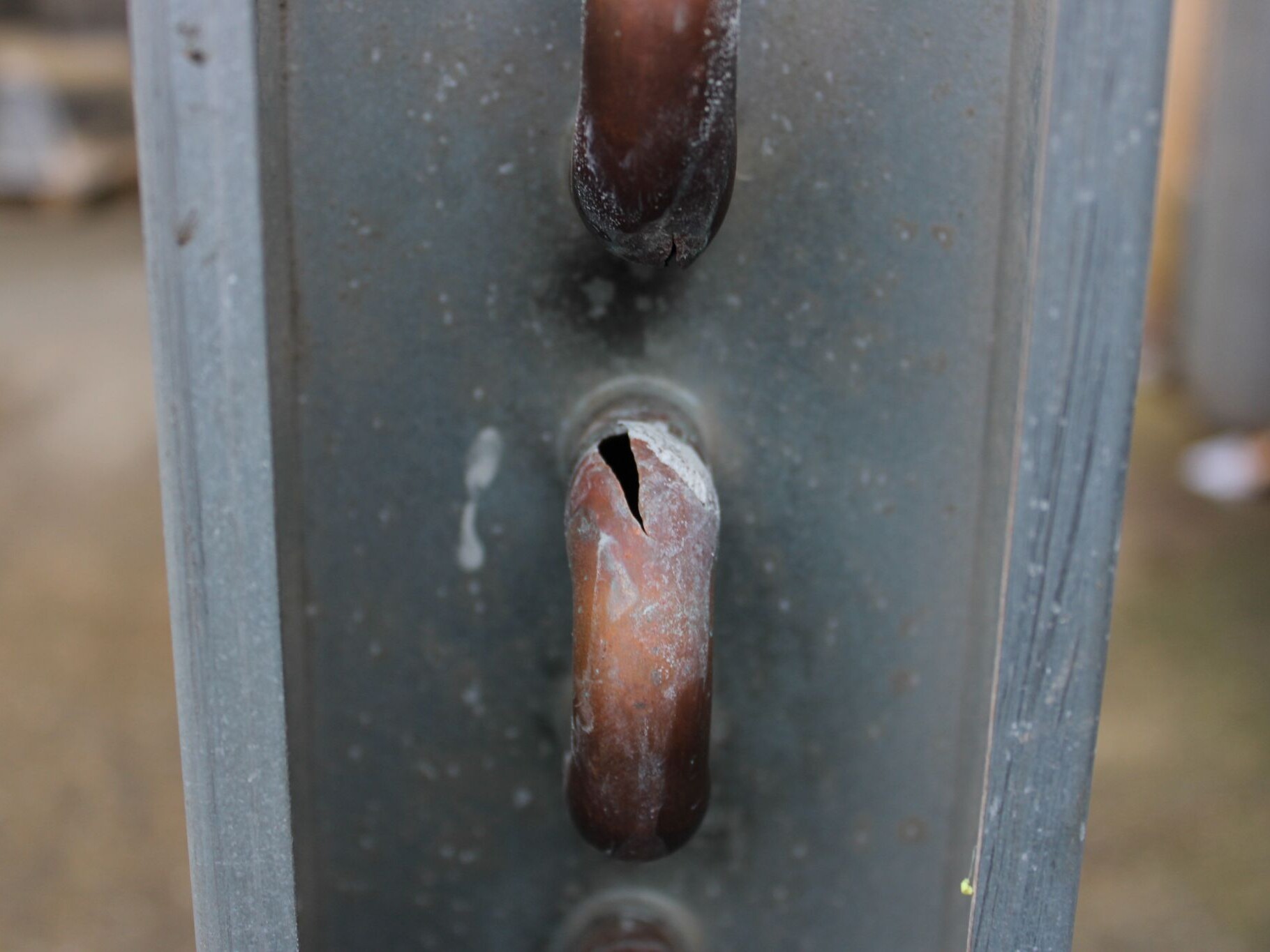
Why Freeze Damage Occurs
When water inside a coil is exposed to freezing temperatures, it expands as it turns to ice. Unlike air, water increases in volume when frozen, exerting pressure from the inside out. This expansion places significant stress on the pipework, particularly at the U-bends or return bends, where pressure concentrates and can exceed the strength of the tubing.
Unlike frost forming on an outdoor unit’s surface, freeze damage in water-based coils comes from internal expansion. Even with circulating water, stagnant areas or low flow can allow pockets of fluid to drop below freezing. In many cases, this pressure causes the U-bend to crack or burst, leading to leaks, loss of system performance, and potential damage to surrounding equipment.
Freeze damage is not always immediately visible. Systems may continue to operate until symptoms such as worsening leaks, decreased performance, or complete system shutdown occur, resulting in unexpected downtime and costly repairs.

How do you prevent coil frost damage?
Coil frost damage is most likely where cold outside air meets water that is not moving. The coils most at risk are those on fresh air intakes, cooling coils left full over winter, and coils in plant that has been switched off.
- Frost coils and frost thermostats: a frost coil upstream warms incoming air, and a frost thermostat shuts the fan or closes the dampers before the main coil reaches freezing.
- Dampers: fresh air dampers should close fully when the unit stops, so cold air cannot sit on a still coil overnight.
- Circulation and controls: keeping a minimum flow through the coil during cold weather stops water standing in the tubes.
- Draining down: coils that will not be used over winter should be drained fully, including the U-bends, which can hold water after a basic drain-down.
- Trace heating: pipework and headers in exposed plant rooms can be protected with trace heating.
- Glycol: adding glycol lowers the freezing point of the water, and SPC can select a coil for a given glycol mix. Glycol is best treated as a last resort, because it reduces coil performance and increases the pressure drop through the coil.
The Importance of Early Assessment
Identifying freeze damage early is essential to prevent further system issues. A damaged coil can reduce heat transfer efficiency, increase running costs, and compromise overall system reliability.
Whilst some preventative strategies, such as maintaining circulation, checking insulation, or using appropriate antifreeze concentrations, can help reduce risk in certain systems, real-world conditions and installation variables mean that freeze events still occur, particularly in poorly drained or neglected systems.
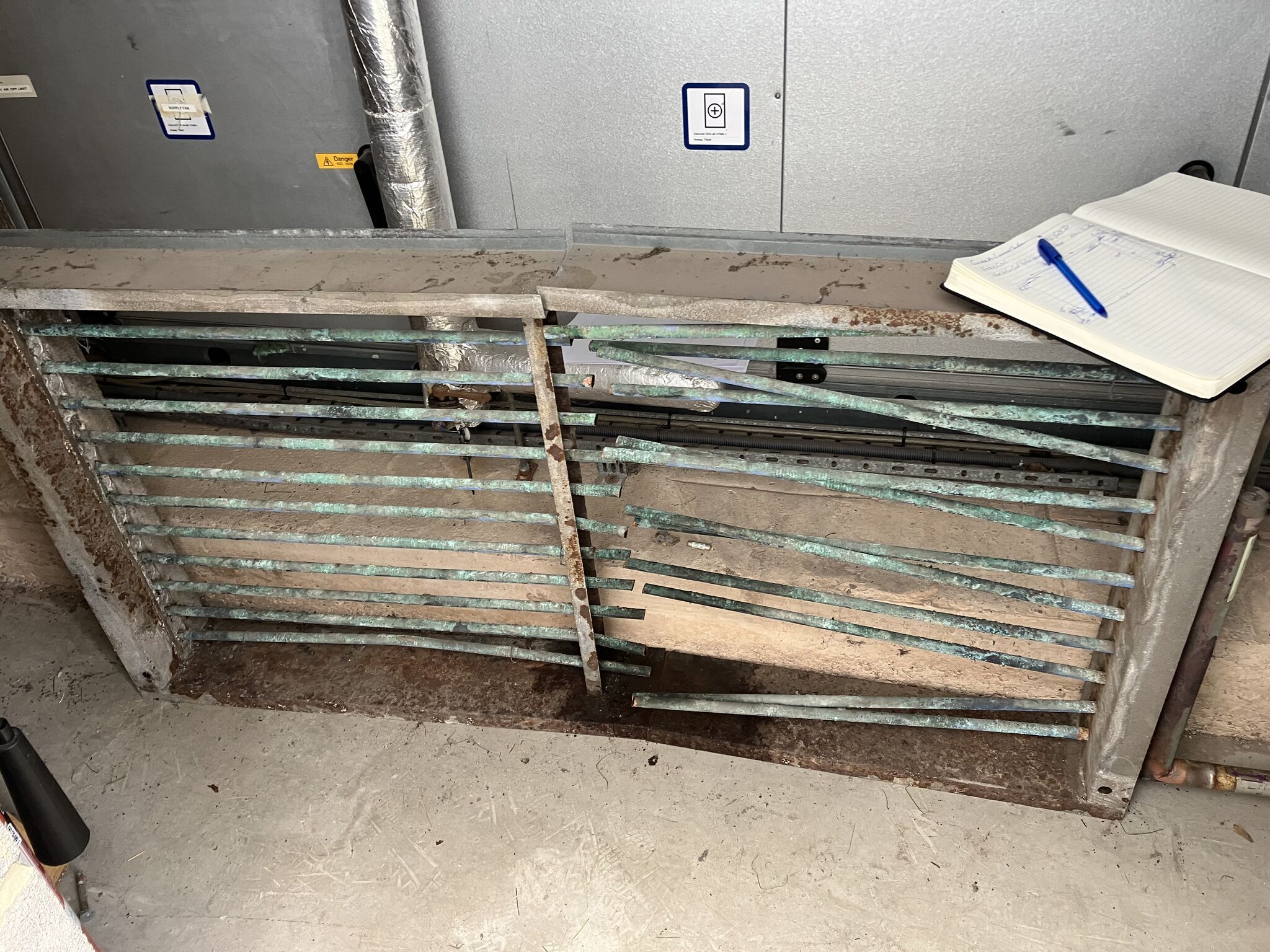
Expert Coil Replacement from SPC
At SPC, we have over 50 years of experience designing and manufacturing high-quality coil heat exchangers. We support customers who’ve experienced coil failure due to freezing conditions with specialist site surveys and bespoke replacement solutions.
Our coil replacement site surveys are carried out by experienced specialists who assess the condition of the existing coil and the surrounding system, identifying damage and any factors that may have contributed to it.
Our team carefully measures and designs replacement coils to match existing units, including coils not originally manufactured by SPC. Each replacement coil is engineered to meet the specific requirements of the application. This precision helps to:
- Minimise on-site rework and installation modifications
- Reduce installation time and downtime
- Restore and improve system performance
- Lower long-term running costs
For an example of SPC’s bespoke coil design, see the University of Surrey EnFlo Laboratory project, where SPC supplied a 3.5 m wide wind tunnel heating coil.
Frequently Asked Questions
Water left in the tubes freezes and expands, which splits the tubing, usually at the U-bends where stress concentrates.
Coils on fresh air intakes, cooling coils left full over winter and coils in plant that has been switched off.
SPC does not repair damaged coils. Instead, SPC measures the existing coil and manufactures a like-for-like or bespoke replacement in Leicester, made to fit the existing unit.
Yes. SPC measures and designs replacement coils to match existing units, including coils not originally made by SPC.
SPC’s CIBSE approved CPD, An Introduction to Coil Heat Exchangers, covers how coils are engineered and how to get the best performance from them.
What information does SPC need to quote a replacement coil?
To quote a replacement coil, SPC needs the coil dimensions, connection sizes and positions, and the duty if known. If the coil has a nameplate, a photo of it and a few photos of the coil in place are often enough to start. Send your details using the form below, email spc@spc-hvac.co.uk or call 0116 249 0044.
Product information and literature were correct at the time of publishing. For the latest brochures, IOMs and data sheets, visit our Literature page.