

Industrial radiant heating panels are increasingly the preferred choice for warehouses, factories, and large commercial spaces, particularly where buildings are targeting low-carbon heating systems or working towards net zero. Unlike unit heaters, radiant panels heat occupants and surfaces directly through infrared radiation rather than warming the air, making them well-suited to draughty, high-bay environments where heated air would otherwise be quickly lost to ventilation or door openings.
How Do Industrial Radiant Panels Work?
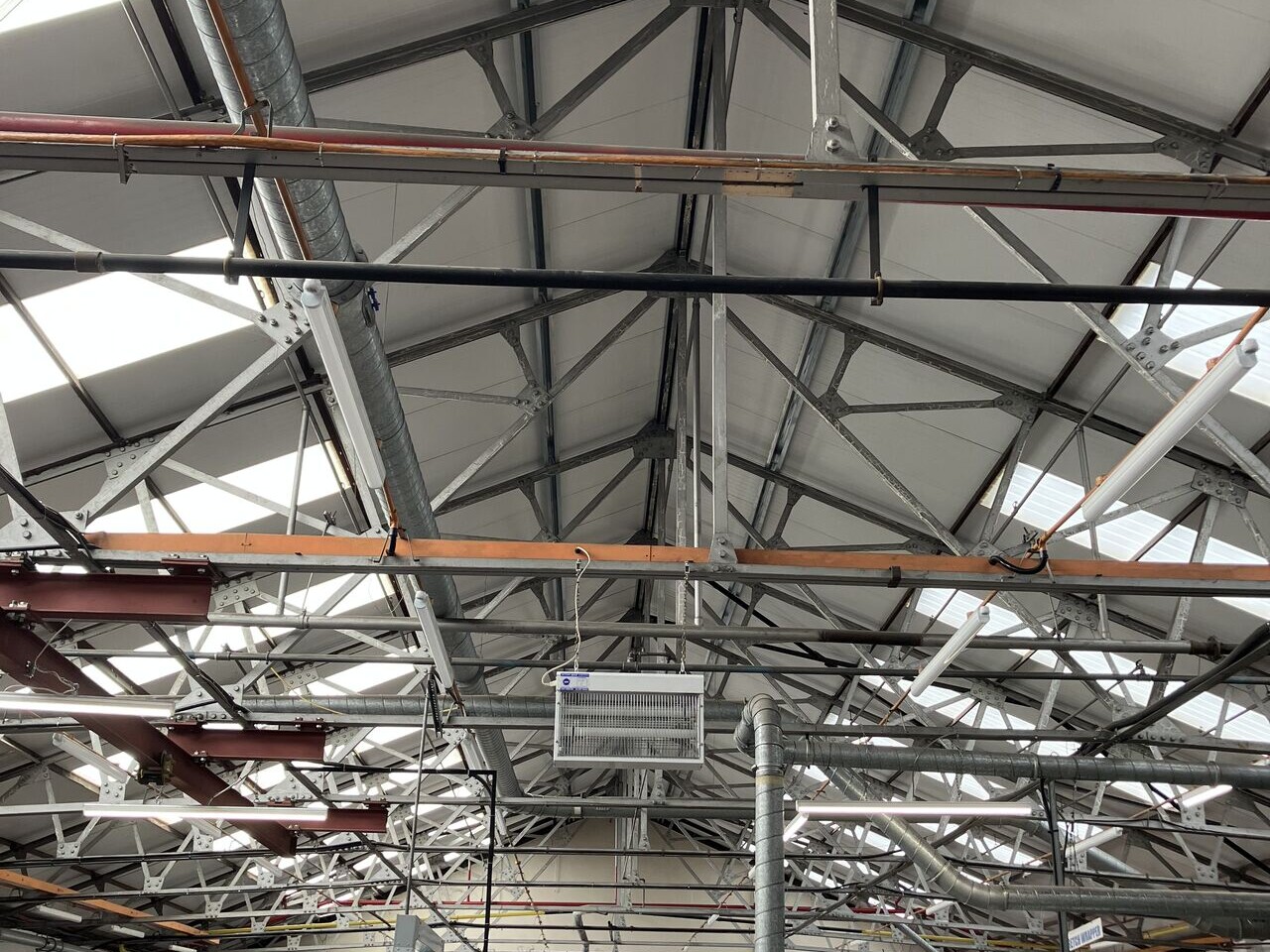
Radiant panels transfer heat through infrared radiation from the panel surface to occupants, floors, machinery, and other surfaces within range. No fan is required, and no air is moved. The heat is felt directly, in the same way that sunlight warms you on a cold day even when the air temperature is low.
This mechanism has practical advantages in industrial buildings:
- Heat is not lost through air movement, ventilation, or frequent door openings
- Comfort is maintained even in large, open spaces with high ceilings
- Silent operation — no fan noise in working environments
- No circulation of dust or airborne particles
What Makes Radiant Panels Well-Suited to Large Industrial Spaces?
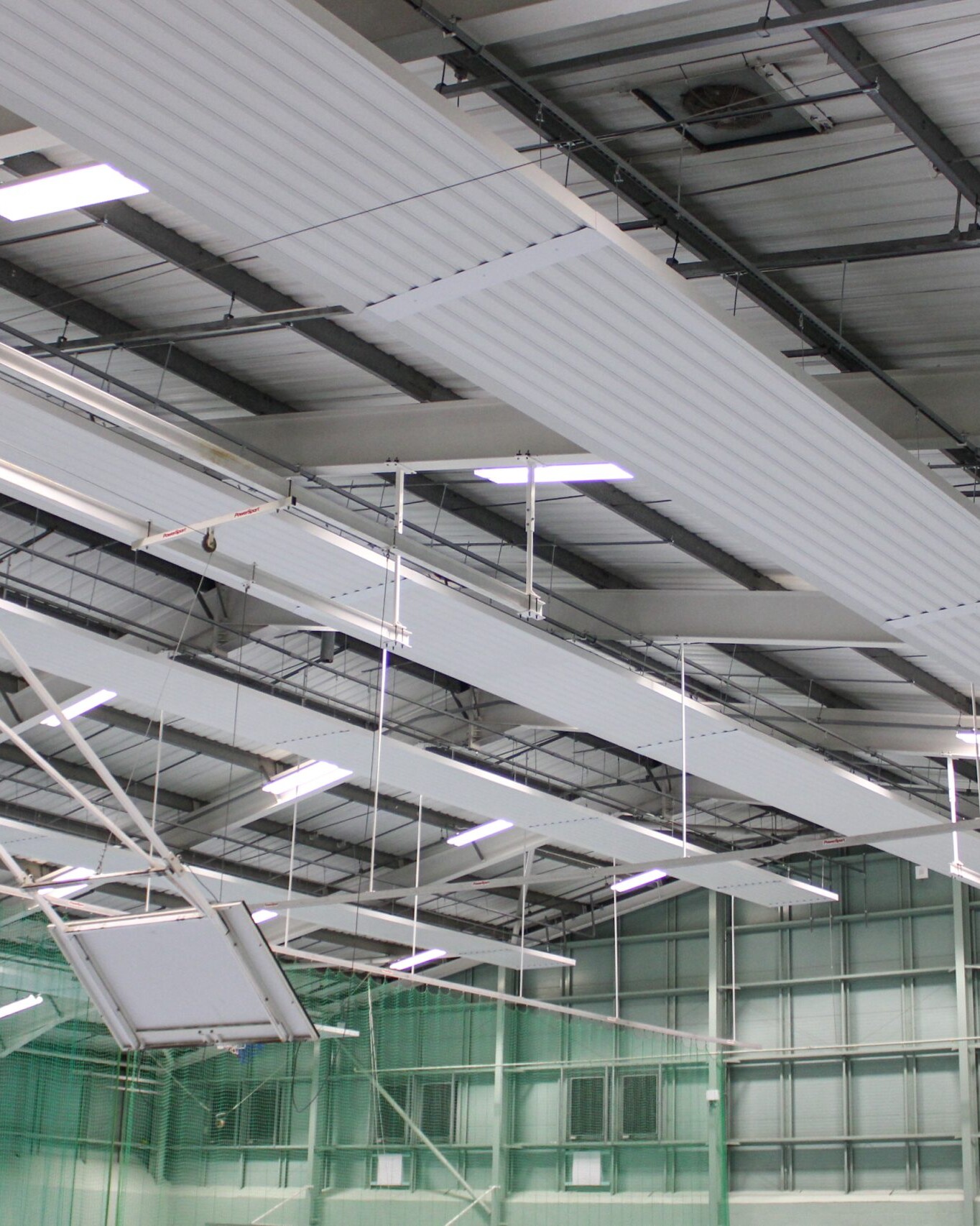
In a conventionally air-heated industrial building, warm air rises. In a warehouse with an 8 or 10-metre ceiling, a significant proportion of the energy input ends up at roof level rather than in the occupied zone. Radiant panels address this directly: because the heat transfer is radiative rather than convective, it reaches the space and occupants below rather than accumulating at roof level.
For large-footprint buildings, SPC’s industrial radiant panel range supports pipe runs of up to 70 metres from a single connection point, reducing the number of distribution circuits required and simplifying the overall system design.
Are Industrial Radiant Panels Compatible with Heat Pumps?
This is one of the most important specification questions for industrial buildings with decarbonisation targets, and the answer is yes, with the right design approach.
Heat pumps operate most efficiently at lower flow temperatures, typically in the range of 45 to 60°C. Radiant panels are among the best-suited emitter types for heat pump systems because they rely on surface radiation rather than convective air heating. A radiant panel delivering heat at 50°C flow temperature can still provide meaningful occupant comfort; a unit heater at the same flow temperature will deliver a reduced output compared to its rated performance at 82°C, which is why emitter selection matters when specifying a heat pump system.
For industrial buildings planning a transition to heat pumps, whether now or in the next five to ten years, specifying radiant panels as the primary emitter is the most future-proof approach.
How Do Radiant Panels and Unit Heaters Work Together in Industrial Buildings?
Rather than treating radiant panels and unit heaters as competing options, many well-designed industrial heating systems use both, each in the zone where it performs best.
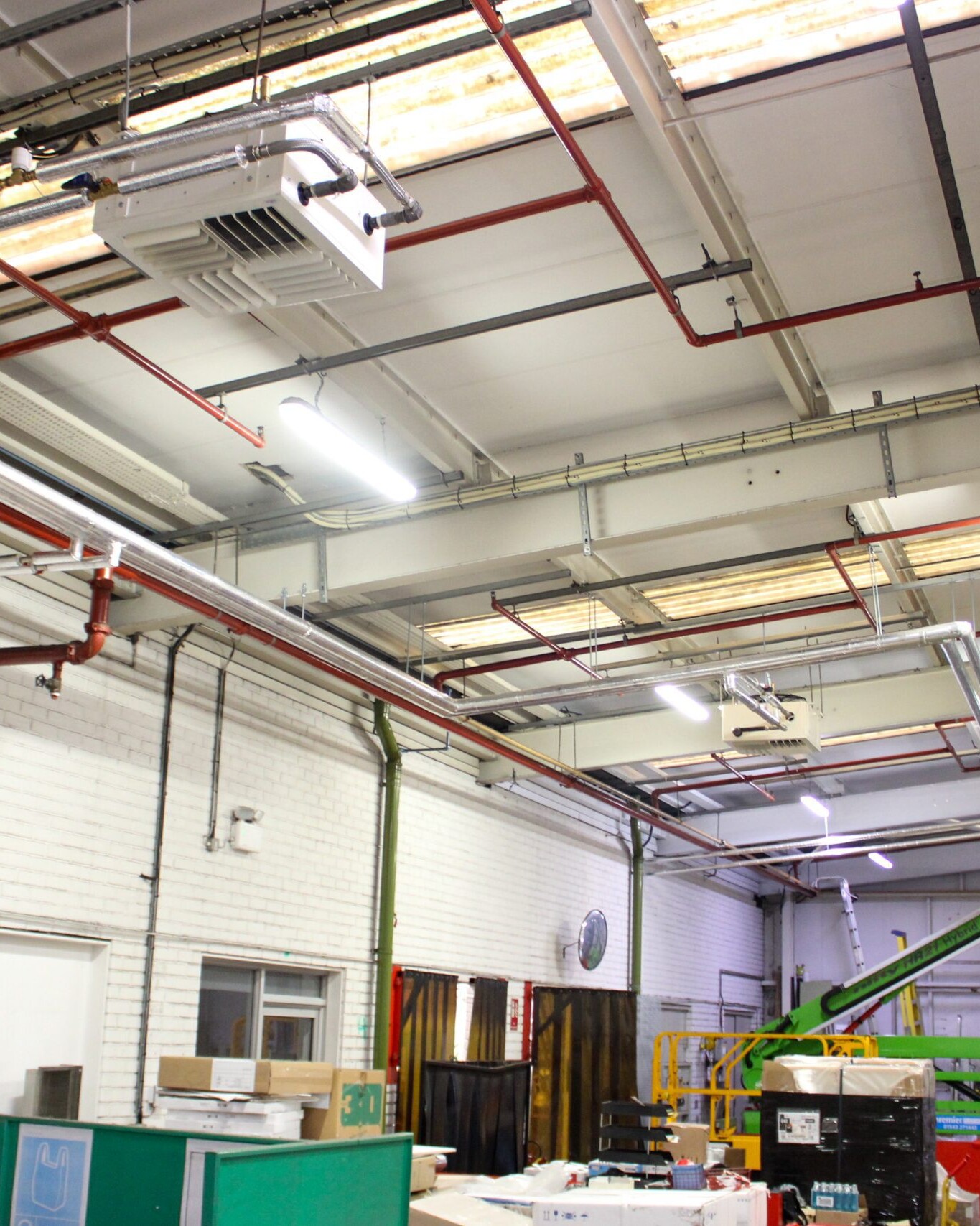
Radiant panels are typically the right choice for the main floor area, as they provide consistent background warmth, operate silently, perform well in areas with large openings where air temperature fluctuates, and are highly compatible with heat pump systems at low flow temperatures. SPC’s CiRRUS unit heaters, by contrast, excel in zones that require rapid heat-up from cold, such as loading bays, entrance areas, or intermittently used spaces, where their high-output axial fan delivers warmth quickly and with good throw and coverage.
The combination approach is increasingly common in buildings working towards net zero targets: radiant panels covering the main occupied area, supported by CiRRUS unit heaters in specific zones where fast response or localised heating is the priority.
What Should Be Specified Alongside Industrial Radiant Panels?
System design considerations for industrial radiant panel installations include:
- Flow temperature: confirmed at the design stage to ensure compatibility with the heat source
- Panel spacing and coverage: calculated to provide consistent radiant intensity across the occupied zone
- Controls: zone control with black bulb sensors measures resultant temperature, the combined effect of air temperature and radiant temperature, rather than air temperature alone, giving a more accurate picture of actual occupant comfort
- Pipework configuration: counterflow connection for multi-row systems to maximise heat transfer efficiency
For buildings where Embodied Carbon is also being assessed, the CIBSE TM65 methodology provides the industry-standard framework for quantifying the embodied carbon of building services equipment.
SPC, a Leicester-based manufacturer with over 50 years in the HVAC industry, offers the Decarbonisation of Industrial and Commercial Heating Systems CPD, a CIBSE-approved session covering heat pump integration, low-temperature emitter selection, and Embodied Carbon assessment. It is available to architects, mechanical consultants, and contractors.
Frequently Asked Questions
SPC’s industrial radiant panels are designed to run at low water temperatures, making them compatible with heat pump systems. The precise flow temperature required depends on the panel specification and the heating load. SPC can provide selection data for specific project conditions.
Yes. Radiant panels are well-suited to high-bay buildings because the radiant heat transfer mechanism is far less affected by air stratification than convective heating. In a conventionally heated building, warm air rises and much of the energy input is lost to the upper zone before it reaches occupants. With radiant panels, heat is transferred directly to surfaces and occupants in the occupied zone, making them a more efficient choice where ceiling heights are significant.
Yes, and this is one of the scenarios where radiant panels perform particularly well. Because radiant heat warms surfaces and occupants directly rather than heating the air, comfort can be maintained even when large doors are open and air temperature drops. For the loading bay area itself, SPC’s CiRRUS unit heaters can be specified alongside radiant panels to provide rapid heat recovery when doors close.
Radiant panels have no moving parts, which significantly reduces maintenance requirements compared to fan-assisted heating products. Periodic checks on pipework connections and panel mounting are the main service considerations.
Radiant panels support net zero in two ways: they are highly compatible with heat pump systems at the flow temperatures heat pumps can sustain efficiently, and their energy consumption relative to the comfort delivered is lower than convective heating in high-bay spaces. For buildings where Embodied Carbon is also being assessed under TM65, SPC can provide relevant product data.
Talk to SPC About Your Industrial Heating Project
SPC has been manufacturing heating and cooling products for industrial and commercial environments for over 50 years. Whether you are specifying a new warehouse heating system, replacing ageing equipment, or looking to improve efficiency on an existing installation, our technical team can advise on product selection, sizing, and system configuration.