

Fan convectors for churches are a strong option where a building is only occupied part of the week and needs to reach a comfortable temperature quickly. The Belgravia range from SPC, manufactured in Leicester, pairs compact units with variable fan speeds, low surface temperature protection and heat pump ready heat exchanger options. That combination suits everything from a historic nave to a parish hall.
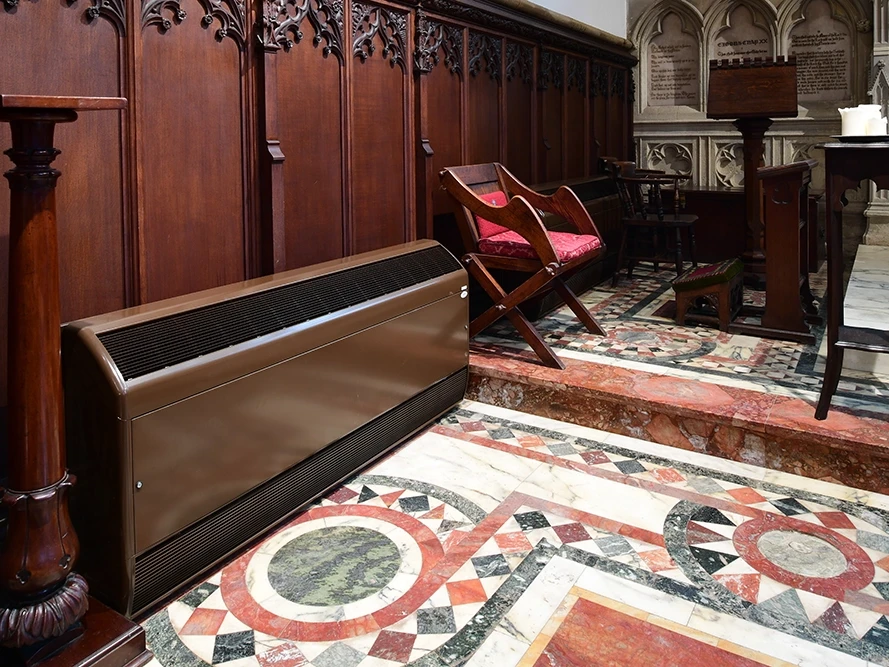
What makes fan convectors suitable for church buildings?
A fan convector passes room air across a heated coil and uses a fan to distribute the warmed air. Because the fan does the work of moving heat, a Belgravia unit delivers a high output from a compact casing, which matters in churches where wall space, pews and heritage features limit where emitters can go.
Churches are also heated in bursts. A building used on Sundays, and a few weekday evenings needs to warm up fast and then hold temperature quietly. Fan convectors are well matched to that pattern, and SPC’s Belgravia Supreme and Belgravia Classic ranges are specified for places of worship as well as schools, libraries and healthcare settings.
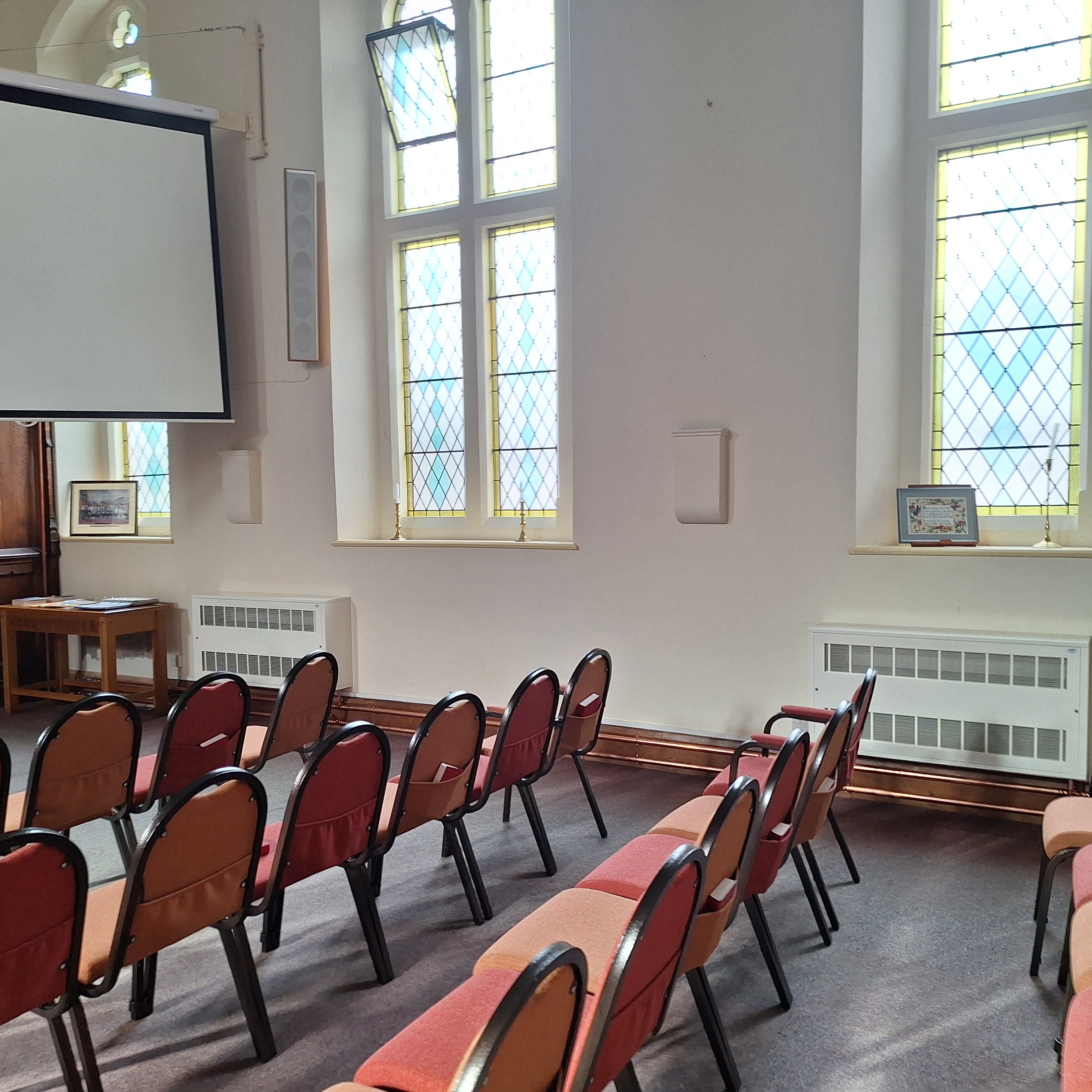
Can fan convectors work with a heat pump in a church?
Many churches are now weighing a move away from fossil fuels, and the heat emitter needs to suit the heat source. The Belgravia range is heat pump compatible and offers standard, enhanced and low-flow heat exchanger options, with the low-flow version intended for heat pump and low temperature hot water systems.
Output always depends on the water temperature supplied, so the units should be selected against the actual design flow temperature of the system. A heating consultant or installer can confirm this at specification stage, and the SPC team can support the selection.
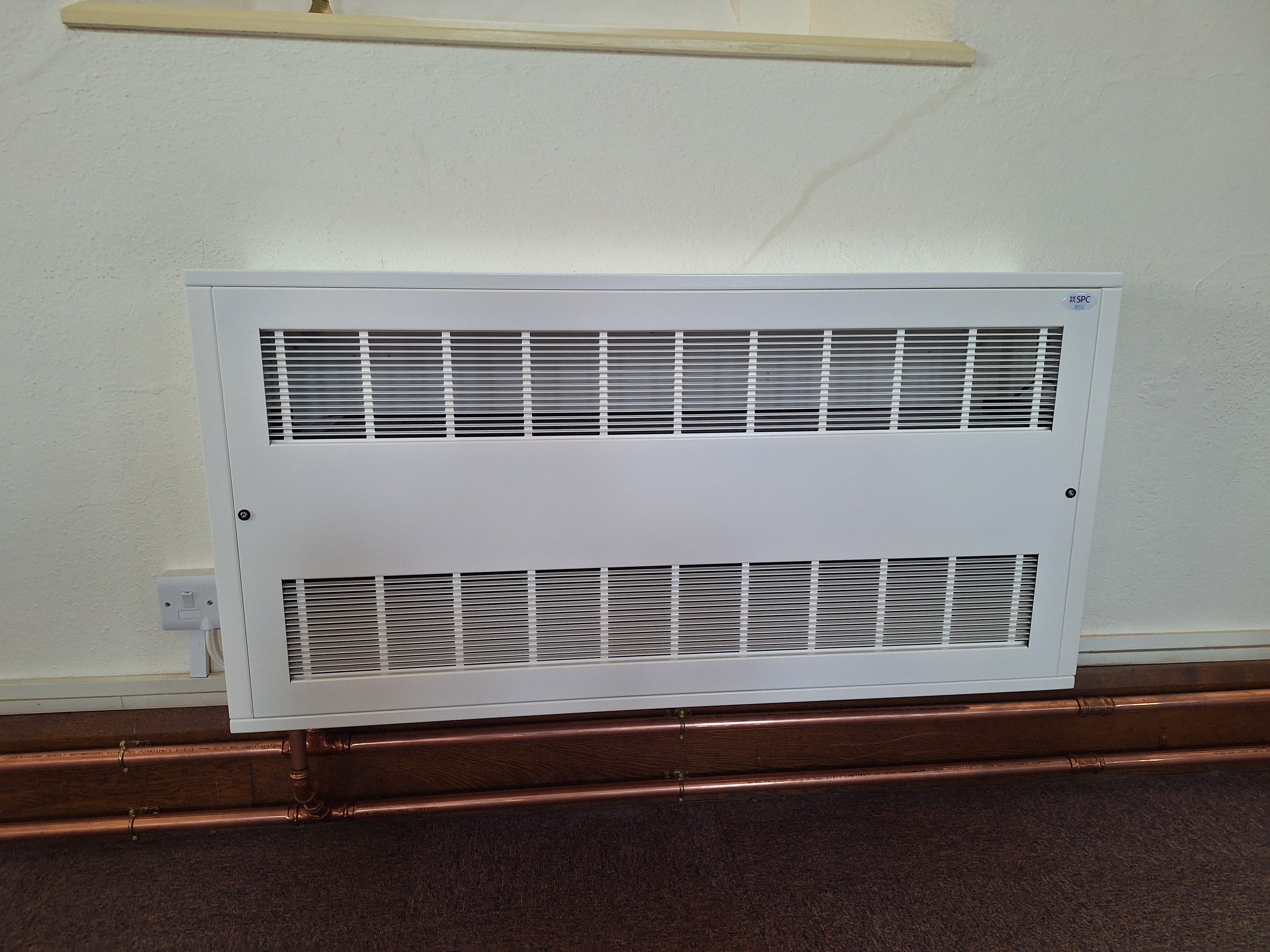
How do you keep fan convectors safe and quiet where a church hall is hired out?
Many churches now let their halls to nurseries, toddler groups and community classes. Belgravia fan convectors use Active LST (low surface temperature) control, which monitors the casing at its hottest point so surface temperatures never exceed 43°C, in line with NHS safety guidance for healthcare and education settings.
Noise is the other common concern in a resonant building. Belgravia sound levels range from 32 NR at low speed to 46 NR at high speed, depending on the model. The practical approach is to size the units, so they meet the heat load at low speed during a service and use the fan at higher speed only for warm-up. The Modulo touch-screen proportional controller and BMS fan speed control options make that straightforward to manage.
Will fan convectors suit a historic or multi-use church interior?
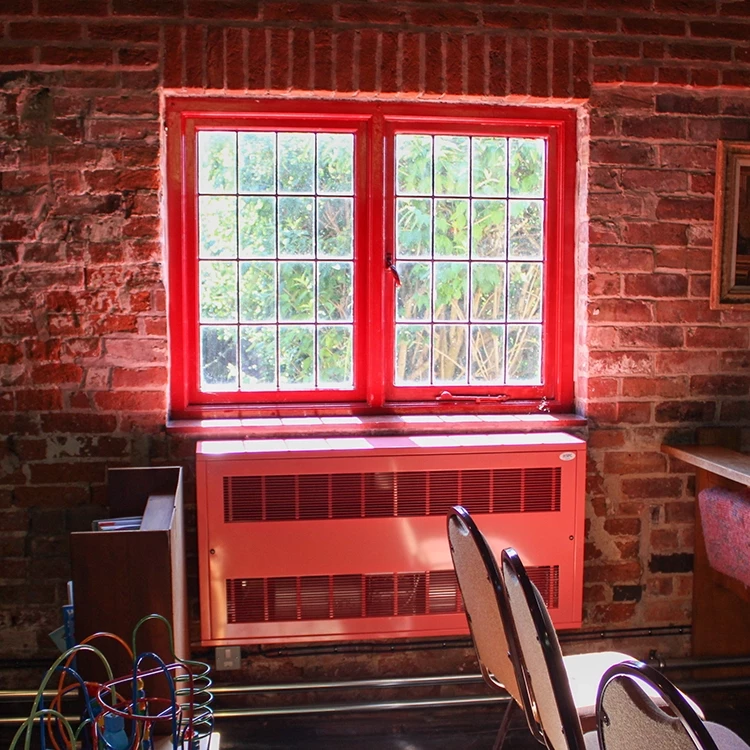
Belgravia units can be exposed and cased on the floor or wall, recessed and concealed, or fitted at low level, so the layout can respond to the fabric of the building rather than fight it. Standard finishes are white (RAL 9010) and special RAL colours are available to order to sit quietly alongside existing decoration.
View St James Church where antique pink coloured fan convectors were installed
For parish rooms, offices and meeting spaces with suspended ceilings, the Belgravia Tilevector range is designed to fit standard 600 x 600mm or 1200 x 600mm ceiling grids. That lets one manufacturer supply emitters for both the worship space and the rooms around it.
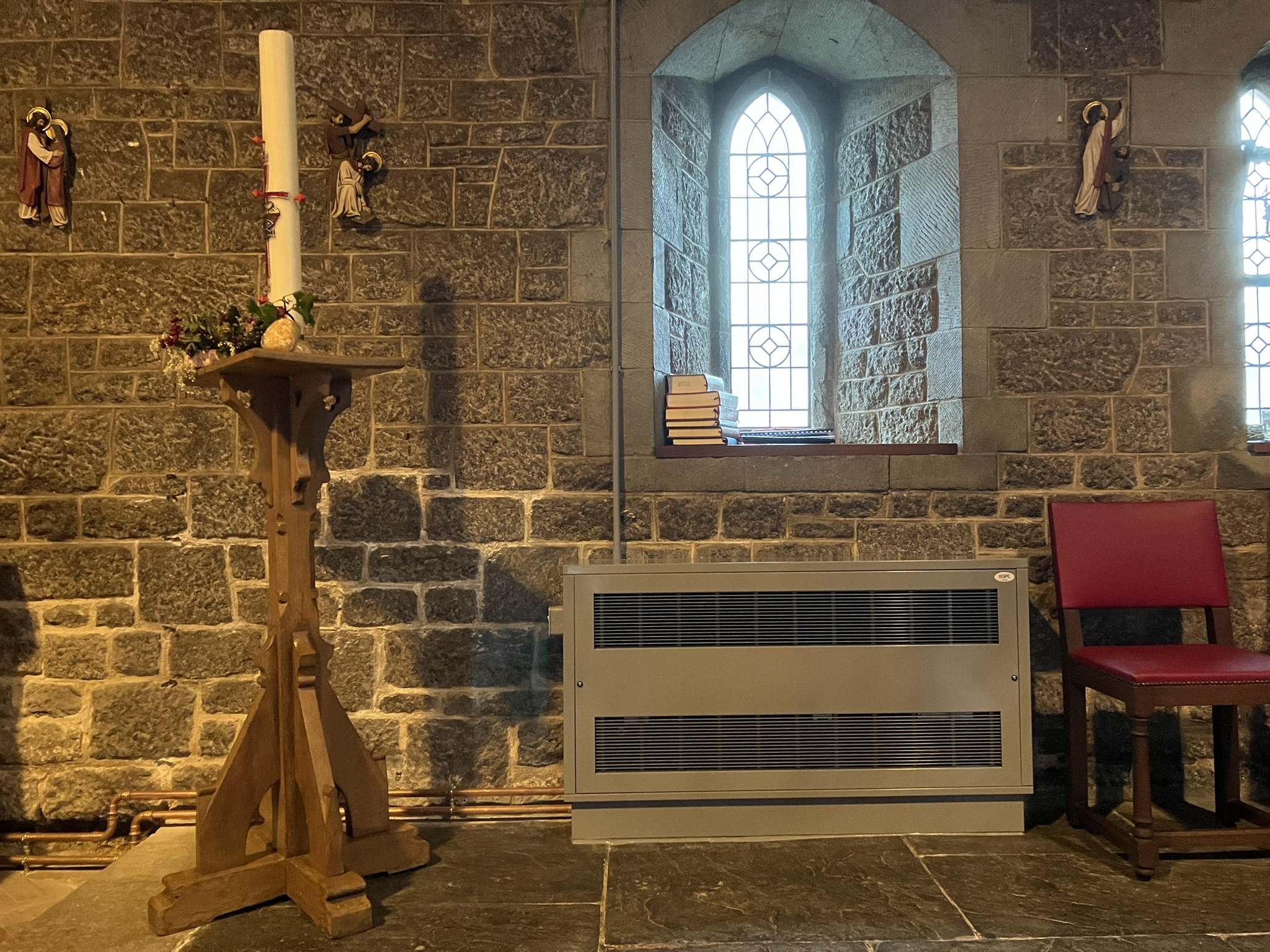
What does a church fan convector project look like in practice?
SPC’s South West Area Sales Manager, Chris Ward, worked with an installer on the refurbishment of a 150-year-old church, where ten Belgravia BEL 150 fan convectors formed part of a wider heating and electrical upgrade. The aim was to create a building usable for multiple purposes seven days a week, which is a common brief for churches today.
Frequently Asked Questions
Usually, yes. For Church of England churches, heating replacements need a faculty, and since July 2022 applicants must show they have had due regard to the Church Buildings Council’s net zero guidance. Other denominations have their own processes, so check with your diocese or governing body before specifying anything.
The number and size of units depends on a heat loss calculation for the building, its intended use and the flow temperature of the system. A heating consultant or installer normally carries this out, and the SPC team can support product selection once the design figures are available.
SPC supplies through heating contractors, installers and building services professionals rather than selling direct to end users. The best route is to involve your installer or consultant early, and the SPC team can work with them on the specification.
The concealed and recessed mounting options, low-level positions and choice of RAL finishes give flexibility in sensitive interiors. Any work to a listed building still needs the appropriate consents, so raise the proposal with your diocesan advisory body at an early stage.
Planning a church heating upgrade?
Speak to the SPC team about specifying Belgravia fan convectors for your project.