

Yes, industrial air curtains work in summer! For temperature-controlled warehouses, food production facilities, and high-throughput logistics operations, summer is often when they earn their keep most.
Industrial air curtains are not just a cold-weather product. In warehouses, factories, food production facilities, and logistics centres, they solve a different but equally costly set of problems during summer, and specifying the right variant year-round is a decision that pays back quickly.

Why Do Warehouses and Factories Need Air Curtains in Summer?
When external temperatures rise, large industrial doorways stop being a cold draught problem and start being a heat gain, pest, and contamination problem.
High-traffic loading bays and factory entrances remain open for extended periods. Without an air barrier in place:
- Flying insects enter food production and processing environments, creating hygiene and compliance risks
- Cool, conditioned or ventilated air escapes freely, increasing energy costs
- Dust, airborne debris, and exhaust fumes infiltrate working areas
- Warm, humid external air enters temperature-controlled spaces, increasing the load on the refrigeration and cooling plant
- Internal temperature control becomes difficult in spaces that rely on mechanical ventilation
An industrial air curtain addresses all of these by maintaining a continuous high-velocity air seal across the opening, without restricting vehicle or pedestrian movement.
Summer-Specific Use Cases
Cold Stores and Temperature-Controlled Warehouses
This is arguably the most critical summer application. When dock doors are open during loading and unloading, warm, humid external air floods in. That humidity doesn’t just raise the temperature; it creates condensation on racks, floors, and product packaging. In a cold store operating at 2-4°C, a single open door on a warm day can introduce enough moisture to trigger icing on evaporator coils and disrupt the entire refrigeration circuit.
An ambient iForce unit installed above the dock door creates a continuous barrier during loading operations, dramatically reducing warm air infiltration without interrupting vehicle or forklift movement.
Food Production and Processing Facilities
BRCGS, SALSA, and retailer-specific food safety standards all require effective pest and contamination control at entry points. Flying insects are at their highest density in summer. A correctly sized and commissioned air curtain creates a discharge velocity that flying insects cannot penetrate, making it a primary compliance measure rather than a secondary comfort benefit.
The iForce is designed to maintain effective barrier velocity across the full width and height of the opening, not just at the centre of the discharge grille. This consistent coverage is what makes it reliable as a pest control measure.
Logistics and Distribution Centres
High-throughput distribution sites often have multiple dock levellers operating simultaneously across shifts. Keeping physical doors closed is operationally impractical. Air curtains at each bay allow continuous movement of goods while maintaining environmental separation, reducing both the cooling load on the building and the volume of external air, insects, and debris entering the facility.
Cleanrooms and Controlled Manufacturing
Positive pressure environments, such as those found in pharmaceutical manufacturing, electronics assembly, and precision engineering, rely on a controlled differential between internal and external air pressure. An air curtain at the entrance helps maintain separation, reducing the frequency and severity of pressure fluctuations each time the door is in use.
What Makes the iForce Industrial Air Curtain Suitable for Large Openings?
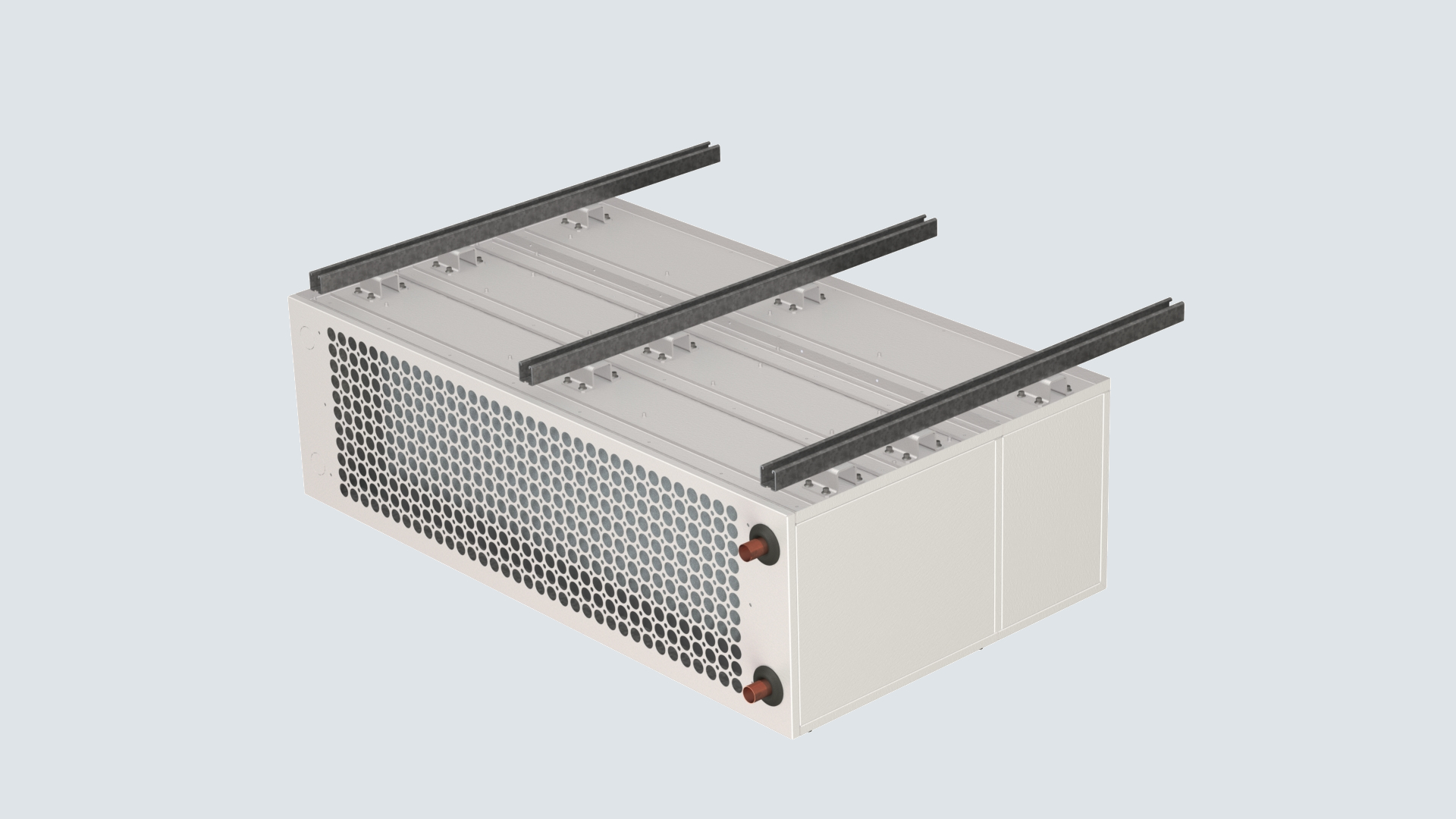
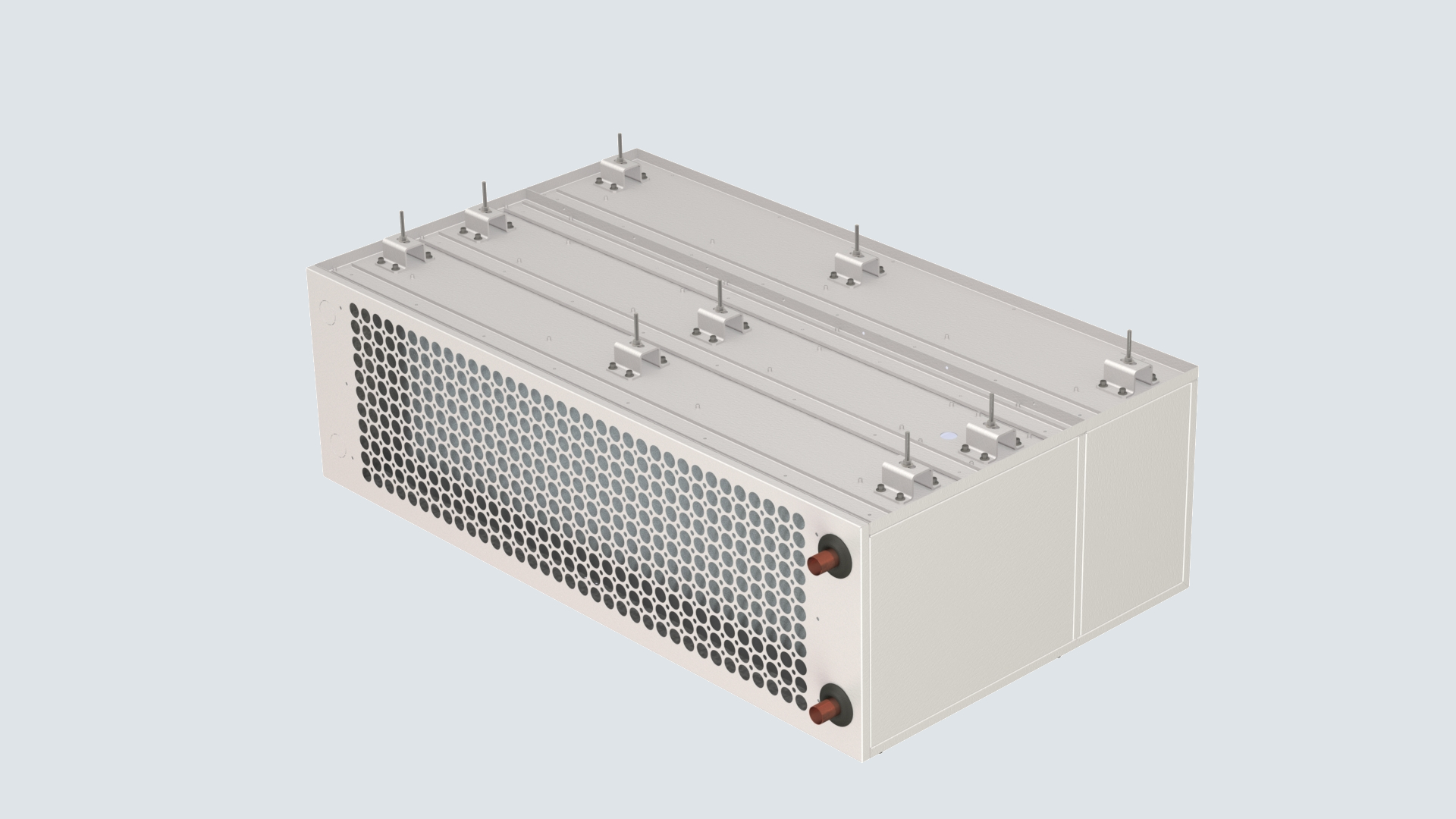
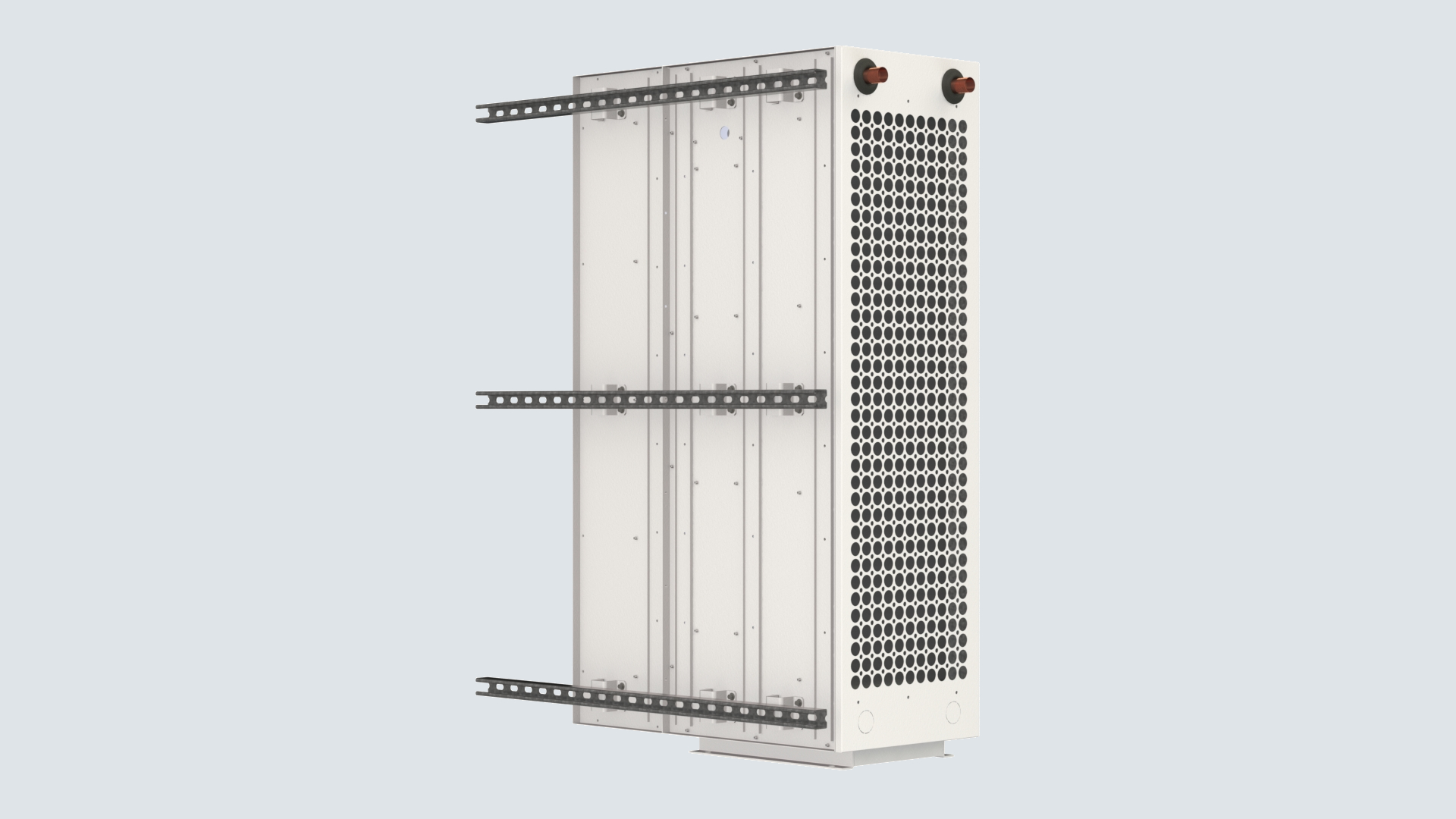
SPC’s iForce Industrial Air Curtain is engineered specifically for heavy industrial and commercial applications. It covers doorway heights up to 6 metres, making it suitable for loading bays, factory entrances, and distribution centre openings that standard commercial air curtains cannot adequately protect.
Key specification details:
- Three variants available: ambient (no heat), low-pressure hot water (LPHW) heated, and electric heated
- Available in widths of 1.5m, 2.0m, and 2.5m – units can be installed side by side horizontally or vertically to cover any opening width
- EC motors with 0-10V fan speed control for energy-efficient operation
- Heat outputs up to 70kW and airflows up to 3.2m³/s
- Heavy-gauge powder-coated steel casing with extruded aluminium outlet grille
- BACnet and BMS integration for full building management system compatibility
- Door contactor input and master/slave control for multi-unit installations
A common specification error worth flagging at the design stage: for summer applications where heating is not required, the ambient variant is the appropriate specification. However, if the same opening needs to perform in winter, the LPHW heated variant is the correct choice, the ambient model has no heating capability and cannot be upgraded after installation.
For sites that require precise waterside temperature control, the SPC Delta Waterside Controller integrates directly with LPHW units, modulating hot water flow for energy-efficient, accurate output.
What Is the Energy Impact of Running an Air Curtain in Summer?
EC motors across the iForce range are designed for continuous operation with low energy draw relative to the energy saved. Uncontrolled air infiltration through an open industrial doorway carries a significant energy cost, particularly where mechanical cooling, refrigeration, or air handling equipment is working to maintain internal conditions.
When an industrial facility has its cooling system running (chillers, DX units, or evaporative cooling), every open doorway represents a direct load on that system. Warm external air entering through an open dock door must be cooled before it reaches the rest of the building. An air curtain’s energy consumption is typically a fraction of the cost of the infiltration it prevents.
For BMS-connected installations, door-contact activation means the unit only runs when the door is open, further reducing unnecessary energy use.
Frequently Asked Questions
For purely summer applications, the ambient iForce variant is the correct specification. It provides the air barrier without heating capability. However, if the same opening will be used in winter and thermal comfort or energy retention is a factor, the LPHW heated variant should be specified from the outset; the ambient model cannot be retrofitted with heating. This is a decision best made at the design stage, not after installation.
Yes. An air curtain’s primary function is to create a physical air barrier across a doorway; heating is an optional addition, not a requirement. Ambient units discharge room-temperature air at high velocity to separate internal and external environments, making them effective at reducing air infiltration, blocking insects and debris, and supporting energy efficiency in cooling-dominated environments, without any heat output.
No. An air curtain is not a cooling device and should not be specified as a substitute for air conditioning. What it does is reduce the load on your existing cooling system by limiting the volume of warm external air that enters through open doorways. The two work together; the air curtain helps the cooling system work more efficiently, reducing run time and energy consumption.
Yes. Multiple units can be installed side by side to cover any opening width. This is a common approach on large loading bay openings and factory entrances where a single unit would not provide full coverage.
Yes, where correctly sized and installed. The iForce can be used across food production, food storage, and cold chain logistics applications. The air barrier helps to prevent flying insect ingress and limits the exchange of external air, both important factors in food hygiene compliance under BRCGS and SALSA standards.
The iForce Industrial Air Curtain provides effective protection for openings up to 6 metres in height. For taller openings, units can be stacked or mounted vertically along the sides of the door.
Yes. BACnet and BMS integration is available, and the unit supports door-contact activation for automatic operation when the door opens. Master/slave control is also supported for multi-unit installations.
Yes, and it is often the preferred choice. A heated air curtain at a cold store entrance would introduce warmth into a refrigerated environment, increasing the load on the refrigeration system. An ambient unit creates the same barrier effect without adding heat – separating the cold internal environment from warm external air during loading operations without disrupting the cold chain.
Specify an iForce Industrial Air Curtain for Your Site
View the iForce Industrial Air Curtain or use our online product configurator to explore configurations for your opening dimensions.
For a site survey or technical advice, contact the SPC team: