

Selecting the right industrial heating system for a warehouse, factory, or workshop depends on getting three things right: managing heat stratification in high-ceilinged spaces, controlling heat loss through loading bays and open doors, and deciding whether to heat the full air volume or deliver warmth directly to the occupied zone. SPC has been manufacturing heating and cooling products for over 50 years, and these are some factors that determine whether an industrial heating installation performs well or wastes energy.
Why does ceiling height affect industrial heating performance?
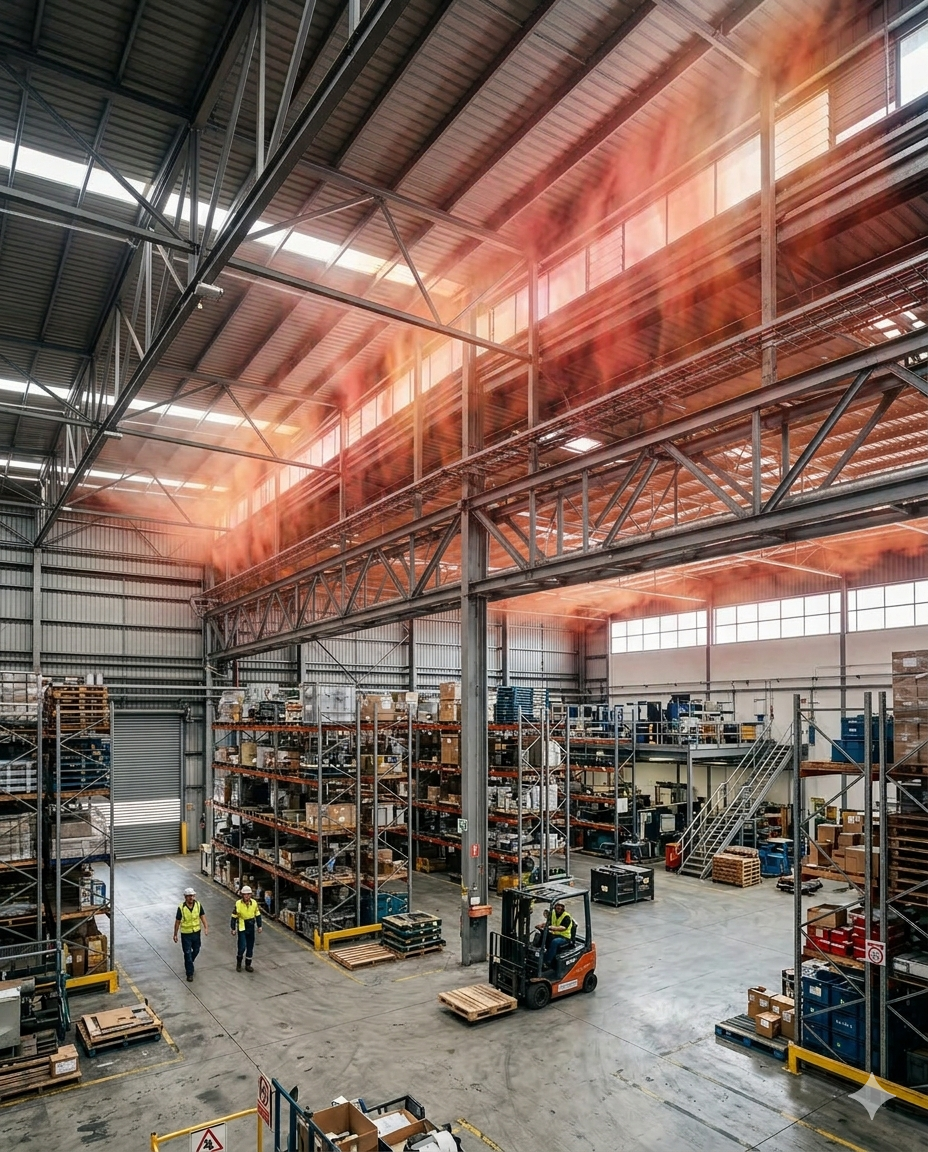
In high-bay buildings, warm air naturally rises and stratifies near the roof, well away from the people and processes that need it. The result is that a significant proportion of the energy going into the system ends up heating unoccupied space at height, while the floor-level working zone remains cold.
The right industrial heating system needs to either deliver heat directly to the occupied zone, or generate enough air momentum to overcome stratification and push warmth down to where it is needed. This is one of the primary reasons products designed specifically for industrial environments differ from standard options.
How do loading bays and roller shutter doors affect heat retention?
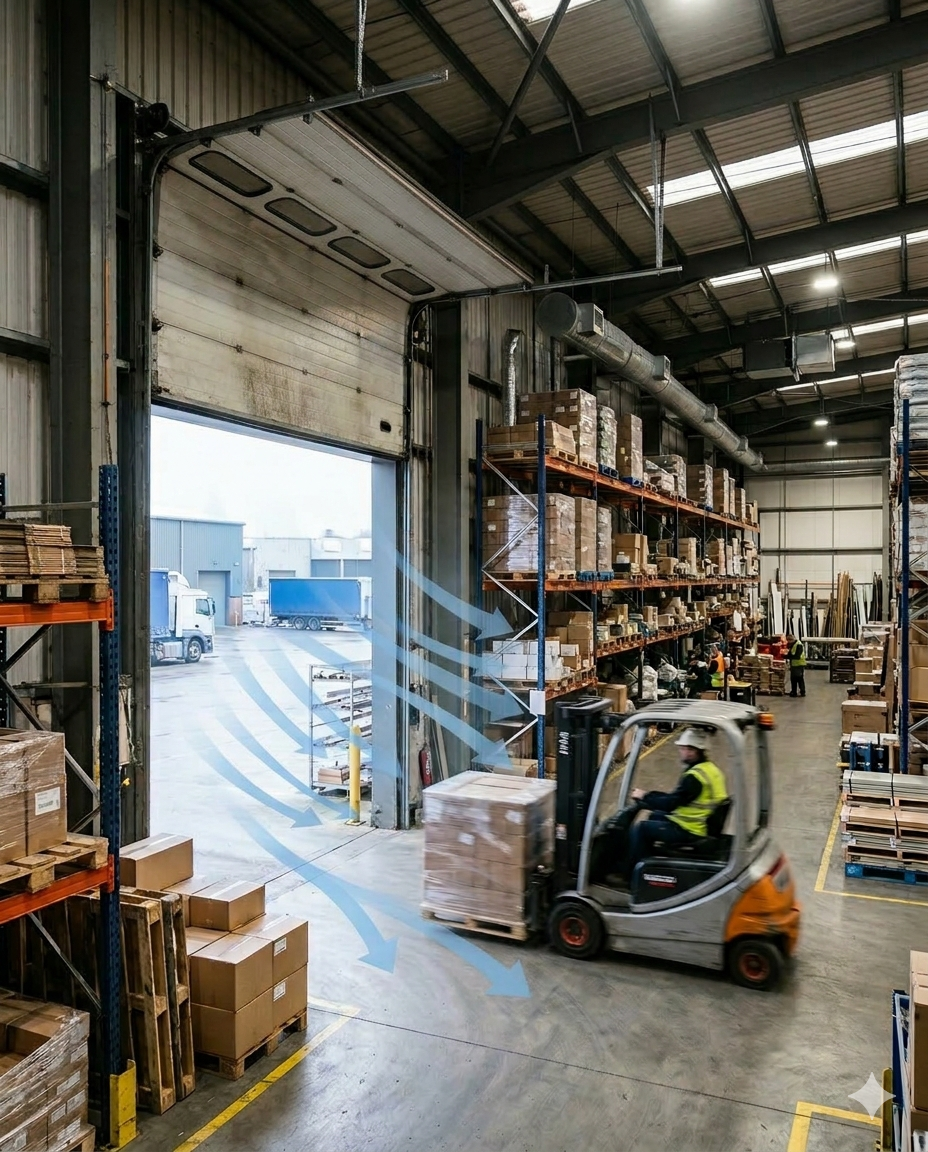
Loading bays, roller shutter doors, and natural ventilation create a constant drain on any industrial heating system. Every time a large door opens, conditioned air escapes and cold air enters. In buildings with regular vehicle or forklift traffic, this can happen dozens of times a day and significantly increase the energy required to maintain a stable working temperature.
Reducing heat loss at the point of entry is one of the most effective ways to improve overall system efficiency. Industrial air curtains are specifically designed for this role, creating a high-velocity air barrier across the doorway that limits the exchange of internal and external air without obstructing access.
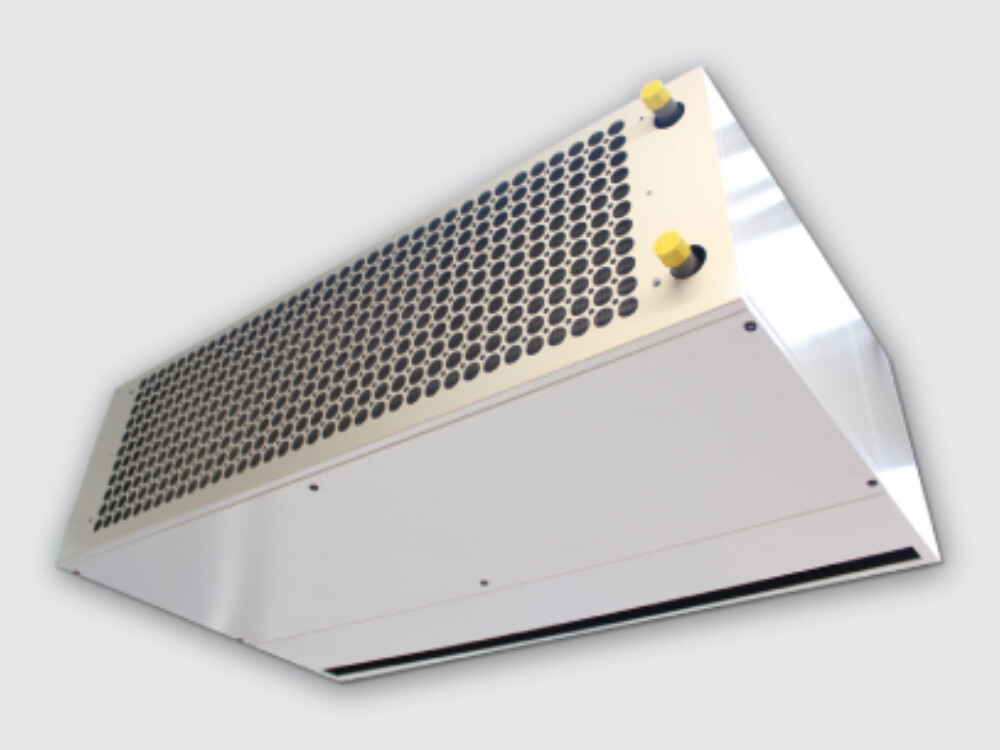
SPC’s iForce Industrial Air Curtain is available in ambient, LPHW, and electric versions and protects openings up to six metres in height, making it suitable for large warehouse loading bays where standard commercial air curtains are undersized.
Is it always necessary to heat the entire air volume of an industrial space?
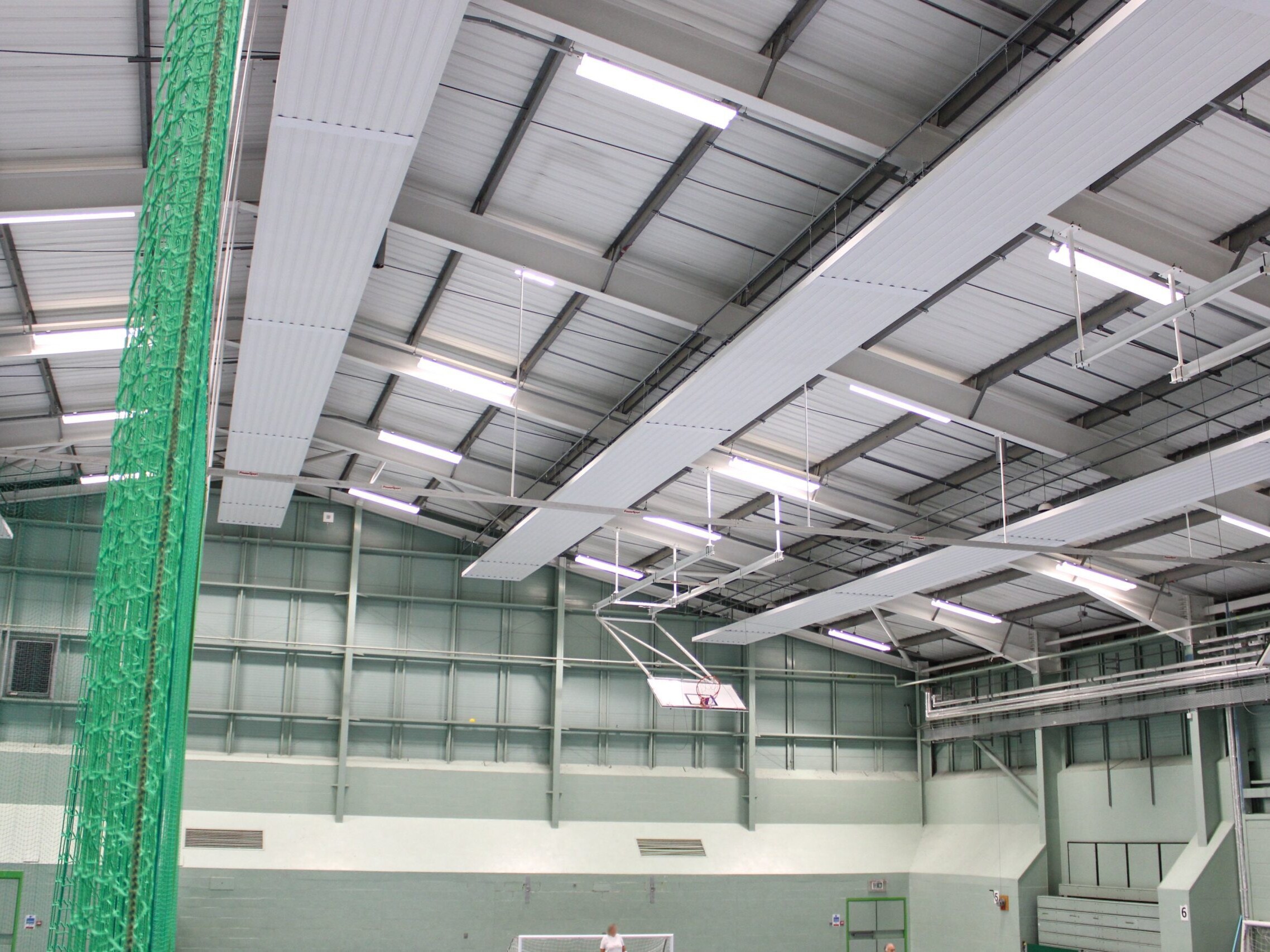
In many industrial buildings, the answer is no. Heating the full air volume of a large, high-ceilinged space is energy-intensive and, in some environments, impractical. Radiant heating takes a different approach: rather than warming the air, radiant panels emit infrared radiation that warms surfaces and occupants directly; the same principle as the warmth you feel from sunlight on a cold day. The air temperature may be low, but the radiant heat reaching you feels warm. This makes radiant heating particularly effective in spaces where the air volume is large relative to the occupied area, or where air movement needs to be minimised.
Frequently Asked Questions
In high-bay spaces, the main challenge is stratification: warm air rising to roof level and away from the occupied zone. Unit heaters with powerful fans can project warm air across large spans at height, while radiant panels deliver heat directly to occupants and surfaces without relying on air circulation. The right choice depends on ceiling height, occupancy pattern, and whether air movement in the space is acceptable.
Yes. SPC’s industrial radiant panels operate effectively at low flow temperatures, making them well suited to heat pump systems. CiRRUS unit heaters can also be specified with coil configurations suited to LTHW systems, though outputs will vary depending on coil row count and airflow. Air curtains are also available with enhanced heat exchanger options suited to condensing boilers and heat pump systems. Contact SPC’s technical team for guidance on system selection for heat pump-connected installations.
Industrial air curtains create an air barrier across open doorways that significantly reduces the volume of warm internal air escaping and cold external air entering. In buildings with high door-opening frequency, this can meaningfully reduce the load on the main heating system. Units are available in ambient (no heat), LPHW, and electric versions, so they can be integrated into existing systems or specified as standalone installations.
Yes. The CiRRUS Unit Heater supports BMS integration via 0-10V or BACnet, and the iForce Industrial Air Curtain can be connected to door contactors with delay relays for automatic operation. SPC’s technical team can advise on control strategies for individual projects. Contact us on 0116 249 0044 or at spc@spc-hvac.co.uk.
SPC Industrial heating products
SPC manufactures three product ranges designed specifically for industrial environments:
Our Industrial Radiant Panels use water-based radiant heating with anti-convective edge profiles that deliver 81% radiant output. Individual modules extend to six metres, with panel runs of up to 70 metres suitable for large industrial bays and aircraft hangars.
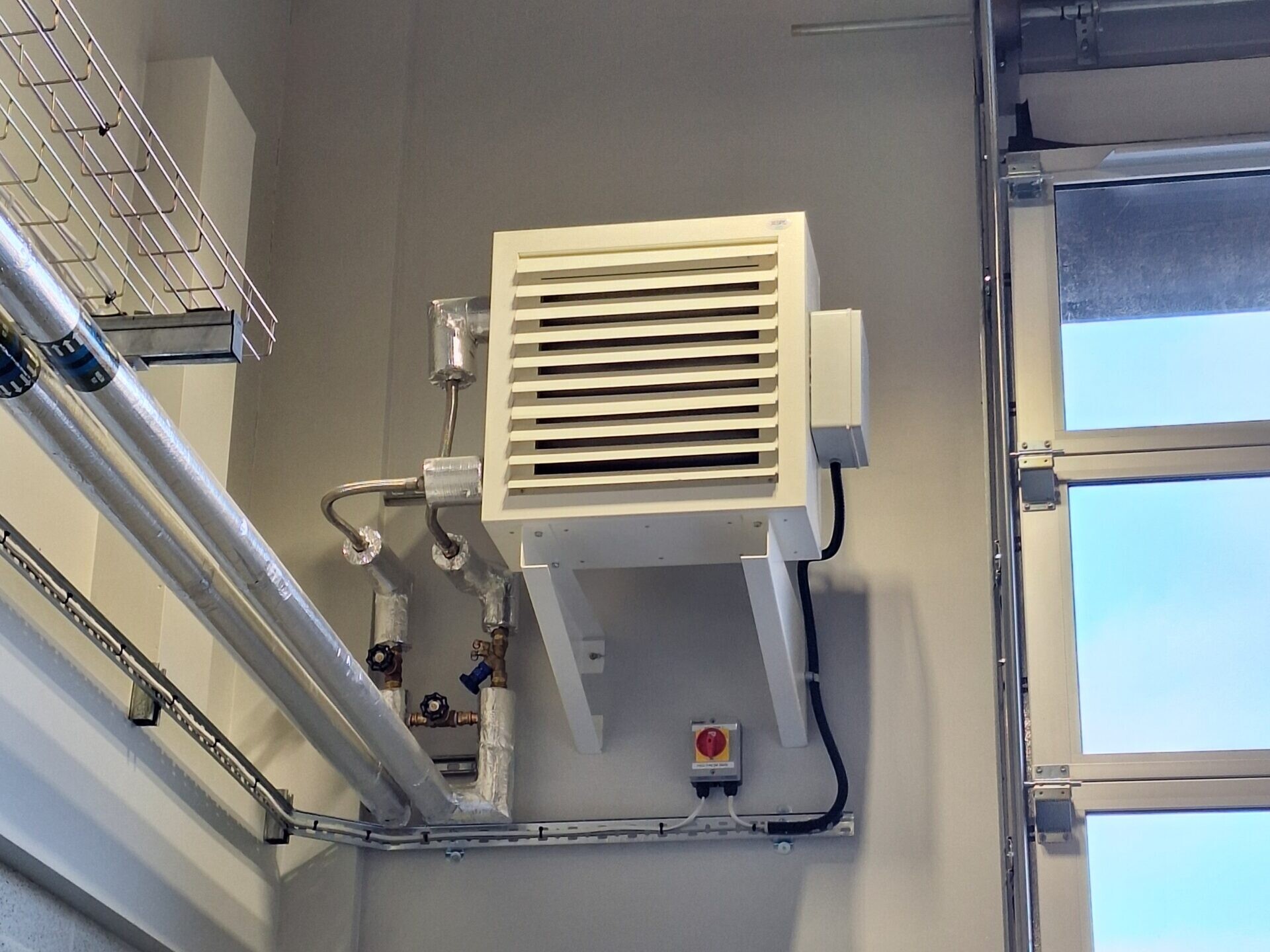
Our CiRRUS Unit Heaters use a powerful axial fan to project warm air into the space. The Ci8 delivers a throw of up to 27 metres at high speed and can be mounted at heights of 2.5 to 6 metres. Available with LPHW water coils; an electric version is also available as the Ci5.
Our iForce Industrial Air Curtains protect doorway openings up to six metres in height. Available in ambient, LPHW, and electric versions, including a three-row coil option suited to condensing boilers and heat pump systems.
Planning an Industrial Heating Project?
Whether you’re specifying radiant panels for a high-bay space, unit heaters for a factory floor, or air curtains for loading bay doors, our team can advise on system selection, sizing, and configuration.